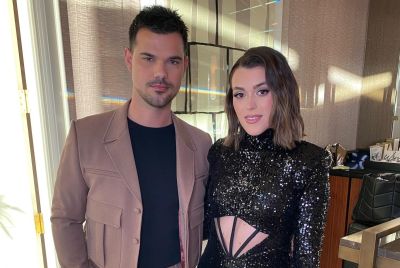
Lauren Southern has once again found herself at the centre of online debate after past backlash from 'trad wife' supporters resurfaced across social media platforms. The renewed discussion comes in the wake of her public comments about experiencing an abusive traditional marriage, a revelation that has sharply divided online communities that once followed or aligned with her views.
Clips, posts, and discussions circulating on Reddit and other platforms have reignited criticism from former supporters within the 'trad wife' and traditional lifestyle space, with some users questioning her credibility and ideological consistency. Others, however, argue that her personal testimony sheds light on the gap between idealised online narratives of traditional marriage and lived reality.
'She's Not a Trad Wife — She's a Feminist!' Online Reactions Resurface

One of the most widely shared reactions in the resurfaced debate includes the claim: 'She's not a trad wife — she's a feminist!' The statement reflects the polarised nature of the discourse, where users are split between viewing Southern as a former ideological figure who broke from expectations, or as someone whose personal experience challenges the very ideals she was once associated with.
The backlash highlights a recurring dynamic in online political and cultural spaces, where public figures are often judged not only by their current statements but also by their past positions. In Southern's case, her previous association with traditionalist and conservative online communities has intensified scrutiny over her recent remarks.
The Clash Between Ideology and Lived Experience
At the core of the renewed controversy is a broader cultural tension: the difference between online ideology and real-life experience. The 'trad wife' movement, often romanticised on social media, promotes traditional gender roles and domestic ideals as a form of lifestyle choice. However, Southern's claims about an abusive marriage have prompted some observers to question whether such portrayals reflect the full reality behind closed doors.
Supporters of Southern argue that her willingness to speak out is an important reminder that personal experiences do not always align with ideological narratives. Critics, meanwhile, point to her past positioning within similar online spaces as a reason for skepticism, further fuelling the divide.
Internet Communities and the Cycle of Backlash
The situation also reflects a wider pattern in digital culture: the rapid cycle of online influence, backlash, and identity reshaping. Public figures who shift their narratives or share conflicting experiences often face intensified scrutiny from the very audiences they once engaged.
In Southern's case, the resurfacing of old commentary demonstrates how the internet frequently re-evaluates past statements through present-day contexts. What may have once been accepted messaging within certain communities is now being reinterpreted under a more critical lens.

A Debate That Goes Beyond One Individual
While the discussion continues to centre on Lauren Southern, the broader debate extends far beyond her alone. It touches on how online communities construct ideals around relationships, how those ideals are challenged by real-world experiences, and how quickly digital audiences can turn when narratives shift.
As the conversation continues to spread across social platforms, the controversy serves as another example of how personal testimony, ideology, and internet culture intersect in increasingly complex and often polarised ways.
Conclusion: Ideology, Identity, and Online Reality
The resurfaced backlash against Lauren Southern illustrates a familiar pattern in modern internet culture where past affiliations and present experiences collide, creating ongoing cycles of debate and reinterpretation.
Whether viewed as a contradiction or a revelation, the discussion reflects a broader question at the heart of online discourse today: what happens when personal reality no longer fits the ideology that once defined a public identity?