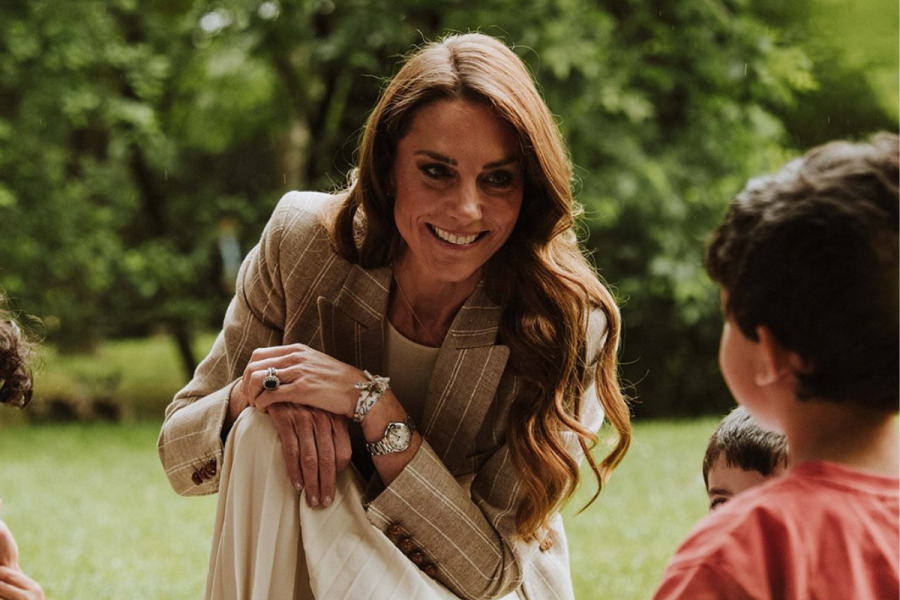
Catherine, Princess of Wales, has spent 2026 continuing a wardrobe shift that would have looked far more radical in Princess Diana's early royal years. At Wimbledon in July, Kate Middleton arrived in a periwinkle trouser suit, extending her preference for tailoring over the coat dresses long associated with her public image. The choice echoed Diana, whose 1981 engagement portrait drew attention because she was pictured in trousers.
Many of the supposed 'royal fashion rules' attached to Catherine are not written palace protocol. The Royal Family's own etiquette guidance says 'there are no obligatory codes of behaviour, just courtesy', while dress expectations vary according to the event. Even so, Catherine and Diana have repeatedly stepped outside seven conventions that shaped how royal women were expected to look.
Tailoring Rewrites the Princess Formula
1. Trousers Instead of Dresses
Trousers are now a regular part of Catherine's working wardrobe, including the blue suit she wore at Wimbledon in 2026. The National Portrait Gallery notes that Diana's trousers in her engagement portrait were 'considered a radical choice for a royal'. Debrett's still excludes trousers from women's white-tie dress, although other dress codes allow them, making context more important than any blanket royal ban.
2. Black Outside Mourning
The idea that royal women should reserve black for mourning has never operated as an absolute rule. Catherine wore a black-and-white, off-the-shoulder Roland Mouret gown to the London premiere of Top Gun: Maverick on 19 May 2022, while Diana famously wore Christina Stambolian's black cocktail dress in 1994. Kerry Taylor Auctions records that Diana's original was made from black silk, confirming that the colour had a place in her high-profile wardrobe beyond mourning.
3. Bare Shoulders
Catherine's Roland Mouret premiere gown also moved away from the conservative daytime formula commonly associated with royal dressing. Diana had already made strapless and off-the-shoulder evening gowns a signature, including the Victor Edelstein velvet dress she wore while dancing with John Travolta at the White House in 1985. Christie's later recorded that gown as the top lot in Diana's 1997 charity dress sale, where 79 of her dresses were auctioned for charity.
4. Bright Nail Polish
There is no published palace rule requiring royal women to wear nude nail polish, despite years of claims to the contrary. Catherine wore a dark red manicure to the Easter Sunday service at Windsor on 9 April 2023, while Diana was also photographed wearing vivid red polish during public appearances. Debrett's says nail varnish can 'enhance the look' when neatly maintained and does not prescribe a royal-approved colour.
5. Shorter Hemlines
Traditional formal dress guidance tends to favour longer hemlines, with Debrett's advising that black-tie dresses should be long or 'at least not very short'. Catherine has nevertheless worn above-the-knee dresses during royal engagements, particularly earlier in her public life. Diana similarly shifted towards shorter cocktail dresses in the 1990s, moving away from the fuller and more conservative silhouettes associated with her early years as Princess of Wales.
6. Bare Legs Instead of Tights
Tights are another convention frequently presented online as mandatory royal protocol. Debrett's recommends them for formal morning dress and black tie, but Catherine has appeared bare-legged at less formal engagements, as Diana also did. Their wardrobes demonstrate the difference between rules attached to a specific dress code and a universal palace requirement.
7. Wearing the Same Clothes Repeatedly
Catherine has made outfit repeating a visible part of her royal wardrobe, regularly returning to coats, dresses and accessories for major engagements. Diana also re-wore and restyled pieces rather than treating every public appearance as a one-use fashion moment.
The Design Museum has placed Diana within a wider history of women using fashion as 'an important tool of self-expression and empowerment', highlighting how clothing became part of her public identity.
The seven examples show less a pattern of palace rebellion than an evolution in royal dressing across two generations. Diana helped make trousers, stronger evening silhouettes and more individual styling feel possible for a Princess of Wales, while Catherine has normalised many of those choices in modern royal life. The 'rules' remain shorthand for tradition, but documented dress codes are narrower and more situational than royal fashion lore suggests.