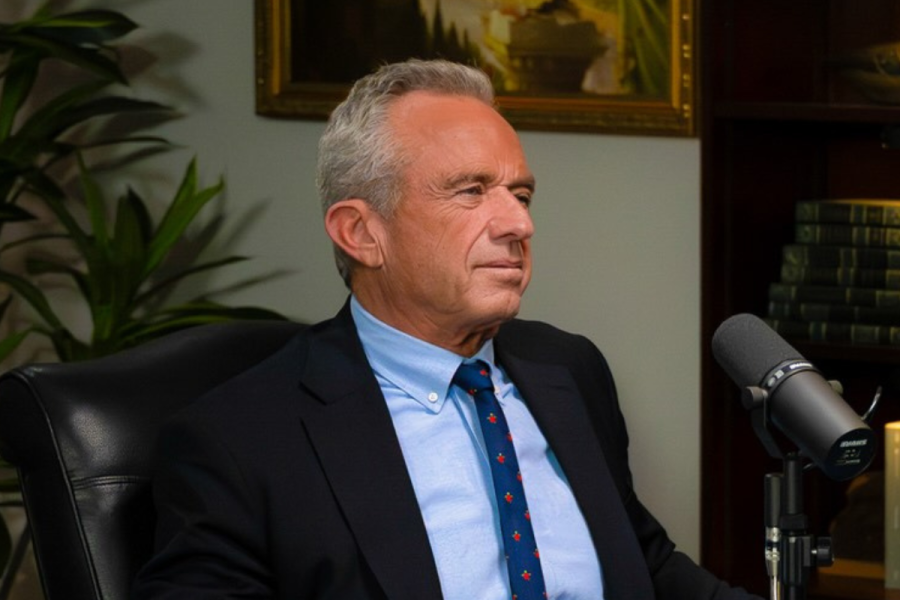
A federal judge has temporarily blocked the US Department of Health and Human Services from moving ahead with major changes to a teen pregnancy prevention programme. The court found that the evidence cited to support parts of the new policy raised serious questions. The policy was introduced under Health Secretary Robert F. Kennedy Jr.
The changes would shift grant-funded programmes towards an abstinence-focused approach. They would also introduce new requirements involving 'body literacy'. The changes affect the federal Teen Pregnancy Prevention Program.
US District Judge Christopher R. Cooper issued the preliminary injunction on 19 August 2026 in Washington, DC. In his 61-page ruling, Cooper said several studies cited by HHS either could not be located as referenced or did not appear to support the claims attached to them. He described that type of problem as a 'hallmark of AI-generated citations'.
Judge Questions HHS Evidence
The court examined seven articles cited in HHS funding notices while reviewing the new body literacy requirements. According to the preliminary record before the court, five of the seven articles could not be located as they were cited. Two appeared to be entirely fabricated, while three others did not appear in the journals named by HHS even though articles with similar titles were found elsewhere.
Cooper did not find that artificial intelligence had definitely been used to create the references. Instead, he said citations that appear not to exist, or that fail to support the claims attached to them, can be characteristic of AI-generated references. The ruling therefore does not establish that Kennedy personally used AI or instructed anyone to fabricate research.
The court instead focused on whether HHS had provided sufficient evidence and explanation for its policy changes. It considered whether the agency had properly supported the new requirements it wanted to impose. At this preliminary stage of the case, Cooper found that the challengers were likely to succeed on their argument that the policy was 'arbitrary and capricious'.
Abstinence Rules Face Scrutiny
Congress established the Teen Pregnancy Prevention Program to fund approaches supported by evidence showing they can help prevent teenage pregnancy. Funded programmes have included efforts encouraging young people to delay sexual activity as well as education involving contraception and other pregnancy prevention methods. Congress has funded the programme since 2010.
For the 2026 funding round, HHS introduced requirements that the court characterised as imposing an abstinence-only approach across the programme. HHS guidance described sexual risk avoidance education as a required component of funded projects, while programmes were also expected to incorporate body literacy, reproductive goals counselling and other new material. The agency describes sexual risk avoidance education as an approach that explains the potential health and social benefits of avoiding sexual activity during adolescence.
Body Literacy Raises Questions
HHS describes body literacy as helping young people understand how a healthy body functions and interpret biological signals. Its 2026 programme materials include topics such as female and male reproductive health, hormones, sleep, nutrition, physical activity and stress. The agency says the approach is intended to help teenagers make informed decisions about their health.
However, the HHS funding material itself acknowledged a 'near absence' of body literacy education standards across the United States. The preliminary record also indicated that no curricula or teen pregnancy prevention programmes centred on body literacy were identified that incorporated all of the newly imposed requirements. That raised questions for the court about why the approach should be required across the entire programme without stronger supporting evidence.
What the Injunction Blocks
The preliminary injunction temporarily bars HHS from implementing its 2026 Teen Pregnancy Prevention policy while the lawsuit continues. This includes the fiscal year 2026 funding notices containing the disputed requirements. The order is temporary and does not determine the outcome of the case.
Cooper also did not order HHS to restore grants that had already been cancelled immediately. HHS issued termination letters on 26 June 2026 to nearly all members of a group that had received grants scheduled to run from 2023 through 2028. The judge said unresolved legal questions remained over whether his court had authority to order those grants reinstated at this stage of the proceedings.
The case was brought by Hennepin County in Minnesota, King County in Washington, Planned Parenthood of the Heartland and the Sexuality Information and Education Council of the United States. The plaintiffs argue that the new requirements move the federal programme away from the evidence-based approach required by Congress. The lawsuit remains active, and the court could consider further evidence and arguments before issuing a final decision.