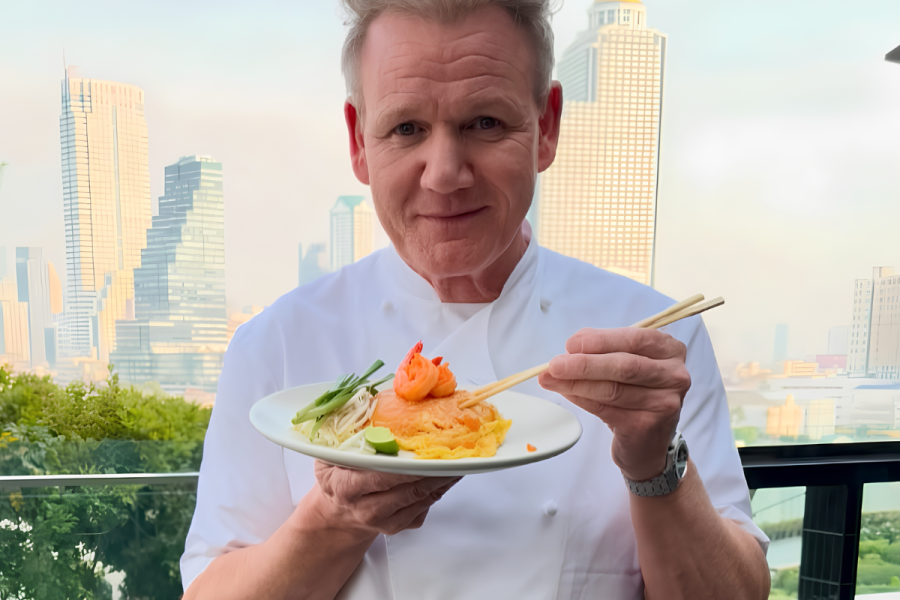
Mursal Saiq has criticised the way celebrity chefs use the word 'authentic', saying it can create a double standard for chefs from racialised backgrounds. In a clip circulating online, the British-Afghan chef called out Gordon Ramsay and questioned why chefs like her are often expected to stick to the food of their heritage. Her comments have sparked a wider debate over who gets to change, mix and redefine traditional food.
Saiq also challenged the idea that chefs from certain backgrounds must always cook the food they grew up with to be seen as genuine. She argued that chefs should have the same freedom to explore different cuisines without being judged by where they come from. The debate has added fresh attention to the meaning of 'authenticity' in modern food culture.
Mursal Saiq Takes Aim at the Word 'Authentic'
Saiq said she has no issue with Gordon Ramsay himself but questioned his use of the word 'authentic' when talking about food. 'Gordon's quite cool, but I don't like his use of the word authentic, because where does that place somebody like me?' she said in the clip. She then explained how her identity has often been viewed differently depending on where she is.
'In Afghanistan, I'm called English, in England, I'm called Afghan,' Saiq said. She added that she had spent more than a decade learning American barbecue while still seeing herself as Afghan. For her, that mix of experiences makes it hard to accept the idea that a chef must cook only the food linked to their background.
Saiq argued that the word can become a limit when it is applied to chefs from minority backgrounds. She said the expectation can suggest that a brown chef should remain inside one food culture, while other chefs can move between cuisines without the same questions being asked. 'The authenticity, hospitality trap for racialised people would mean someone like me shouldn't cook outside Afghan food,' she said.
Mursal Saiq Has Built a Career Around Food Without Borders
Saiq was born in Kabul, lived in Mumbai and moved to London as a child after her family fled Afghanistan. Her experiences across different countries shaped her approach to food, with Great British Chefs noting that Indian flavours also influenced her cooking. She later worked in London hospitality and helped build Cue Point with British-Guyanese chef Joshua Moroney, bringing Afghan flavours into the world of barbecue through smoked meats, sauces and plant-based dishes.
Her career shows why the idea of one 'authentic' identity can feel too narrow. Saiq has brought together Afghan, Indian, British and American influences while developing a style of cooking that does not fit neatly into one box. Her hospitality profile describes her as a British-Afghan pitmaster, live-fire chef, restaurateur and hospitality consultant who combines American barbecue techniques with British hospitality and Afghan heritage.
The Chef Says the Rules Are Not the Same for Everyone
The heart of Saiq's argument is that food should not become a test of a chef's identity. She pointed to the way white chefs can take techniques and flavours from different cultures and make them their own, while chefs from those cultures may face pressure to prove that their food is 'real'. 'Those white men are the guys that did that,' she said, before adding that she would not accept being told how she should cook.
Saiq also challenged the idea that chefs should be judged by how closely they follow one fixed version of a cuisine. 'You can cook my food any jerk style, this style, that style,' she said in the clip. She then made clear that she wants the freedom to take her own food in different directions without being told that doing so makes it less valid.
Gordon Ramsay Has Faced the Authenticity Debate Before
Saiq's comments come after Ramsay faced questions about authenticity in his own restaurant work. In 2019, his London restaurant Lucky Cat was promoted as an 'authentic Asian' restaurant, drawing criticism from food writers and sparking a wider debate about cultural appropriation. The Guardian reported that critics questioned the use of the term while the restaurant served food inspired by cultures outside Ramsay's own background.
The Lucky Cat debate showed why the word 'authentic' can be complicated in the food world, as recipes and cooking styles often change across families, cities and generations. Food writer Jay Rayner argued that calling the restaurant 'Asian inspired' could have avoided some of the criticism. For Saiq, the issue is bigger than one restaurant, as she believes chefs from racialised backgrounds should have the same freedom to experiment with food. 'Quite frankly, I'll take the power back and cook my food in as many ways,' she said.