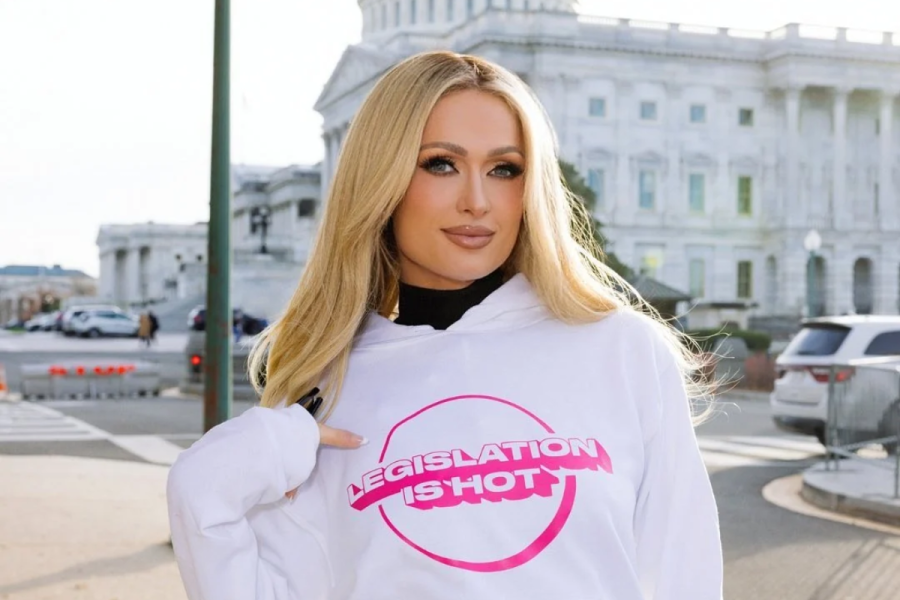
Ten months after last standing outside the Capitol to recount what it felt like to have her body exposed without consent, Paris Hilton went back on Tuesday, 17 November, because the bill she wants still had not become law. Victims of sexual AI deepfakes still lack a federal civil route to sue over synthetic images, and the House version of the legislation has sat in the Judiciary Committee since May 2025.
Democrat Alexandria Ocasio-Cortez and Republican Laurel Lee, cosponsors of the House bill, stood beside her. Versions of the bill have passed the Senate unanimously twice, but any bill not enacted before the 119th Congress ends and the next begins on 3 January 2027 would have to start the process again.
Why Is Paris Hilton Back in Washington?
By her own account, Hilton was 19 when footage of her was leaked by an ex-boyfriend, so she speaks as someone who has lived through it. If it can happen to a woman with 'my resources and my platform', she cautioned, a young girl facing it alone would feel powerless.
Hilton estimates that more than 100,000 explicit deepfakes of her circulate online, which makes the stakes personal as well as political. She contends the laws are not protecting people.
What Does the DEFIANCE Act Do?
The Disrupt Explicit Forged Images and Non-Consensual Edits Act, filed in the House as H.R. 3562, would extend the existing federal civil action for intimate images to AI-generated 'digital forgeries', which that law does not expressly cover. Victims could sue those who create or distribute them and recover any profits made, with 10 years to bring a case, counted from the day they discover the violation or turn 18, whichever comes later.
That sets it apart from the Take It Down Act, which made posting such images a federal crime and obliges websites to remove them within 48 hours of a request. Removal curbs the spread, but it does not compensate anyone or make the creator pay.

Why Hasn't the House Voted?
The House bill was referred to the Judiciary Committee in May 2025 and has not moved since. Ocasio-Cortez pressed the question of why it has not reached the floor, while Speaker Mike Johnson's office did not respond to a request for comment on the delay.
Hilton appealed directly to Johnson, Majority Leader Steve Scalise and Judiciary Chairman Jim Jordan, challenging them to explain whether they would allow this to keep happening to their daughters, wives or sisters. Ocasio-Cortez described backers as 'very optimistic' about the White House's openness to the bill, though optimism has yet to translate into a scheduled vote.
From 2004 Tape to Capitol Hill
In 2004, the footage hit shelves as 1 Night in Paris, distributed by Red Light District Video, turning a private moment into a commercial product. Hilton has since described the release as a betrayal of her trust and recalled how cruelly people reacted at the time.
Her footage was real, not synthetic, but she is now pressing Congress to extend federal civil protections to AI-generated images, a harm she says she understands first-hand. The spotlight that followed the 2004 release now serves a very different purpose.
How Many Women Are Targeted?
Hilton reports that her team found 83 of the 156 women serving in Congress have sexual deepfakes online and puts the number of victims overall at 50 million. Even if the precise scale is disputed, the issue has drawn lawmakers from both parties to the same podium.
Lee voiced hope earlier this year that the Judiciary Committee would take the bill up, and the Senate has already passed its version. With the next Congress due to begin on 3 January 2027, the House has weeks, not months, before the DEFIANCE Act must begin again.