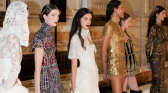
Zandra Rhodes was once considered too unconventional for fashion manufacturers to embrace. Decades later, the designer whose bold prints and theatrical clothes were worn by Princess Diana is seeing her creative process used to inspire students at De Montfort University Leicester (DMU), creating a full-circle moment for one of Britain's most distinctive fashion figures.
Rhodes' archive, spanning six decades from 1964 to 2025, is now being used as an educational resource for emerging designers. A major exhibition, Zandra Rhodes: Archive Unfolded, opened across the DMU campus on 25 September 2026, bringing together sketches, garments, press material and other pieces from her career while showcasing how her work is influencing students today.
From 'Too Extreme' to Princess Diana
Rhodes studied printed textile design at the Royal College of Art before establishing her own fashion studio. Early in her career, her striking textile designs were considered so unconventional that she struggled to find manufacturers willing to use them.
Rather than tone down her ideas, Rhodes took control of the process and began designing clothes specifically to showcase her textiles. DMU says her designs were considered 'so outrageous' that she initially found it difficult to find work, before establishing her own studio and launching her solo collections.
That decision ultimately became central to her success.
Rhodes went on to become known for vivid colours, dramatic prints and theatrical silhouettes. Her clients included Princess Diana, as well as musicians and entertainers such as Freddie Mercury and Marc Bolan.
The contrast between her early rejection and later success is now part of what makes her archive particularly valuable to students: it shows that a distinctive idea does not necessarily need to be made less ambitious to find an audience.
Princess Diana's Designer Opens Her Archive
Rhodes announced in 2023 that she would donate more than five decades of archive material to DMU after receiving an Honorary Doctor of Arts from the university. Her collection has since expanded into a major resource covering her career from 1964 to 2025.
The archive contains thousands of objects, including licensed work, press cuttings, film, opera material and colour transparencies. The new exhibition also explores her collaborations with brands including IKEA, Topshop and Marks & Spencer.
Rhodes said she wanted the material to be used rather than remain in storage, explaining that she hoped it would help inspire 'the creative minds of today and tomorrow'.
That educational purpose is now visible across DMU, where student responses to the archive are included alongside the exhibition.
Students Can See How Rhodes Designed
Rather than treating Rhodes' clothes simply as finished fashion pieces, DMU is using the archive to expose the stages behind them.
At DMU Museum, the Autumn/Winter 1983 Mediæval Collection is presented through its development from historical research and sketches to finished garments and the runway. At Leicester Gallery, a process table examines Rhodes' design methods, while silk screens, show posters and other material provide further insight into her working practice.
That approach allows students to see the experimentation behind a collection, including the revisions and decisions that are normally invisible once a garment reaches a catwalk or fashion photograph.
The archive is already embedded into teaching across art, fashion and design subjects, according to DMU's Head of Special Collections Katherine Short. She said students can handle original sketches and follow their development through to finished garments.


Rhodes' Legacy Is Inspiring New Designers
The archive's influence extends beyond fashion design.
DMU's creative courses cover areas including footwear, textile design, fashion communication, interior design and fashion marketing. The university has also demonstrated how its students can translate creative ideas into industry-facing work, with Rhodes attending its Contour Fashion Show in 2024 and praising the standard of student collections.
For students, studying an archive created by a designer who worked without today's digital tools also offers a tangible connection with the history of fashion practice.
Rhodes herself has described being one of the last 'physical designers', with much of her work created by hand. Her archive preserves not only the finished garments but also evidence of the drawing, experimentation and physical processes behind them.
From Rejection to Fashion Education
Rhodes' journey gives the archive significance beyond celebrity or nostalgia.
The designer who once struggled to convince manufacturers to embrace her unconventional prints eventually created a visual identity that became instantly recognisable. Her designs reached royalty, music icons and international audiences, while collaborations with brands such as IKEA and Marks & Spencer expanded her influence beyond traditional fashion.
Now, the same creative process is placed directly in front of students beginning their own careers.
For Rhodes, that means the work that once seemed too extreme is no longer simply part of fashion history. At DMU, it has become a working source of inspiration for the designers who will help shape what British fashion looks like next.