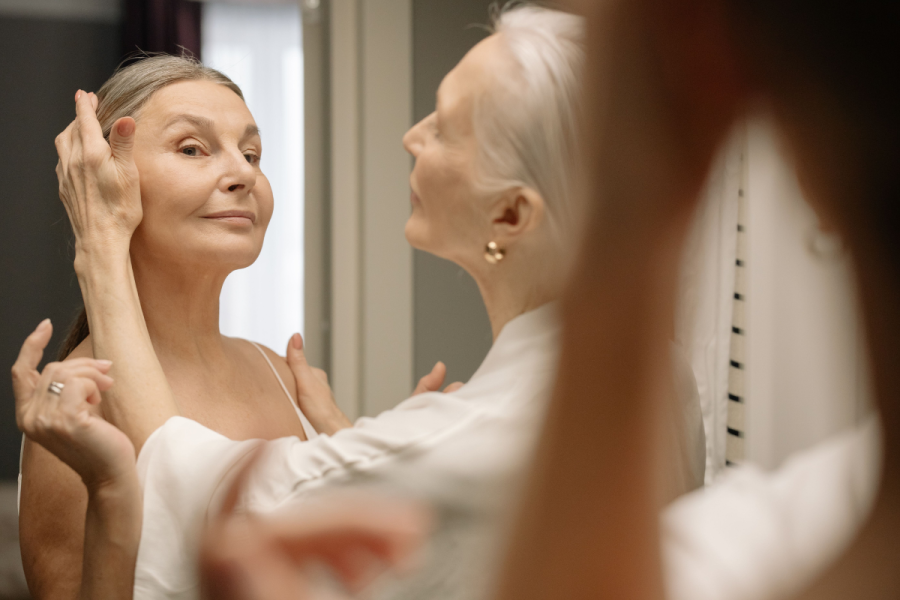
Older women are not disappearing from society, but a debate over Botox, fillers and facelifts is raising an uncomfortable question: are women being pressured to look younger to remain visible?
That concern was voiced in a Reddit discussion linked to a recent Slate article about cosmetic procedures and feminism. One commenter put it bluntly: 'Can we talk about how this contributes to the disappearance and erasure of older women in society? We just aren't supposed to exist as old in public, I guess.'
The remark goes beyond surgery. It challenges a culture in which wrinkles, grey hair and changing features can be treated as problems to conceal, while youth remains the preferred beauty ideal.
That debate gained relevance after Rosie O'Donnell, 64, revealed in May that she had undergone a lower deep plane facelift in January, despite previously viewing facelifts as a betrayal of feminism and ageing. After losing more than 50-lbs, she said she struggled with changes to her face and eventually decided that refusing surgery could become another form of pressure. She said women should be free to change their appearance without losing autonomy.
When Ageing Becomes Something To Hide
O'Donnell's experience exposes the contradiction. A woman can be criticised for altering her appearance, yet also feel judged for ageing naturally.
She said her weight loss changed her face dramatically, prompting her to question whether accepting those changes was genuine. She eventually chose surgery after months of considering the decision, describing her aim as remaining herself rather than becoming unrecognisable.
That tension mirrors the Reddit discussion, where commenters questioned editing women's faces and the expectation that older women should minimise visible signs of age.
One commenter argued that the pressure can extend into professional life, suggesting women may be judged by employers and others based on whether they conform to a particular aesthetic. Another pointed to class, arguing that cosmetic procedures can create pressure for women who cannot afford them.
The concern is not every woman who has Botox or surgery is coerced. It is that the standard can become so normalised that looking your age feels like failing.
Is Looking Young Becoming a Requirement?
Another Reddit commenter offered a more personal explanation for why some women may pursue increasingly drastic measures: 'I guess those that feel that their attractiveness is their primary attribute fear it's loss/decline more steeply and will take drastic steps in the belief that they can hold back the tide of aging.'
It is one person's interpretation, but it raises a question about how women are taught to measure their value. If attractiveness is treated as a major source of social worth, losing the appearance of youth can feel like losing status, confidence or identity.
Yet there is an important distinction between challenging that pressure and judging women who respond to it. O'Donnell's story illustrates the complexity. Her decision was not about chasing youth. She described wanting to remain herself while having the freedom to decide what happened to her own face.
That may be the real issue behind the accusation of 'erasure'. Older women do not need to look younger to deserve visibility. Nor should women who choose cosmetic procedures be condemned for making that choice.
The challenge is creating a culture where both can exist: a woman can smooth a wrinkle if she wants to, but can also show every sign of her age without feeling less worthy of being seen.