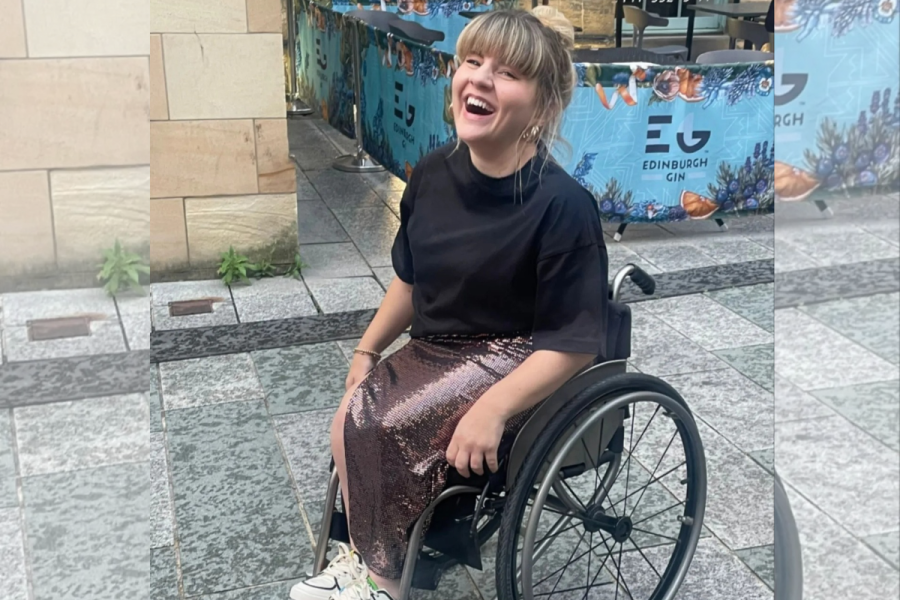
British actress Ruth Madeley is using her latest screen role to challenge assumptions about disability, sexuality and independence. In Being Heumann, she portrays American disability rights activist Judy Heumann, whose fight for equal access helped reshape the lives of disabled people. But the film also looks beyond Heumann's public achievements, presenting her as a woman with relationships, desires, humour and a personality that cannot be reduced to her disability.
Speaking to a media outlet in an interview published on 13 November 2026, Madeley discussed why it mattered to show Heumann's intimate life, how her own experience of spina bifida informed the performance, and why fashion and beauty brands need to consider disabled consumers. Her message is clear: disabled people should be represented as whole individuals, not treated as fragile or defined by other people's expectations.
Challenging Stereotypes Through Sexuality
Directed by Siân Heder, Being Heumann revisits the 1977 occupation of a federal building in San Francisco, where disability rights activists staged a 28-day protest demanding enforcement of Section 504 of the Rehabilitation Act of 1973.
The film also explores Judy Heumann's relationship with activist Jim Pechin, played by Jon Beavers, including an intimate scene that highlights her sexuality and independence.
'I loved the fact that there [are] so many shifts within that scene when it comes to power,' Madeley said, noting that Heumann initiates intimacy rather than being portrayed as vulnerable or dependent on her non-disabled partner.
The film also hints at Heumann's possible exploration of her sexuality without assigning her a definitive label, reflecting the social attitudes of the time.


Bringing Judy Heumann's Physicality to Screen
Madeley, who has spina bifida, said she and Heumann had different experiences of mobility. Madeley uses a lightweight manual wheelchair and can stand and use steps, while Heumann relied on a powered wheelchair and required more assistance.
Capturing Heumann's movement was an important part of the role. Madeley wanted to show the activist's independence when navigating the world in her chair, as well as the practical barriers she faced when she needed personal assistance.
She also highlighted a scene in which Heumann objects after Pechin moves her wheelchair. For Heumann, the chair was not simply equipment; it was central to her freedom and independence.
Madeley said learning to communicate her own access needs has also changed her working life. She explained that when accessibility arrangements are in place, she can focus on acting rather than pushing herself through avoidable physical difficulties. She also spoke about living with chronic pain, which has become more significant during her career.
Why Fashion and Beauty Need To Be More Inclusive
The conversation also moved beyond the film to the fashion and beauty industries. Madeley said Heumann loved clothes, and costume designer Danny Glicker researched the fabrics and patterns of the activist's original wardrobe to recreate her style.
Madeley enjoys using red-carpet appearances to highlight adaptive fashion labels, but believes accessibility should extend to beauty products, too. She pointed to practical details that can make everyday routines easier: square-shaped containers that do not roll off a table, larger handles that are easier to grip, and fragrance-free products for people with sensitivities.
These design choices may appear small, but they can make products more usable for people with different access needs. They also show why inclusive design should be considered from the beginning, rather than treated as an afterthought.
'Disabled' Is Not a Dirty Word
Madeley also addressed the language used around disability, noting that preferences differ from person to person. Some people prefer 'disabled person', while others choose 'person with a disability'. She believes listening to individuals and understanding context are more important than assuming one term suits everyone.
She also discussed reclaimed language within the disability community, explaining that words with a painful history can be used differently by people who identify with that community. Her central point was that 'disabled' is not an insult.
Through Being Heumann, Madeley brings attention to a disability rights pioneer while challenging the limited roles often offered to disabled characters. The film premiered on Apple TV on 13 November 2026. For Madeley, meaningful representation means showing disabled people as fully rounded individuals, with agency, relationships, style and the right to define themselves.