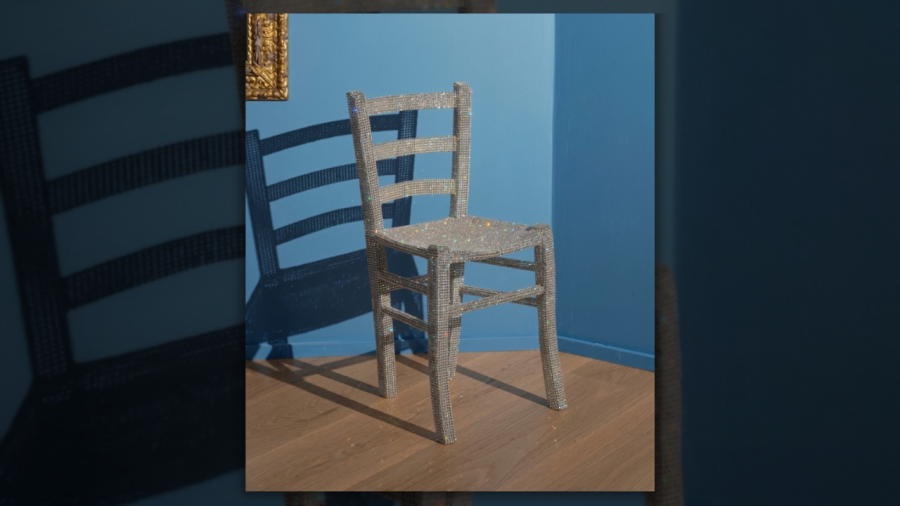
A tourist damaged a delicate, crystal-covered sculpture inspired by Vincent van Gogh's famous chair painting after attempting to sit on it at an Italian museum. The incident at Palazzo Maffei in Verona was captured on CCTV, showing the artwork collapsing beneath the visitor as his female companion appeared to prepare to take a photograph.
Created by Italian artist Nicola Bolla, the sculpture was covered in hundreds of Swarovski crystals and displayed on a pedestal with a warning asking visitors not to touch it. The artwork was subsequently restored, while footage of the incident sparked discussion about visitor behaviour and the measures museums can take to protect fragile exhibits.
The Moment the Chair Collapsed
The incident occurred in April 2025, while the museum released the CCTV footage in June 2025. The footage showed a male tourist attempting to sit on the sculpture as his female companion appeared to prepare to take a photograph, before the chair's seat and front legs buckled beneath him.
The pair were seen leaving the area after the artwork collapsed, according to reports. Their identities were not publicly disclosed, and the museum used the incident to highlight the importance of respecting artworks rather than treating museum exhibits as ordinary household objects.
A Chair Covered in Crystals
Bolla created Van Gogh's Chair between 2006 and 2007 as a contemporary interpretation of the Dutch painter's celebrated 1888 work of the same name. While van Gogh's original painting depicts a simple wooden chair on a tiled floor, Bolla's sculpture transforms the familiar design into a glittering installation.
Hundreds of Swarovski crystals give the sculpture its distinctive appearance, but its resemblance to everyday furniture does not make it suitable for sitting on. Its placement within an art exhibition, alongside a warning against touching it, indicated that the piece was intended to be admired rather than used as a functional chair.
The Museum Faces Criticism
The incident raised questions about whether fragile artworks displayed within visitors' reach need additional protection. Some online reactions reportedly focused on the museum's arrangements, although individual comments should not be treated as evidence of widespread public opinion or proof that the institution had breached any safety requirements.
Comment
by u/Separate_Finance_183 from discussion
in interesting
Museums must balance accessibility with the need to preserve delicate objects, particularly when an installation resembles something visitors might ordinarily handle. However, without verified evidence about the museum's specific safety procedures, it would be premature to conclude that its display arrangements were inadequate.
Comment
by u/Separate_Finance_183 from discussion
in interesting


Visitors Face Their Own Blame
The incident also highlighted the responsibility visitors have to respect exhibition rules and avoid touching artworks without permission. A warning against touching the sculpture was reportedly displayed nearby, making the distinction between an exhibit and an ordinary chair particularly relevant.
At the same time, the available footage does not establish every detail of the visitors' intentions or the museum's internal safety decisions. The incident illustrates how visitor responsibility and exhibition protection can both matter when preventing accidental damage to valuable cultural objects.
Jokes Turn Damage Into Art
The incident also became a talking point about the unpredictable relationship between art, accidents and public interpretation. Some online reactions reportedly treated the broken sculpture as an opportunity for conceptual-art humour.
Comment
by u/Separate_Finance_183 from discussion
in interesting
There is no established evidence that the damage was planned or that the sculpture became more valuable afterwards. Such interpretations remain speculation, rather than facts about the artist's intentions or the artwork's market value.
Comment
by u/Separate_Finance_183 from discussion
in interesting
The Artwork Gets Restored
Palazzo Maffei described the incident as a museum's nightmare and used the footage to encourage greater awareness of the need to respect artworks. The museum's message emphasised the importance of preserving cultural objects so that future visitors can continue to appreciate them.
The sculpture was subsequently restored and returned to display, according to reports about the incident. Whether additional physical protection was installed afterwards remains unverified. Ultimately, the incident serves as a reminder that even an object resembling familiar household furniture can be a fragile work of art, and that respecting exhibition rules helps protect it from avoidable damage.