Adidas is defending a campaign that people are interpreting in two very different ways: one perspective sees it as a genuine initiative supporting disability awareness, while the other views it as a problematic choice that features an IDF veteran as a symbol of amputation, overshadowing the plight of amputees in Gaza. The sportswear giant has issued an apology, but the controversy continues to escalate.
The backlash came quickly. Spanish actor Javier Bardem urged his millions of followers to abandon their Adidas trainers, accusing the brand of 'helping child killers get back on their feet'. While Adidas intended to showcase a useful accessibility service, it instead learned how swiftly good intentions can be overshadowed by geopolitics.
Who Is Shalev Biton? The Veteran at the Centre of the Storm
Shalev Biton lost his left leg in May 2021, after an anti-tank missile fired from Gaza struck his military vehicle during an earlier operation more than two years before the current war began. He was among a group of disabled athletes featured across posters and videos in Adidas stores in Israel, promoting the brand's Single Shoe service, which lets amputees buy one shoe instead of a full pair at half the price.
The images spread with the wrong story attached anyway: posts drawing millions of views falsely claimed Biton had been wounded fighting in the present conflict, and some accused him of participating in 'genocide'.
ADIDAS launches “SINGLE-SHOE SERVICE" for Israeli soldiers who lost a foot in Gaza.
— The Resonance (@Partisan_12) September 3, 2026
Boycotting is the least we can do. pic.twitter.com/0MkbKS4KUD
Why the Single Shoe Campaign Split Audiences
The scheme itself looks like a genuinely useful idea. It launched across 23 European countries in January, built with disability organisations including the British Paralympic Association, long before Biton fronted its Israeli leg.
Adidas says the service was never designed around any single country and continues expanding across the UAE, Palestine, Lebanon, Saudi Arabia, Kuwait, Qatar and Egypt.
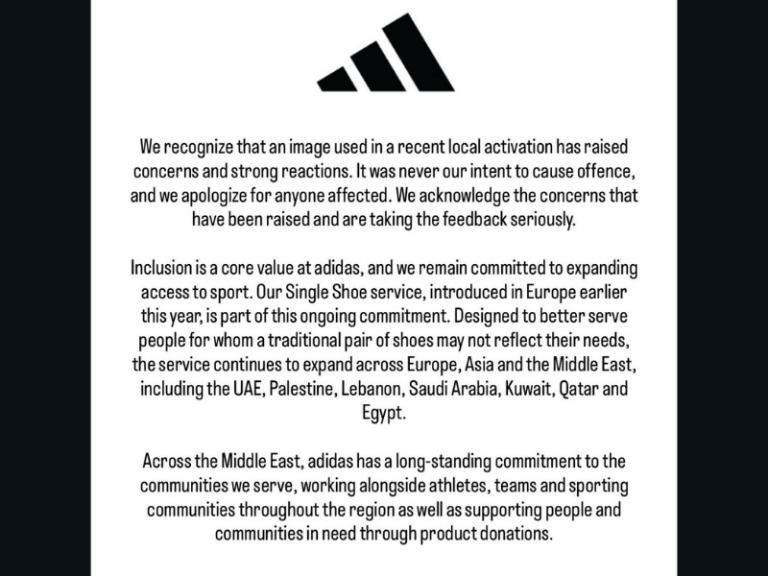
Critics say the timing is the whole problem. Gaza has one of the highest rates of child amputation in the world, and pro-Palestinian campaigners argue an Israeli veteran front and centre was always going to land badly.
Some commentators, such as Hen Mazzig, have pushed back against the boycott, arguing that access to sports should not depend on where an amputee served or which side they were on. Biton says the controversy has led to a surge of abuse directed at his social media accounts.
When a Local Ad Becomes an International Crisis
The posters never ran outside Israel, but that barely mattered once the screenshots started circulating. A local activation no longer stays local, and Adidas has had to apologise to an audience it never intended to reach.
This isn't the brand's first stumble in the region. In 2024, Adidas dropped Palestinian-American model Bella Hadid from a Munich Olympics campaign due to criticism from Israeli sources.
The company later apologised, calling it an 'unintentional mistake'. These two incidents in two years show the brand is still learning to navigate a region where casting decisions are seen as political statements.
Adidas has issued an apology to Bella Hadid for dropping her from shoe ad criticized by Israel. pic.twitter.com/KQJyVymg1r
— Pop Crave (@PopCrave) July 27, 2024
Adidas said it would 'continue to listen, learn and work to ensure that our actions reflect the inclusive values we stand for'.
Disability campaigners are questioning if an amputee can be depicted without it becoming political. Boycott organisers are wondering whether the apology is sufficient, or if pressure needs to continue until it impacts Adidas significantly.