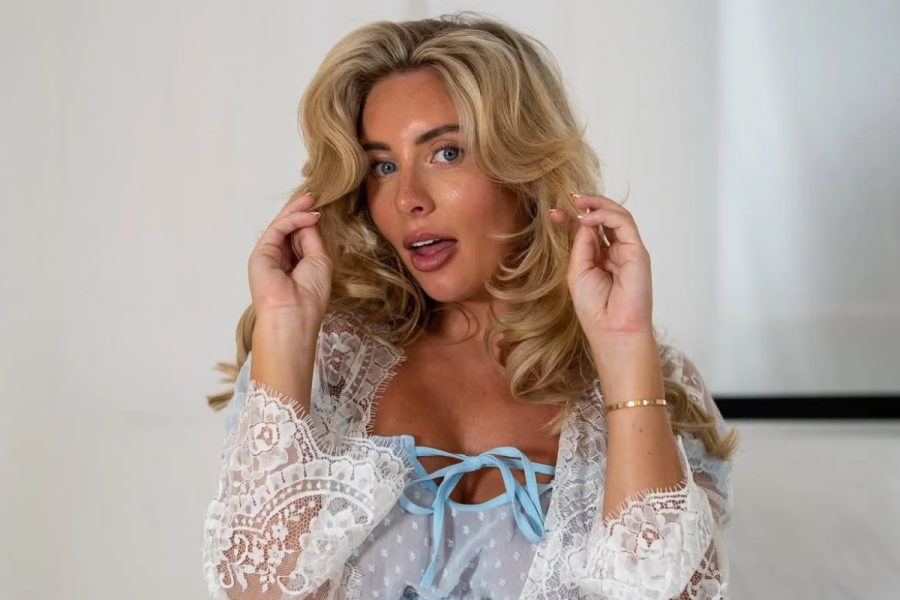
Bonnie Blue says her newborn will be named after BetBolt, an online crypto betting brand, after a stranger paid £1.2 million for the privilege of choosing her son's name. The adult content creator ran the whole thing as a public auction, and she says she'd happily do it all over again for the right price.
But strip away the shock value, and there's a genuine argument underneath it. Should a parent be allowed to turn a child's name into a piece of branding when that child has no say in the matter, and should the law step in, if at all?
Is the £1.2m Baby-Name Auction Even Real?
So far, the only source for any of this is Blue herself. She's the one who announced the winning bid, the £1.2 million figure, and that BetBolt beat out other contenders, including Group Project and Top G.
Nobody outside her social media has confirmed that the money changed hands or that BetBolt, as a company, had any real involvement beyond having its name attached. Blue has said she's due at the Westminster Register Office to make the name official, though whether that's happened yet is anyone's guess.
What UK Law Says About Baby Names
There's no real rulebook stopping this. Parents in England and Wales just have to give their child a name when they register the birth, and there's nothing in place specifically banning names linked to companies or brands.
Registrars have occasionally pushed back on names that are offensive or simply can't be written down properly, but a betting brand doesn't obviously fall into either category. Nobody quite knows whether BetBolt would sail through or hit a wall, because a case like this has never really come up before.


Is This a Child Protection Issue?
This isn't the first time Blue's approach to motherhood has landed her in hot water. Tory MP Joy Morrissey reported her to the National Society for the Prevention of Cruelty to Children over an earlier video showing Blue with her baby surrounded by masked men from her adult shoots, and Kemi Badenoch branded the footage a safeguarding concern.
Child protection lawyer Nieki Shaw has gone further, suggesting the naming auction itself could count as emotional abuse. However, nothing so far suggests any authority has actually found Blue's son to be at risk.
Child services needs to get involved here
— Endo🐻 (@EndoFrmTwt11) September 22, 2026
It should be illegal for Pornstars to have kids man
— Hooyo Mataalo (@Atom10f1) September 22, 2026
Still, the calls to ban adult performers from having children entirely feel like they're missing the point. The real issue isn't Blue's job. It's whether a baby's identity should be up for sale before it can even hold its head up.
Why Is This Worse Than Sponsored Family Content?
Blue's hardly the first parent to cash in on her child. Family influencers do it constantly through sponsored posts and brand deals, usually without a fraction of this backlash, and a name can always be changed down the line.
But a sponsored Instagram post eventually disappears from the feed, whereas a name doesn't. It ends up on school registers, medical records and job applications for the rest of that child's life, which is arguably a much stickier kind of branding than anything a typical mummy vlogger signs up for.
What Happens Next for Baby BetBolt?
Right now, this is still very much Blue's story to tell, and nobody else has confirmed the money or the paperwork behind it. If BetBolt does end up on a birth certificate, though, the conversation stops being about a tasteless stunt and starts being about something far trickier: whether a child's name is really a parent's to sell.