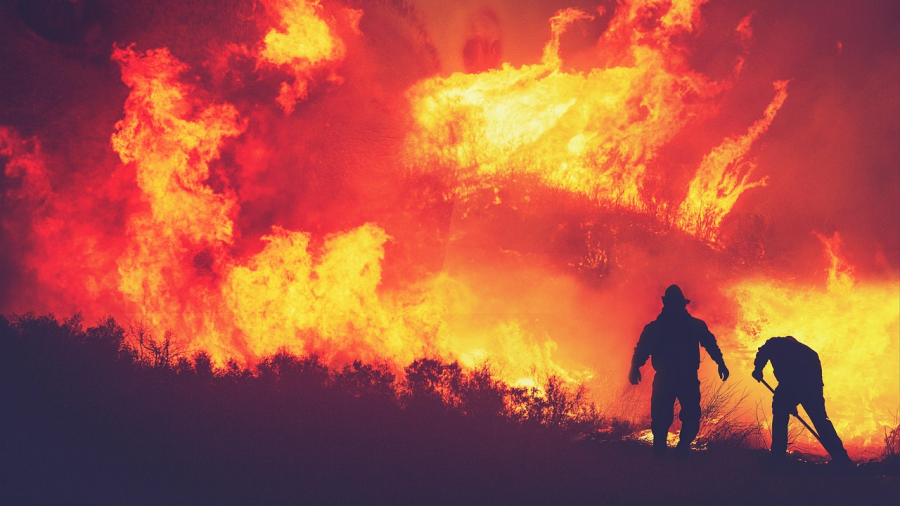
Smoke drifting from Canada's massive wildfire outbreak is once again turning skies hazy across parts of the United States, with air quality alerts issued across several states as pollution spreads from the Midwest to the Northeast. But while the smoky skies are impossible to miss, experts say the biggest danger may actually be the tiny particles floating in the air that people cannot see.
Researchers have warned that wildfire smoke may be up to 10 times more toxic than normal air pollution because of the harmful fine particles it carries. Those microscopic pollutants can travel deep into the lungs and even enter the bloodstream, raising fresh concerns as hundreds of Canadian wildfires continue to burn and smoke lingers over millions of people.
Smoke Spreads Across the Border
The latest wave of smoke comes from hundreds of active wildfires burning across Canada. More than 800 fires were listed nationwide, with 188 described as out of control, allowing thick plumes of smoke to travel hundreds of miles into the United States.
Air quality advisories were issued across New York, New Jersey, Massachusetts, Wisconsin, Michigan and Minnesota after smoke settled over the region. Residents reported hazy skies, reduced visibility and the unmistakable smell of burning wood as pollution levels rose throughout the day.
Meteorologists said a persistent heat dome has made the situation worse by trapping smoke close to the ground instead of allowing it to disperse into the atmosphere. While officials stressed conditions remain below the record pollution levels seen during Canada's 2023 wildfire crisis, they warned that smoke levels could change quickly depending on shifting winds.
Why Wildfire Smoke Is More Dangerous
Jessica Yu, a research scientist at Stanford University, explained that fine particulate matter known as PM2.5 can travel deep into the lungs before entering the bloodstream. Once inside the body, these tiny particles may affect several organs, including the heart and nervous system.
Her colleague, Lisa Patel, estimated that wildfire smoke could be '10 times as toxic' as typical air pollution. That estimate has attracted widespread attention as smoke continues spreading across North America. Unlike everyday pollution from traffic or industry, wildfire smoke contains a complex mix of gases, ash and microscopic particles created by burning forests and vegetation.
Officials Warn Everyone Is at Risk
Canadian authorities warned that heavy smoke conditions can affect everyone, regardless of age or existing health conditions. Environment Canada rated air quality in parts of Ontario at 10+, classified as 'very high risk', while warning that poor air quality and reduced visibility could continue for several days.
People with asthma, heart disease, chronic lung conditions, older adults, children and pregnant women remain the most vulnerable. However, even healthy people may experience coughing, sore throats, headaches, dizziness, shortness of breath and fatigue after prolonged exposure. Outdoor workers and anyone spending long periods outside also face a greater risk.
One City Recorded Exceptionally Poor Air Quality
Some locations have experienced particularly severe conditions. Duluth, Minnesota, recorded an Air Quality Index of 902, placing it among the worst air quality readings in the country. Any AQI above 100 is considered unhealthy.
Meanwhile, a resident in Woodstock, Ontario described the thick haze as 'otherworldly' after sharing footage showing smoke blanketing the town. The video quickly highlighted just how dramatic conditions have become near some of the affected areas.
Now don’t get me wrong, I do love me a campfire but this is otherworldly! Wow! Can’t imagine what this is like up where the fires are burning. #shareyourweather #onwx @weathernetwork @IWeatherON @StormhunterTWN @1Weathercanada @weatherchannel @TheWeatherNetUS @ThatMetGirl pic.twitter.com/58VqGlDMYK
— Mike 🥃 (@MikeWil32606343) July 15, 2026
How To Stay Safe From Wildfire Smoke
Experts recommend avoiding unnecessary outdoor activities, especially exercise, and checking local air quality forecasts before leaving home. If going outside is unavoidable, a properly fitted N95 or KN95 respirator offers far better protection than a standard surgical mask.
Indoors, residents are advised to keep windows and doors closed, use air conditioning on recirculation mode and run an air purifier where possible. Officials also recommend creating a 'clean room' inside the home where smoke exposure can be kept to a minimum.
With weather patterns expected to keep pushing smoke across parts of the United States over the coming days, authorities say staying informed and limiting exposure remain the simplest and most effective ways to reduce the health risks.