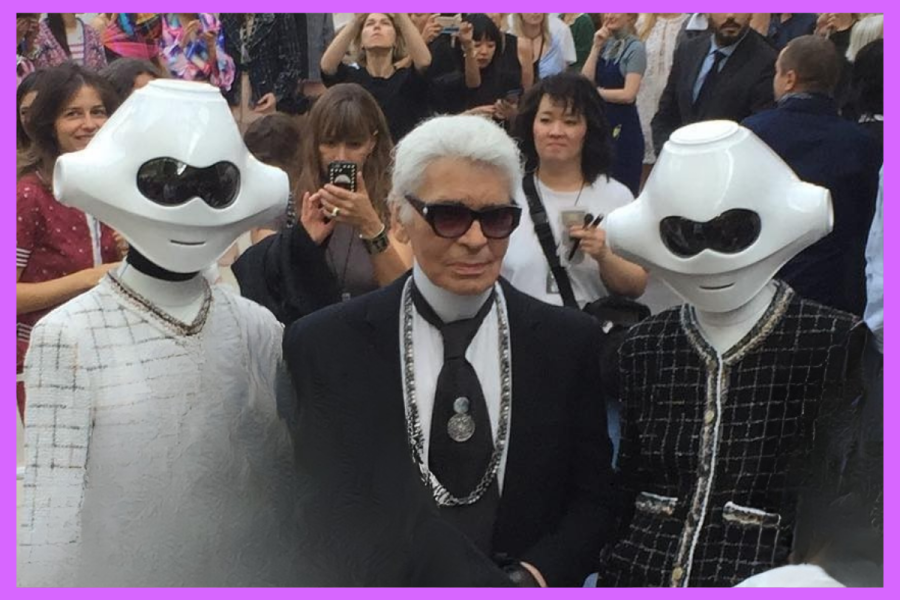
A Chanel runway filled with server racks, flashing lights and robot-like models is going viral again almost ten years after Karl Lagerfeld sent it down the catwalk. The Spring/Summer 2017 ready-to-wear show turned Paris's Grand Palais into a huge digital world at a time when data centres were still mostly hidden behind the internet.
Now, pictures from the show have returned to social media with a very different message, as one viral post declared, 'you couldn't do this kind of thing today, they'd cancel you'. The claim may be an exaggeration, but the reaction shows how differently Lagerfeld's futuristic runway can be read in 2026.
From Grand Palais Into a Data Centre
On 4 October 2016, guests arriving at Chanel's Paris Fashion Week show found themselves surrounded by giant computer units instead of a normal runway set. Colourful cables, blinking equipment and rows of machines filled the Grand Palais, creating what became known as 'Data Center Chanel'.
The show began with two women dressed like robots, complete with white masks, gloves and boots over classic Chanel-style tweed. Arizona Muse then became the first model without the robot look to walk through the set, followed by names including Soo Joo Park, Taylor Hill and Lindsey Wixson.
Lagerfeld was not simply putting computers behind models because they looked futuristic. Vogue reported that he described the collection with the line, 'This is technology. But with the lingerie, it's intimate technology!' as he mixed cold digital ideas with clothing that felt soft and personal.
Robots Met Classic Chanel Tweed
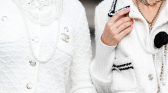
The contrast became the collection's main point, with Chanel's classic code placed inside a world of machines. Traditional tweed suits were filled with bright colour, while silk dresses, lace, plastic details and computer-like prints appeared beside them.
Even the accessories joined the digital theme, with robot-shaped handbags and bags that appeared to light up. Vogue also noted that computer wiring was worked into the look of Chanel's famous bouclé tweeds, giving the house's old design language a strange new setting.
At the same time, Lagerfeld kept the show playful instead of making it look like a serious science project. Models wore sideways baseball caps and side ponytails, while bright colours and soft lingerie pieces gave the collection a clear 1980s and 1990s feel beside the futuristic machines.
Why the Runway Feels More Provocative in 2026
In 2016, the data centre mostly stood for the hidden digital system changing the way people lived, shopped and communicated. The Guardian noted at the time that Lagerfeld focused on the huge and slightly unsettling power of server rooms rather than only the friendly phones people carried in their pockets.
Circuit-board tweeds, @Chanel #PFW pic.twitter.com/LkYbC7f8lR
— Vanessa Friedman (@VVFriedman) October 4, 2016
Ten years later, those machines carry much heavier meaning because of the huge growth of artificial intelligence. The International Energy Agency reported in April 2026 that electricity demand from data centres jumped 17% during 2025, with AI-focused facilities growing even faster, and it expects overall use to roughly double by 2030.
Data centres have also become political issues in some communities because of concerns about electricity prices, water use, pollution and new construction. That does not prove a fashion house would be attacked for using them as a runway theme, but it explains why the same images can create a much stronger reaction now than they did in 2016.
Lagerfeld Made Spectacle Part of Experience
The data centre was also part of a much bigger period when Lagerfeld treated Chanel shows almost like films or giant stage productions. During his years at the house, the Grand Palais was transformed into settings including a supermarket, an airport-style space, icy landscapes and other huge worlds built around a collection.
That approach made the background almost as important as the clothes, giving guests and viewers an image they could remember long after fashion week ended. Only months after the data centre show, Chanel went even bigger by placing a huge Chanel-branded rocket inside the Grand Palais for Autumn/Winter 2017 and lifting part of it into the air during the finale.
Seen from 2026, 'Data Center Chanel' feels like a snapshot of a fashion era willing to make its ideas huge, strange and impossible to ignore. Whether or not it would truly be 'cancelled' today is impossible to prove, but the fact that people are still arguing about the runway ten years later shows why Lagerfeld's biggest Chanel spectacles remain hard to forget.