
Argentine TikTok creator Keila Rodríguez is back at the centre of an online debate after a February 2026 video declaring that poor people should not have children began circulating widely on Reddit this week.
In the Spanish-language clip, Rodríguez argued that parents who cannot meet their own basic needs should not bring children into the same circumstances, turning a blunt take on financial planning into a much bigger conversation about poverty, parenthood and who gets to decide when someone is 'ready' for a family.
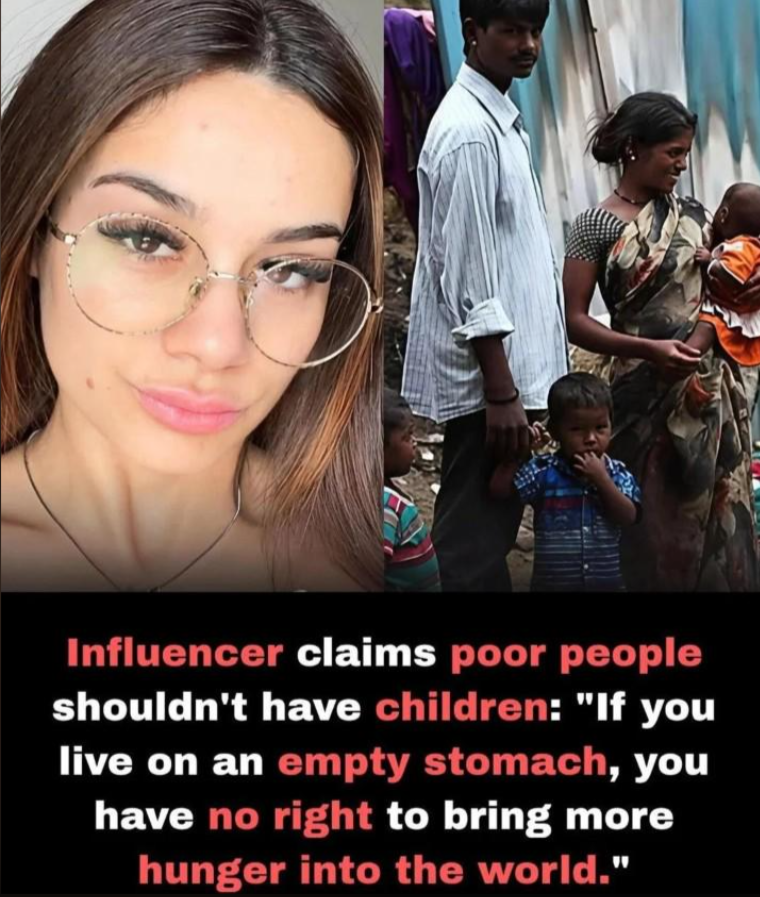
Rodríguez did not frame her argument around expensive schools, holidays or designer baby gear. In the widely shared clip, she said, translated from Spanish, 'Poor people shouldn't have children. If you live with an empty stomach, you have no right to bring more hunger into the world.'
She later pointed to milk, nappies, clothes and schooling as unavoidable costs, saying: 'A baby, at minimum, needs milk,' before arguing that the financial demands only grow as children get older.
Raising a Child Really Is Expensive
There is a factual basis for one part of Rodríguez's argument: children require significant resources, and those costs can be quantified. Argentina's national statistics agency, INDEC, estimated in June 2026 that raising a child cost between 529,539 and 678,308 Argentine pesos per month, depending on the child's age.
Its calculation includes both goods and services, such as food, clothing, housing, transport, education and healthcare, and the economic value of the time spent providing care.
@theshaderoom Awww new mom #KekePalmer took a moment to give praise and show love to the single parents out there after experiencing motherhood for the first time over the past few days. ❤️ #fyp #foryoupage #TheShadeRoom #BlackTikTok #Viral ♬ original sound - The Shade Room
Celebrities have also spoken about how economic pressures shape modern parenthood. Nope actress and Emmy winner Keke Palmer, who shares son Leodis with former partner Darius Jackson, addressed the reality of being a working parent in 2025.
'The reality is, if you got to work, you got to work,' Palmer said, adding that parents should not feel guilty about accepting help because 'it takes a village', particularly 'in this economy where everybody's got to go to work'.
Palmer's comments point to a distinction at the centre of the Rodríguez controversy. Financial stability can affect how families approach work, childcare and other necessities, but household circumstances can also change after a child is born.
The figures therefore establish that raising children carries substantial costs, not that a person's income at the time of conception can determine their ability to parent for the next 18 years.
Poverty Is Where the Argument Gets Complicated
The same official data also shows why turning financial planning into a blanket rule about who should reproduce raises a different question. INDEC reported that 28.2% of people in Argentina's surveyed urban areas lived below the poverty line during the second half of 2025, while 41.3% of children aged 14 and under lived in households below that threshold.
Applying Rodríguez's argument literally would therefore make income a condition of parenthood for a substantial section of the population, which is at the heart of the classism criticism surrounding the video.
There is another complication: pregnancy is not always the result of a fully planned decision. The United Nations Population Fund estimates that nearly half of pregnancies worldwide are unintended, amounting to about 121 million each year, while 257 million women who want to avoid pregnancy are not using safe, modern contraception.
UNFPA Executive Director Dr. Natalia Kanem said the figure represents 'a global failure to uphold women and girls' basic human rights', highlighting how access to contraception, healthcare and reproductive autonomy complicates the idea that people can simply opt out of parenthood when money is tight.
The viral debate ultimately separates two claims that can easily get bundled together. Planning for the financial realities of raising a child is measurable and practical, but declaring that an entire economic group should not have children goes beyond budgeting advice and into questions about reproductive rights and inequality.