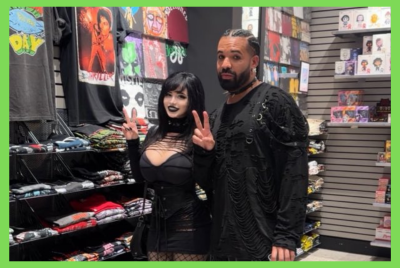
A sign inside a small Nantucket gift shop has sparked a much bigger conversation about fashion, social media and the growing influence of digital creators. What may have been intended as a tongue-in-cheek message quickly became the centre of an online row after influencer and entrepreneur Paige Lorenze publicly challenged its meaning.
Lorenze, who recently married American tennis star Tommy Paul, accused Four Winds Craft Guild of undermining an industry dominated by women after spotting a sign inside the store reading 'No influencers'. Her response ignited debate across social media, with supporters praising her defence of the creator economy while others argued that independent retailers should be free to set their own rules.
Paige Lorenze Questions the Shop's Message
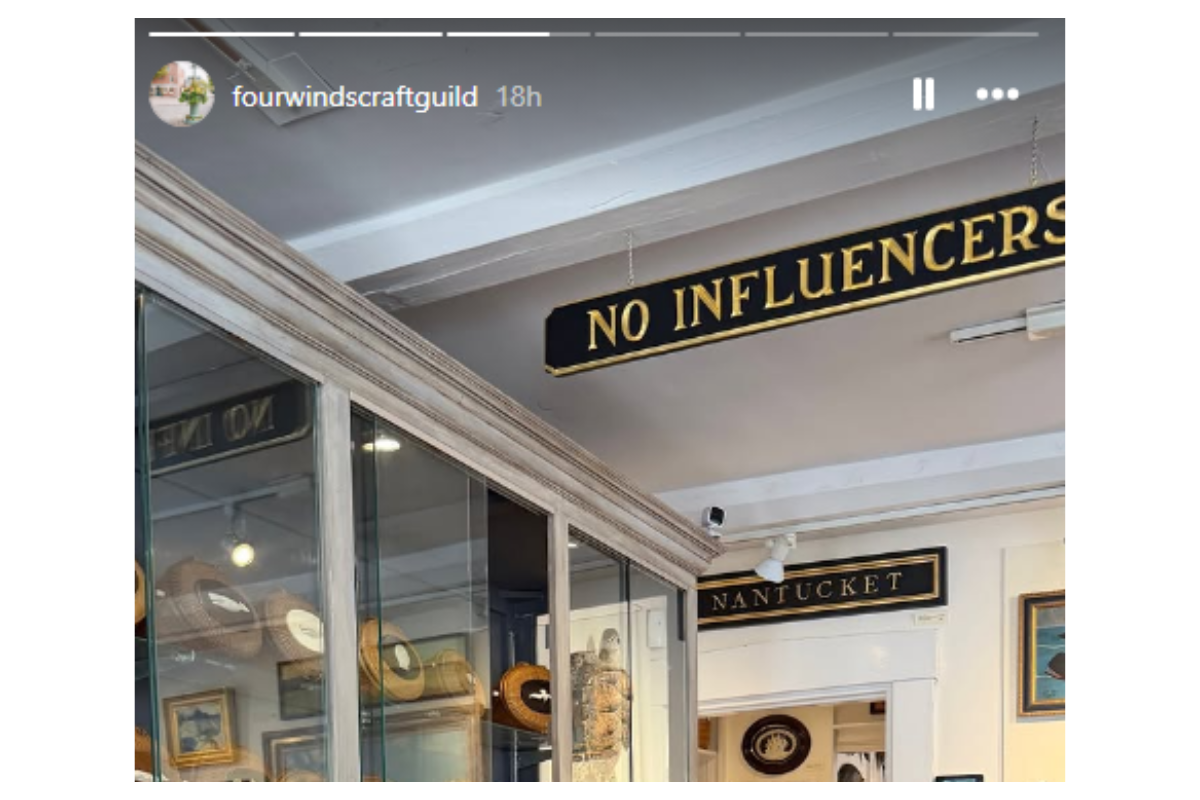
The controversy began when Four Winds Craft Guild, a Nantucket business established in 1948 and known for selling handcrafted baskets, artwork, purses and wood carvings, shared an Instagram post featuring the sign displayed inside its shop.
Rather than dismissing it as a joke, Lorenze interpreted the message as a broader criticism of women who have built successful careers through digital platforms.
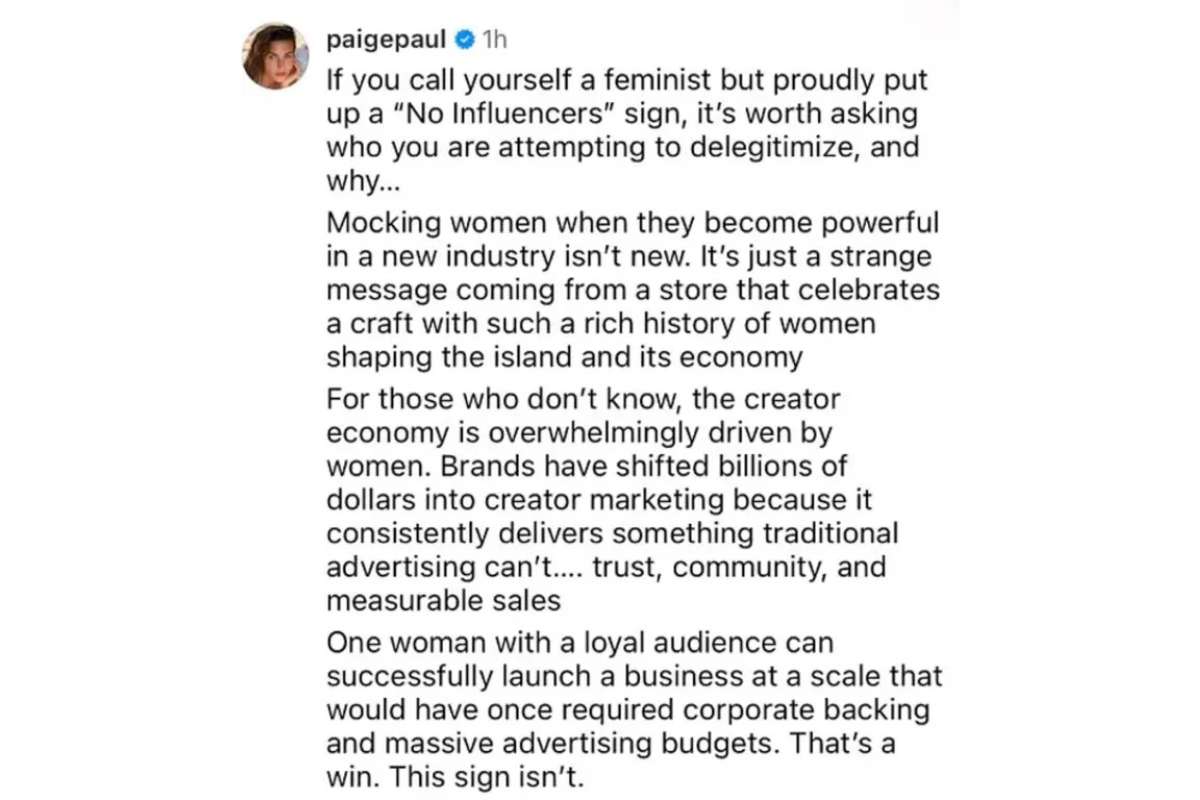
'If you call yourself a feminist but proudly put up a 'No Influencers' sign, it's worth asking who you are attempting to delegitimise, and why,' she wrote beneath the post.
She continued by arguing that attitudes towards female creators often mirror long-standing prejudices surrounding emerging industries.
'Mocking women when they become powerful in a new industry isn't new. It's just a strange message coming from a store that celebrates a craft with such a rich history of women shaping the island and its economy.'
Her remarks quickly spread beyond Instagram, prompting widespread discussion about whether influencer culture deserves greater respect or whether businesses should be able to discourage content creation on their premises.
Why Influencers Matter to Fashion
The disagreement also highlighted the growing importance of influencers within the fashion and retail industries.
Over the past decade, content creators have become a central part of luxury marketing strategies, helping brands launch collections, promote products and shape consumer trends through social media rather than relying solely on traditional advertising.
Lorenze pointed to that shift in her response, arguing that the creator economy is overwhelmingly driven by women and has transformed how businesses connect with customers.
'Brands have shifted billions of dollars into creator marketing because it consistently delivers something traditional advertising can't... trust, community, and measurable sales,' she wrote.
She added that one creator with a loyal audience can now build a successful business without the corporate backing once required to enter the fashion and lifestyle market. Those comments reflect Lorenze's own career. After establishing herself as a content creator, she launched her lifestyle label Dairy Boy in 2021, expanding her online platform into a recognised consumer brand.
Social Media Quickly Took Sides
As screenshots of Lorenze's comments circulated online, opinions quickly became divided.
Many users agreed that dismissing influencers overlooks the genuine businesses and careers many creators have built, particularly women who have successfully turned social media into entrepreneurial ventures.
Others defended Four Winds Craft Guild, arguing that small independent retailers are increasingly dealing with customers filming content inside shops without permission, potentially disrupting staff and other visitors. From that perspective, the sign was viewed less as an attack on influencers and more as a practical store policy presented with humour.
The debate highlighted the tension between traditional retail experiences and the growing expectation that shops double as social media backdrops.
Store Responds to the Backlash
Although the original Instagram post was later deleted, Four Winds Craft Guild addressed the controversy through its Instagram Stories. The business claimed its page had been reported following the online reaction and suggested critics had overreacted.
'Imagine being so bored with life that you spend your pastime trying to report a photo on IG that makes you feel uncomfortable,' the shop wrote before reposting an image of the same 'No influencers' sign.
The response indicated that the retailer had no intention of withdrawing its position, extending the debate beyond the original Instagram exchange. Neither Lorenze nor the business appeared willing to soften their stance, allowing the discussion to continue across social media.
More Than a Celebrity Disagreement
Although Lorenze's marriage to Tommy Paul attracted headlines earlier this month following their wedding at Old Westbury Gardens in New York, the dispute has drawn attention for reasons beyond celebrity.
The influencer has previously spoken about the way her personal style and business have evolved together, explaining that building a successful brand requires more than simply gaining followers.
'I feel like everything's gotten better in my life with age, including my style,' she previously said. 'As I've grown as a person, my brand has grown in tandem.'
She has also praised Hailey Bieber as an example of someone who combines influence with business success, noting that modern creators can shape industries as well as trends.
A Wider Debate About Modern Retail
The disagreement between Lorenze and Four Winds Craft Guild has become symbolic of a broader cultural shift affecting fashion and retail.
Influencers are now responsible for driving product launches, introducing emerging designers and generating significant online sales for brands of every size. At the same time, many independent businesses continue to wrestle with how social media changes the shopping experience inside physical stores.
Whether the Nantucket sign was intended as light-hearted humour or a genuine policy, it has sparked a far larger conversation about how influencer careers are perceived. For supporters, creators represent modern entrepreneurs who have reshaped marketing and fashion. For critics, retailers should still have the right to define the atmosphere inside their own businesses.
What began as a simple shop sign has ultimately become a talking point about the changing relationship between fashion, commerce and digital influence—one that is unlikely to disappear as creator culture continues to grow.