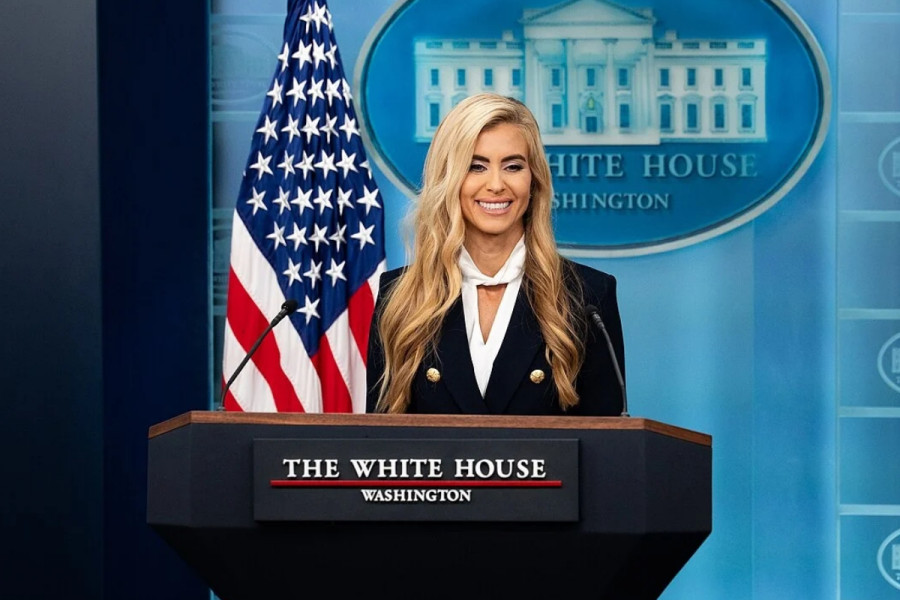
Former White House Press Secretary Katie Zacharia defended her demand for Jensen Huang's immediate return to NVIDIA, calling him 'valuable to our country' as critics questioned her judgement. Her intervention adds to a wider reinstatement campaign after NVIDIA announced an investigation on 8 November and Huang resigned four days later.
The former White House official defended her position after Polymarket posted on 13 November that she had demanded Huang's reinstatement 'immediately.' Replying the following day, she wrote: 'Yes, I did, because I understand how valuable @JensenHuang is to our country.'
Zacharia's Defence Draws a Mixed Response
In the reported exchange, Zacharia based her argument on Huang's importance to the United States and his contributions to the current AI race. Her response did not explain whether she believed NVIDIA should complete its investigation before considering his reinstatement.
Yes, I did, because I understand how valuable @JensenHuang is to our country. https://t.co/J2sPG3OcWY
— Katie Zacharia (@KatieZacharia) November 14, 2026
Her intervention came as NVIDIA began arranging a permanent succession, rather than announcing any agreement to restore him. The company's position and the campaign's demands remained distinct, despite support for Huang from prominent technology figures and investors.
Among the responses against Zacharia, @Texas_Charles told the former press secretary to 'step away from the billionaire fan club,' while @whocatrs28507 challenged her credibility by asking: 'Why would we listen'. Both comments criticised Zacharia personally, although the first directly addressed her support for Huang.
A supportive reply from @Clifford98506 read: 'Thank you. We need good people in their rightful position.'
Huang Petition Calls For Due Process
A 14 November report put the petition website's displayed count above 108,000 signatures by Saturday afternoon. Elon Musk and Replit chief executive Amjad Masad were among those promoting it.
A petition is underway to reinstate Jensen and I’m signing it too
— Elon Musk (@elonmusk) November 13, 2026
Organisers argued that Huang had been removed without meaningful due process and should remain chief executive while investigators established the facts, with the inquiry's scope and timetable disclosed. The displayed count had not been independently verified, and organisers acknowledged fake signatures that they were working to remove.
I also support the petition to immediately reinstate Jensen while awaiting the results of the independent investigation, but I thought this letter was a constructive starting place for dialogue with the board.
— Gavin Baker (@GavinSBaker) November 14, 2026
Nvidia Initially Expressed Confidence in Huang
In its 8 November statement, NVIDIA announced an independent investigation into reporting that Huang had been targeted by a foreign intelligence effort. Independent directors, assisted by outside independent counsel, would oversee the review, which Huang supported and committed to cooperating with.
The board said it had 'no reason to believe' national security or NVIDIA secrets had been compromised and expressed confidence in Huang and his leadership team. His resignation followed four days later, without an announcement that the inquiry had established an intelligence operation or a compromise of company secrets.



Huang's Admission and the Separate Allegations
Huang acknowledged being unfaithful to his wife in an apology reproduced in the reporting, saying his actions had hurt her and their children. Separately, the Associated Press said it could not independently confirm reports of an affair involving an NVIDIA executive who reported to him.
The New York Times identified former Megaspeed executive Alice Huang as Jensen Huang's mistress, and reported US intelligence suspicions that she might be a Chinese government spy. China denied the allegation, while Attorney General Todd Blanche said the Justice Department had not reached a conclusion.
Singapore investigated Alice Huang, Megaspeed and other companies over suspected false declarations involving server shipments, not espionage, AP reported. Authorities found insufficient evidence that she had committed offences but issued a stern warning and barred her return, actions that did not amount to a criminal conviction.
NVIDIA's 12 November announcement appointed Colette Kress interim chief executive while she retained her positions as executive vice president and chief financial officer, and Harvey C. Jones became the board's first chair. The board began considering internal and external candidates, with Jones expecting operations, customer commitments, and the product roadmap to continue without interruption.