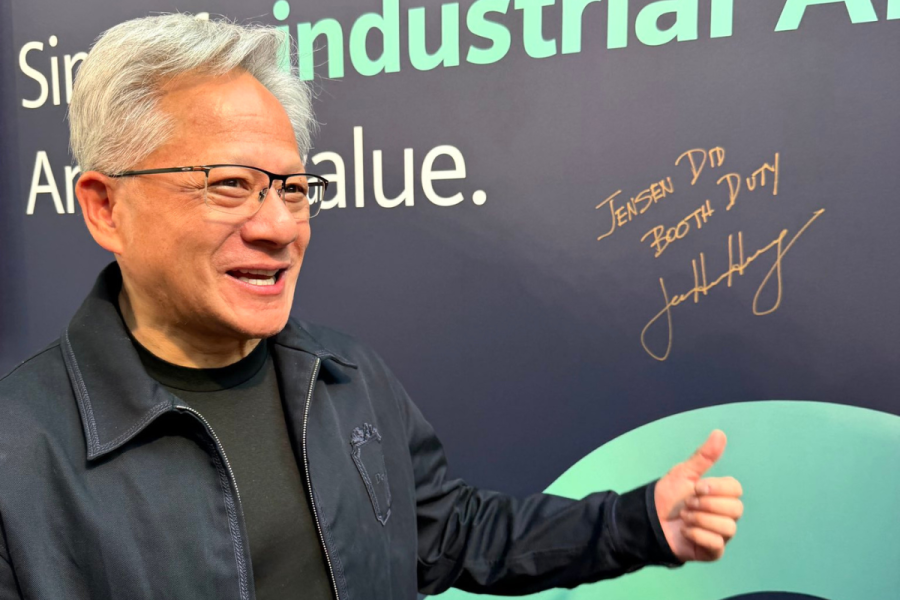
Donald Trump has defended Nvidia chief executive Jensen Huang after the technology billionaire admitted being unfaithful to his wife, saying he 'probably has an excuse'. The US President made the comments on Sunday, 8 November, after Nvidia announced an independent investigation into whether a foreign intelligence operation had targeted Huang.
The inquiry follows reports that he had a close relationship with Alice Huang, a Chinese businesswoman whom US intelligence reportedly suspected of passing information to Beijing. The two are not related. The remarks have drawn attention to Huang's personal life and the national security concerns surrounding his reported relationship with the Chinese businesswoman.
Trump's Response
'I think he's an honourable guy. I think he probably has an excuse for it. You have to hear it', Trump told reporters. He said he had not spoken to Huang about the allegations, but praised his contribution to the United States, saying he had done an 'amazing job for our country'. Asked whether he would take the Nvidia chief on his trip to Asia, Trump replied: 'I don't know, but I'd certainly take him'.
Trump's remarks suggest he continues to have confidence in Huang despite the controversy surrounding the Nvidia chief. His public support comes as the company's board begins examining the reported intelligence concerns.


Huang's Admission and Apology
In a message to Nvidia employees on Sunday, Huang acknowledged being unfaithful to his wife and apologised to his family, colleagues and business partners. 'I was unfaithful to my wife. My actions hurt her and our children. There is no excuse for what I did. I am deeply sorry', he wrote, according to reports.
Huang said he took responsibility for the harm caused and hoped his family would eventually rebuild trust. His message did not name Alice Huang, but followed reports about their relationship. He had previously described their interactions as normal business dealings.
Why Nvidia Launched an Investigation
Nvidia's board said it was initiating an independent investigation 'in light of recent reporting' that its founder and chief executive had been the target of a foreign intelligence effort. A committee of independent directors, supported by outside legal counsel, will examine the available information.
The board said it had 'no reason to believe' national security or Nvidia secrets had been compromised, adding that Huang supported the review and would co-operate fully. The New York Times reported that US intelligence agencies believed Alice Huang had developed a close relationship with the Nvidia chief while seeking information for Beijing.
Further reports said she was suspected of working for China's Ministry of State Security. The claims have not been established in court, and China's embassy has rejected the spying allegations as groundless speculation.
Alice Huang was previously an executive at Megaspeed, a Singapore-based data centre company and Nvidia customer. The company has also drawn scrutiny over concerns that Chinese buyers may have received advanced Nvidia chips despite US export restrictions. Singapore authorities have said a police investigation into Megaspeed is ongoing, but have not confirmed the separate intelligence allegations against Alice Huang.
黄仁勋和情人Alice Huang更多照片首次曝光 https://t.co/2zOmMkOBcm
— 大厂白洁 (@santoulang) November 9, 2026
Political and Business Fallout
The controversy has intensified scrutiny of Nvidia's role in the US-China technology rivalry. Its advanced processors are central to artificial intelligence development, while Huang has become an influential voice in Washington's debate over restrictions on chip sales to China.
Republican members of the House have called for Huang to brief Congress on the reported relationship and Nvidia's security procedures, with a request reportedly targeting 18 November. For now, Huang remains chief executive.
Nvidia's board says it has confidence in him and his leadership team, but the investigation must establish whether he was deliberately targeted, whether confidential information was exposed and whether export controls were breached. Until those questions are answered, the allegations remain under examination, not proven findings.