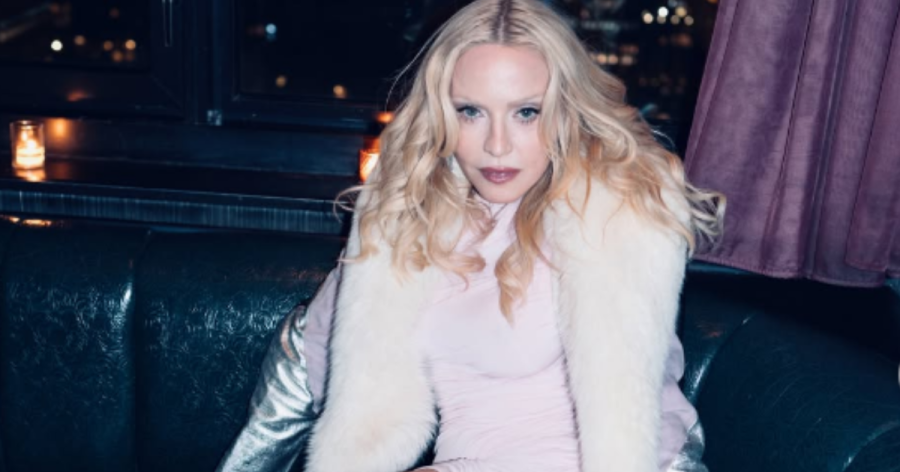
Madonna has signalled a notable shift in her long-standing approach to fashion and self-presentation, stating that she is stepping away from her era of provocative, skin-revealing imagery and embracing a more covered, reflective style direction.
The 67-year-old pop icon made the comments during a recent interview with Interview Magazine, where she revisited decades of boundary-pushing visuals and explained why she no longer feels compelled to rely on nudity as a form of expression.
A Shift Away From Her Most Iconic Era
For much of her career, Madonna built a reputation on challenging cultural norms around sexuality, fashion and female autonomy.
From the 1980s onwards, she became synonymous with daring stage costumes, provocative editorial shoots and public appearances that deliberately pushed the limits of mainstream acceptability.
However, in her latest reflection, she made clear that her perspective has changed.
'Now I don't want to be naked because everyone's naked', she said, suggesting that what was once transgressive has become commonplace in today's culture.
The singer also described a shift in intention, indicating that her focus has moved away from shock value towards more conceptual and introspective forms of expression.
'I Want To Do What People Are Not Doing'
Madonna framed her evolution as part of a long-standing instinct to resist trends rather than follow them.
'I want to do what people are not doing, which is thinking and wearing clothes', she explained, positioning her current aesthetic direction as a form of creative contrarianism rather than withdrawal from artistic expression.
Her comments suggest that the decision is not a rejection of fashion itself, but rather a rebalancing of how she uses it. Where earlier eras relied heavily on exposure and confrontation, her current approach appears to prioritise styling, narrative and symbolism.
Reflecting on Decades of Provocation
Alongside her comments on style, Madonna also reflected on how her career has often been interpreted through a narrow lens, particularly in relation to sexuality.
She described the public response to her work as frequently reductive, arguing that audiences and critics alike have often failed to engage with the intention behind her creative choices.
She concluded by noting that such creative nuance is rarely recognised in real time, particularly when female artists push established cultural boundaries.
Fashion, Identity, and Evolving Expression
Despite stepping away from nudity as a central visual tool, Madonna's connection to fashion remains deeply embedded in her artistic identity.
Recent projects have continued to incorporate archival pieces and carefully curated styling choices, underscoring her belief that clothing itself carries narrative weight.
In her interview, she emphasised that what people wear can shape perception, mood and meaning, which is an idea that has remained consistent throughout her decades in the public eye.
This evolution suggests a transition rather than a retreat: from overt provocation to layered symbolism, where clothing becomes a more deliberate storytelling device.
A New Phase in a Long Career of Reinvention
Madonna's decision to move away from her 'naked dressing' era fits into a broader pattern of reinvention that has defined her career.
Across more than four decades in music and popular culture, she has repeatedly altered her image, sound and public persona, often in ways that challenge expectations of longevity in the entertainment industry.
While earlier reinventions were often tied to shock, controversy or cultural disruption, this latest shift appears more introspective, reflecting both personal maturity and changes in the wider cultural landscape.
With nudity and explicit self-expression now more widespread in mainstream media and social platforms, Madonna's decision may also reflect a changing sense of what constitutes provocation in 2026.
What Comes Next
Although she is stepping away from one of her most recognisable aesthetic phases, Madonna has not suggested a retreat from performance or creative output.
Instead, her comments point towards a recalibration of style and intent, one that continues to prioritise artistic control, cultural commentary and visual storytelling, albeit through different means.
As she put it, her focus now lies in doing what others are not, even if that means wearing more and revealing less.
For an artist whose career has been defined by constant reinvention, this latest evolution is less an ending than another turn in a long-running narrative of transformation.