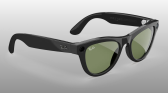

A woman has called out a doctor for wearing Meta smart glasses during a medical consultation in which she was required to remove her clothes, sparking a heated debate over patient privacy and the use of camera-equipped technology in healthcare settings.
The confrontation, shared in a video that has circulated on Reddit, centres on a simple but uncomfortable question: should a doctor be wearing glasses with a built-in camera while examining a patient in an intimate clinical setting? The woman argues that the technology has no place in such an environment, telling the doctor that the glasses 'need to be banned'.
A Doctor Wearing Meta Glasses During A Sensitive Consultation
The video, credited on Reddit to TikTok account @taylorsdiary.mp4, shows a woman discussing her concerns about a doctor wearing Meta smart glasses during her consultation.
The situation became particularly uncomfortable because, according to the discussion surrounding the video, the consultation required her to take off her clothes. That detail has become central to the online reaction, with commenters arguing that patients should not have to wonder whether a camera is capable of capturing them during an examination.
The concern does not necessarily establish that the doctor was recording. Instead, it highlights the problem created by the presence of a recording-capable device in a setting where patients have a strong expectation of privacy.
For the woman involved, simply being told that the glasses were not recording was apparently not enough to make the situation comfortable.
Why The Glasses Are Causing Concern
Meta's smart glasses combine conventional eyewear with cameras, microphones and other connected features. They can be used to take photographs, record video, make calls and interact with Meta's AI features.
That functionality is precisely what makes them controversial in places where confidential information is routinely discussed or where people may be in vulnerable situations.
Several Reddit users claimed that their hospitals or workplaces prohibit camera-equipped smart glasses. One commenter said they worked in a hospital laboratory where the glasses were banned, while another claimed their wife, a paediatrician, worked at a hospital where the devices were also prohibited.
Those comments are individual accounts rather than evidence of a universal healthcare policy. However, they illustrate why the issue is becoming increasingly relevant as smart glasses become more commonplace.
Privacy Is The Real Issue
The debate is bigger than whether the doctor in the video actually pressed the recording button.
In a consultation, patients routinely share sensitive medical information and may be physically exposed during examinations. The presence of a device capable of recording that interaction can therefore create a privacy concern even if no recording ultimately takes place.
Several commenters compared the situation to a doctor holding up a phone or camera while insisting that it was not being used to record. Others questioned whether patients could reasonably be expected to trust a device they cannot directly control.
There were also references to HIPAA, the US health privacy law governing protected health information. However, wearing Meta glasses does not automatically mean a doctor has committed a HIPAA violation. Whether a violation occurred would depend on factors including what information was captured, how it was handled and the circumstances surrounding its use.
Not Everyone Wants Smart Glasses Banned
The backlash has also prompted a more nuanced discussion about the technology itself.
Some commenters pointed out that smart glasses can have legitimate uses, particularly for people with disabilities. Features such as visual assistance, translation and captioning could potentially make the technology useful in everyday life and professional environments.
The issue, therefore, is not necessarily whether smart glasses should exist, but where camera-equipped versions should be allowed and under what conditions.
For healthcare workers, a clear policy could provide patients and staff with greater certainty. A workplace could, for example, prohibit camera-enabled glasses in examination rooms or require them to be removed before an intimate consultation begins.
A Bigger Question For Healthcare
The woman's reaction has struck a chord because the situation touches on a basic principle of medical care: patients should feel safe when they are at their most vulnerable.
Whether or not the doctor was recording, the presence of camera-equipped glasses during an examination can undermine that confidence. The online debate also shows how quickly new consumer technology can create questions that existing workplace rules may not have anticipated.
For now, the video has left viewers debating whether smart glasses belong in medical environments at all. But the more immediate question may be whether patients should ever have to ask a doctor to remove a camera-equipped device before they feel comfortable taking off their clothes.
In a setting built around trust and confidentiality, that concern is difficult to ignore.