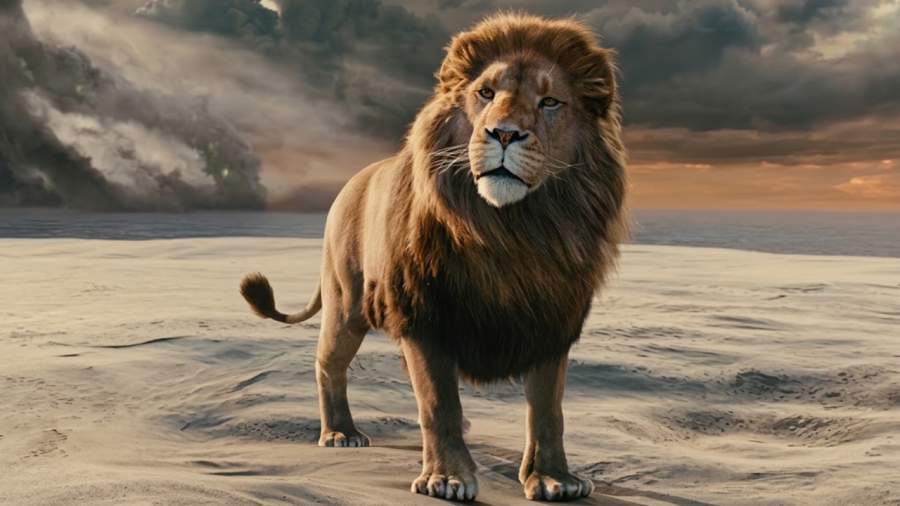
'God is a woman' was one social-media reaction after Meryl Streep was announced as the voice of Aslan in Greta Gerwig's upcoming Narnia film. The unexpected casting immediately caught attention, with some viewers questioning the decision to have a woman voice the iconic lion.
The reaction has also led some social-media users to wonder whether Gerwig has reimagined Aslan himself. However, there is currently no confirmation that the character has been changed from the male lion depicted in C.S. Lewis' books and previous screen adaptations.
Meryl Streep Takes Over Aslan's Voice
Streep is officially voicing Aslan in Narnia: The Magician's Nephew, Gerwig's adaptation of C.S. Lewis' fantasy novel. The role marks another reunion between the director and Streep, who previously worked together on 2019's Little Women.
Aslan is the mythical lion who creates the world of Narnia and is depicted as male in Lewis' books and previous screen adaptations. Liam Neeson previously voiced the character in three Narnia films, making Streep's casting an unexpected change for audiences familiar with those versions.
Social Media Immediately Questioned the Casting
The announcement quickly inspired jokes and criticism online, with one commenter writing, 'So God is a woman'. Others questioned why a female actor had been chosen for a character they know as a male lion.
So God is a woman
— ナット | Nath ♥️🇨🇴🏁 (@HeyitsNat_A) September 17, 2026
Some commenters also connected Aslan to the Christian symbolism commonly associated with the character. One social-media user argued that changing the character would be unnecessary, while another joked about 'deconstructing the Christ figure'. These are individual online opinions, rather than evidence that Gerwig has deliberately altered Aslan's identity.
“We’re going to deconstruct the Christ figure by making him a woman” truly groundbreaking stuff!
— Virgil (@VirgilsQuill) September 17, 2026
Gerwig Wanted Wisdom and Wonder
Gerwig has offered a different explanation for the casting, focusing on Streep's experience rather than gender. She said she wanted someone older than 70 who could bring wisdom while still having the sense of fresh wonder associated with a child.
The filmmaker also described wanting an actor with gravitas who could communicate depth, pathos, joy and delight. Streep, she added, was one of the greatest actors she could imagine for the role, making the casting choice closely tied to her performance rather than an announced gender change.


Aslan's Gender Has Not Been Changed
Despite the online speculation, the available details do not confirm that Aslan is becoming female in Gerwig's adaptation. The character remains referred to as 'he' in Empire's coverage and its social-media post, while a Netflix representative indicated that the wording made the situation clear.
Even the first look leaves room for questions, as the close-up image of Aslan does not clearly show whether he has a traditional mane. For now, Streep appears to be providing the voice of a character who is still officially presented as male.
David Bowie Inspired the New Aslan
There is, however, another striking change in Aslan's presentation. Gerwig has revealed that David Bowie inspired the lion's multicoloured eyes, while his face reportedly features red striping in the new version.
Bowie is also part of the wider creative influence behind the film. Gerwig has described Narnia as a world made out of music and said she wants the adventure to feel 'big and transporting', drawing inspiration from the rock music of the 1960s and 1970s.
Narnia Gets a Very Different Sound
The Magician's Nephew tells the origin story of Narnia, following Digory and Polly as they discover the Wood between the Worlds and eventually encounter the creation of the mystical realm. Daniel Craig, Emma Mackey, Carey Mulligan and Ciarán Hinds are among the cast joining Streep.
The film is scheduled to arrive in cinemas on 12 February 2027 before its Netflix release on 2 April. Until the film reveals more, the biggest question surrounding Streep's Aslan remains unanswered: audiences know the voice has changed, but whether the character himself has changed is another story.