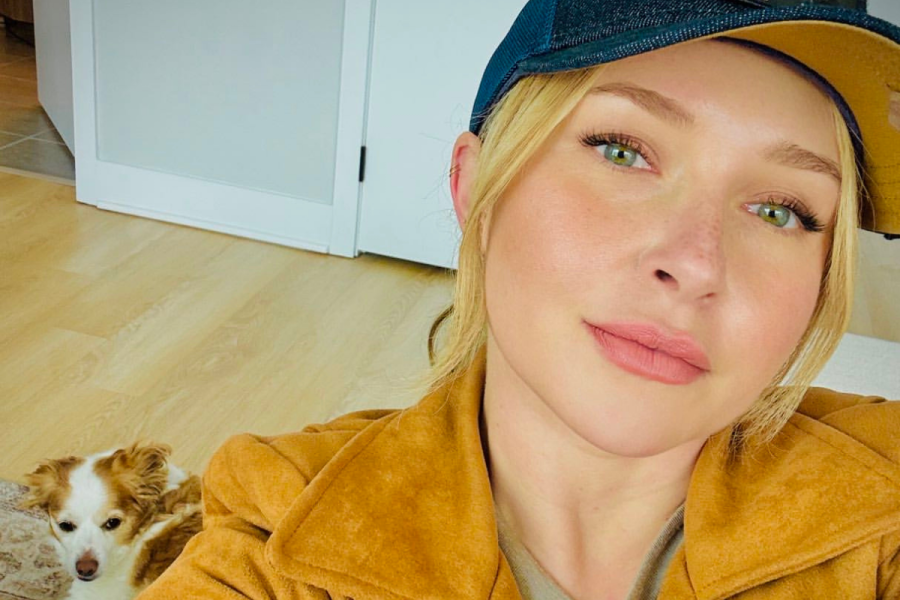
Should a beauty brand get to treat postpartum depression as a business risk? That's the question blowing up online right now, after a clip of Hayden Panettiere describing how her ten-year Neutrogena deal fell apart the moment she opened up about her mental health resurfaced following her death at 36.
The clip is from her May sit-down on the Jay Shetty podcast. In it, Panettiere explains that it all started on Live with Kelly and Michael, where she hadn't planned to say anything at all. She says the topic came up naturally, she was being honest, and it never crossed her mind that anyone would react badly. A few weeks later, she claims, Neutrogena tried to end things for good.
When a Medical Condition Becomes a 'Breach of Contract'
Morals clauses are supposed to protect companies from real scandal, arrests, feuds, that sort of thing. What Panettiere describes is different. She says Neutrogena leaned on that same clause after she talked openly about a medical condition, and her rep at the time told the company straight up that it was illegal. Neutrogena backed off, at least publicly. But the contract quietly ran out a few months later. No renewal, no call, nothing.
That's the part that's landed hardest with people online. Postpartum depression isn't a scandal. It's a diagnosis. Lumping it in with the kind of behaviour morals clauses were actually written for is exactly the leap fans say Neutrogena made.
The Gap Between Brand Persona and Contractual Small Print
Neutrogena now sits under Kenvue, the health and wellness giant that split off from Johnson & Johnson back in 2023, alongside brands like Aveeno, Listerine and Tylenol.
It is concerning that a company focused on health and wellness would distance itself from an ambassador for discussing her mental health, which creates a negative impression.
To be fair to the other side, live TV is genuinely unpredictable, and brands do write these clauses for exactly that reason, to cover themselves when something unscripted happens on air.
The question is whether that logic should stretch to cover a medical crisis the same way it covers a controversy. Right now, many people don't think it should.
Hayden Panettiere in May of this year talking about Neutrogena ending her endorsement deal after she talked about her struggles with postpartum depression in 2015 pic.twitter.com/WOPWHX79RT
— Lunar Surfer (@TheLunarSurfer) August 17, 2026
How Fans Are Reacting to the Viral Interview
The response online has been swift and unforgiving. One widely shared post asked, fairly bluntly, how a brand selling almost entirely to women could penalise an ambassador for speaking candidly about an illness so many mothers experience.
It certainly probably made her feel ashamed, embarrassed, and shunned for having a psychological condition that wasn’t her fault. It clearly broke her heart. I will never buy neutrogena again.
— katie (@krobill2) August 17, 2026
Others declared they were done buying Neutrogena products altogether. A separate comment doing the rounds argued Panettiere would have had strong grounds for a wrongful termination claim, emphasising that postpartum depression is a recognised medical condition rather than a lapse in judgment or a breach of conduct.
Neutrogena, for its part, has remained silent.
I remember this interview. She should have sued Neutrogena for wrongful termination. Having PPD was not a morality failure. It is a disease.
— Milennial Chronologically; Baby Boomer Spiritually (@cquiller1) August 17, 2026
The brand has never confirmed Panettiere's account of events. Following her recent death at 36 and the release of her memoir, This Is Me: A Reckoning, the story has gained renewed attention. What started as a clip about a lost contract has sparked broader discussions on corporate accountability, making silence an increasingly untenable strategy for the brand.