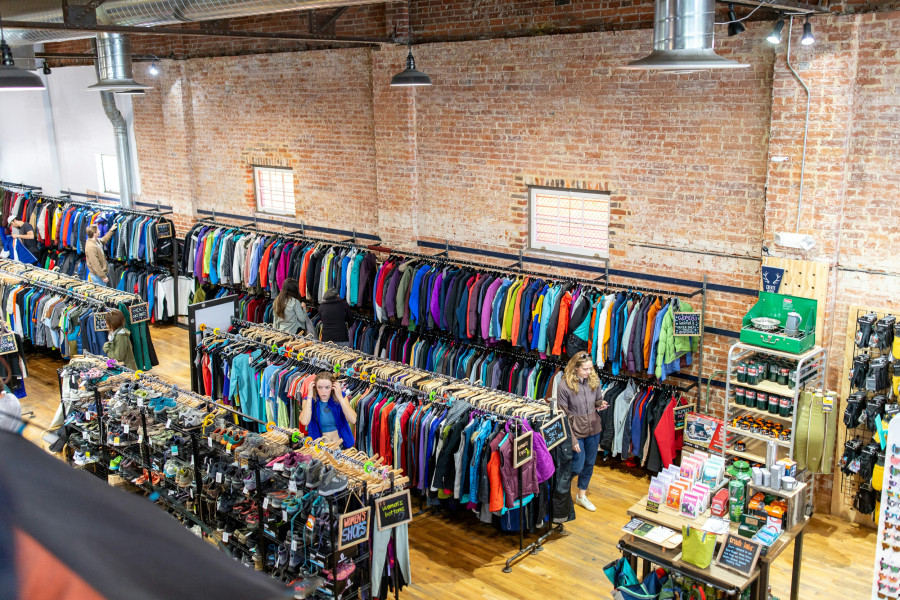
Just until recently, if we're being honest, we were all a little guilty of being trend-chasers — and that's fine. Being a trend-chaser is how you discover your personal style. Try, buy; try and buy again. That was the rhythm. But that no longer works—not in the UK, not for the planet, and not when social media and Instagram make everything so visible. Being a curated individual has become the real trend.
Clothes aren't just clothes anymore; in 2026, they're 'pieces'. Wardrobes aren't just collections; they're 'archives'. The earth is drowning in plastic and waste. The circular economy is quietly changing how we think about style—clothes are meant to circulate, be worn, repaired, and passed on, not discarded after a season. Sustainability is an imperative. We can't keep buying clothes only to throw them away.
Why the UK Is Rethinking How Clothes Are Made and Worn
Textile waste is one of the UK's quiet crises. Millions of garments are discarded each year, whether in landfill or low-cost export. But it isn't just numbers—nearly 711,000 tonnes of used textiles end up in household waste annually in the UK, with almost half of all used textiles thrown into general waste rather than reused or recycled.
It's how we relate to clothing. For decades, mass-produced items were designed to be cheap and fleeting, rarely repaired, somewhat valued. That has shaped our wardrobes, our expectations, even our understanding of style. Now, designers, retailers, and consumers are asking different questions: which pieces are worth keeping? Which ones are worth investing in? There are no straightforward answers, but the questions are reshaping fabrics, cuts, and the way fashion and retail seasons run.
Buy Secondhand, First
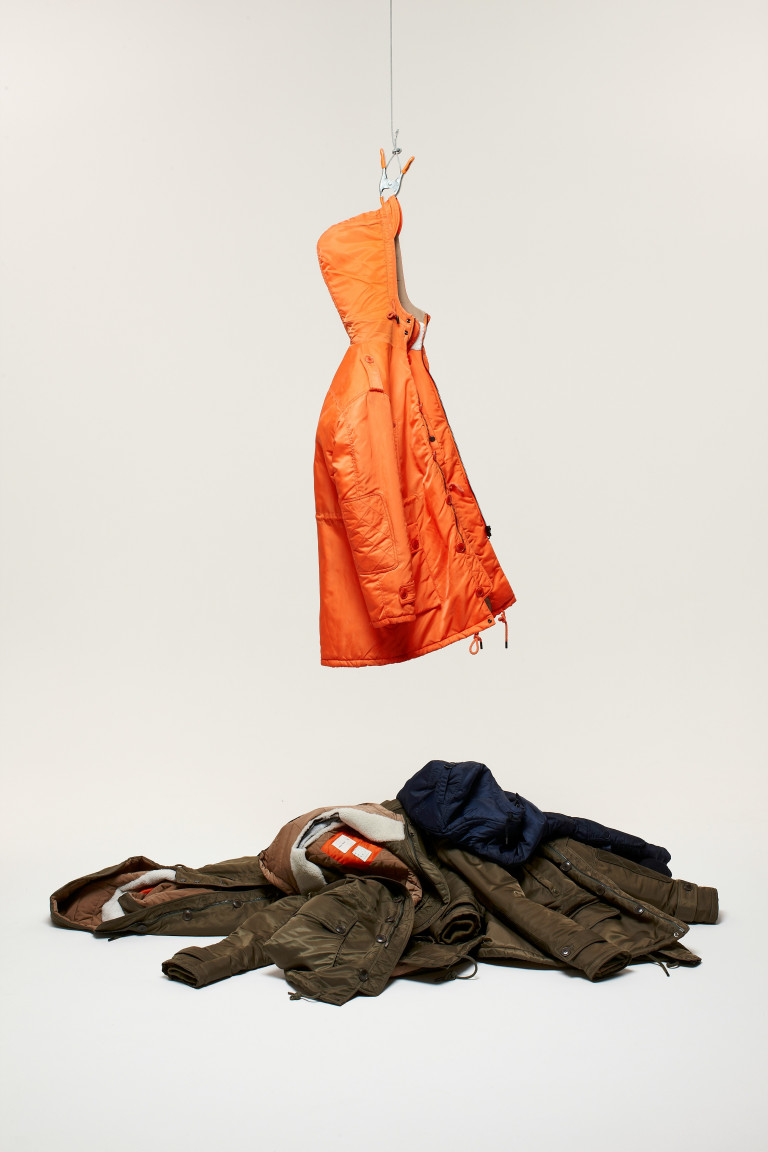
Once, buying secondhand felt like a fallback. Now it is a marker of taste, intent, and understanding. Depop, Vestiaire Collective, charity shops, vintage boutiques — all of them have normalised building a wardrobe over time. Choosing and wearing pre-loved items is deliberate. The clothes carry stories, and those stories become part of the wearer's own expression.
UK shoppers are blending new and pre-loved pieces seamlessly, and curating closets, filled with considered items has become a marker of style literacy. Secondhand isn't sacrifice — it's the statement.
Designing Clothes to Last (and Why That Matters Again)
Durability has returned as a style value. That doesn't mean rigid or expensive pieces. It means fabrics that last, seams that hold up, shapes that age gracefully. A well-made coat, a knit that keeps its form, a jacket that gains character with wear — these are the pieces that define a wardrobe over time.
In a circular model, this is about longevity and impact. It's about giving clothes multiple owners, multiple lives. Repairability and adaptability are part of the design, and just like buying secondhand—not an afterthought. UK brands are increasingly aware that a garment that survives longer gains value beyond money; it accumulates significance.
How UK Brands Are Adapting to a More Circular Future

Circularity isn't a single approach. In the UK, some brands offer repairs, lifetime guarantees, or rental options. Others operate resale platforms that keep clothes circulating. Small-batch production has taken off as a counterpoint to mass manufacturing — read: fast fashion — particularly among independent UK brands. These smaller labels produce slowly and intentionally, paying close attention to their environmental impact, reducing waste, and experimenting with materials and design cycles that larger fast-fashion houses rarely can.
Thankfully its 2026, and brands are definitely more aware, and they're trying. Luxury and designer labels like Burberry partnered with the resale platform TheRealReal to champion the circular economy and keep fashion in use for longer.
The landscape isn't uniform, and it isn't complete (yet). But it's shifting. It reflects a growing understanding that business models based solely on replacement are unsustainable, both culturally and economically.
What a Circular Wardrobe Looks Like Now
A circular wardrobe isn't about austerity. It's about rhythm. New and pre-loved pieces sit side by side, worn thoughtfully and kept in rotation. The life of each garment matters. Mending, repairing, and altering aren't chores; they're part of how style accumulates meaning over time.