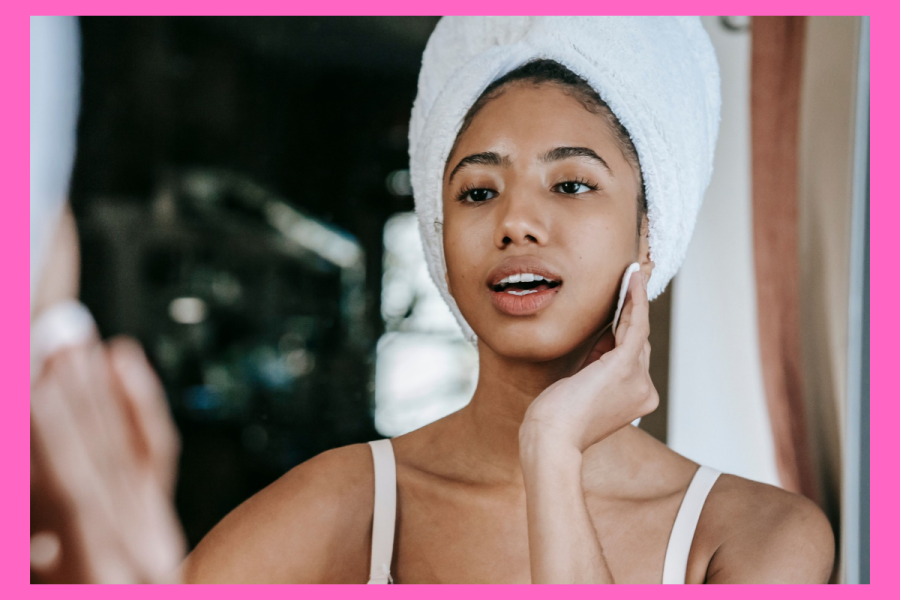
K-beauty helped make skincare feel less like fixing flaws and more like a ritual. On TikTok, however, that philosophy is increasingly being condensed into one highly recognisable goal: impossibly smooth, reflective 'glass skin'.
Now, new research is questioning what gets lost in translation. Nearly 95% of the 38 viral TikTok videos about Korean skincare and glass skin that researchers analysed contained at least one potentially misleading claim. According to research presented on Wednesday, 30 September, at the European Academy of Dermatology and Venereology Congress 2026 in Vienna, the videos were sampled in May 2026, with 84% failing to account for different skin types and 32% promising instant results.
When K-Beauty Becomes an Aesthetic
turmeric soap + Korean skin care = glass skin https://t.co/J1stid9TAN pic.twitter.com/DoduPBnF3N
— Assata (@xoassata) November 25, 2024
The findings land at a moment when K-Beauty is no longer a niche corner of the beauty internet. TikTok said K-beauty searches on TikTok Shop UK surged 125% in 2025, while #kbeauty was the third most-used beauty hashtag in the UK. Brands including Beauty of Joseon, Medicube and Mixsoon have become increasingly visible as Korean skincare moves into mainstream British beauty shopping.
But TikTok's version of K-Beauty can look very different from the slower, personalised approach associated with the category. 'Glass skin', broadly referring to clear, hydrated and luminous-looking skin, lends itself particularly well to before-and-after videos, close-up texture shots and tightly edited routines. What may begin as a long-term approach to hydration and skin barrier care can arrive on a user's feed as a shopping list with an implied finish line.
WATCH HERE: Cardi B shows how far the 'glass skin' ideal has travelled, revealing the luminous finish she credits to Korean skincare products.
Cardi B with a new IG story showing off her Glass skin thanks to the Korean skincare products she’s been using 😍😍 pic.twitter.com/IKN53bAY2N
— Bodega Baddie (@SunnyBanks_) December 2, 2025
That visual consistency also means different routines can start selling the same face. Pores appear minimised, texture becomes less visible and shine is reframed as glow, creating a beauty ideal that is instantly legible even before a creator explains what products they used. The new research suggests the information accompanying that aesthetic does not always travel as successfully.


The Algorithm Rewards a Routine
Researchers found that 45% of the videos promoted combinations of active ingredients without appropriate safety guidance, while none cited an external reference. Nearly 82% were created by non-physician influencers and 11% came from beauty brands, with no dermatologists appearing in the sample.
'Our findings show a clear gap between the popularity of this content and the quality of the information provided,' lead author Dr Maria Lúcia Paysano said.
That gap exists alongside a powerful retail system. TikTok Shop says the average basket value for K-beauty brands is nearly 35% higher than the overall skincare average, which it attributes to multi-step routines. Content, product discovery and checkout can therefore happen without a user ever leaving the app.
TikTok Shop UK beauty head Emily Caine has described the platform as a place where people come to 'discover, be inspired and learn' before deciding what they want to buy. That discovery model has helped previously unfamiliar Korean brands and ingredients reach huge new audiences, while also making the boundary between beauty education, recommendation and shopping increasingly thin.
Is TikTok Flattening K-Beauty?
The study does not conclude that Korean skincare itself is misleading. Its target is the way viral content presents it. Researchers stressed that Korean skincare itself was not the problem, pointing instead to how principles such as gentle cleansing, hydration and barrier care can be turned into one-size-fits-all routines without appropriate safety information.
The problem emerges when a philosophy built around consistency gets translated into instant transformation. TikTok can make a routine developed over months look achievable in a 30-second clip, while the platform's visual language rewards results that are easy to recognise and reproduce.
14 days of layering this Korean sunscreen and my skin looks completely different. You don't need a heavy glow base, you just need a better finish from your SPF to get that smooth, hydrated look 🤍 https://t.co/q8gmWfTIul pic.twitter.com/HElD70K9tJ
— Chloe (@twins7naoatsu) September 25, 2026
That makes the debate bigger than whether one serum works. As K-Beauty becomes increasingly global, TikTok is helping decide which parts of it travel: the ingredients, rituals and product innovation, but also the fantasy of a poreless, mirror-like complexion. The latest research suggests that as glass skin becomes easier to sell, some of the context behind it is becoming much easier to lose.