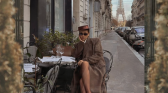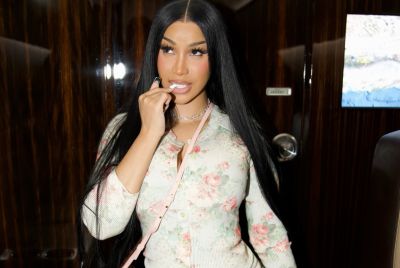

Zara's latest designer collaboration doesn't feel like a typical high-street moment. Instead of chasing a trend, the brand has partnered with New York designer Willy Chavarria on something more personal—a collection shaped by memory, identity, and the people who influence it.
Called 'Vatísimo', the line arrives globally on 26 March, bringing Chavarria's signature silhouettes to a much wider audience. But what stands out isn't just the design—it's the sense that the collection has something to say, even if it does so quietly.

A Name That Feels Personal
The name 'Vatísimo' comes from 'vato', a word often used in the Chicano community to refer to someone close—a friend, a partner, someone you trust.
It's not the kind of reference you always see translated into a global fashion release, and that's part of what makes it feel considered. Rather than being explained in a heavy-handed way, the meaning sits in the background, shaping the tone of the collection without needing to announce itself too loudly.
Zara describes it as a reflection of 'friendship, camaraderie and love', but it also feels like a nod to something more specific—Chavarria's own experience and perspective.
Bringing a Distinct Point of View to the High Street
There's always a risk with collaborations like this that a designer's voice gets softened in the process.
Zara, however, has been clear about its intention to avoid that. In its own words, the collection brings Chavarria's work to a global platform 'without dilution and without compromise'.
That's a bold claim, but there's some truth to it in what's been shown so far. The shapes are still unmistakably his—broad, structured, slightly exaggerated in a way that feels deliberate rather than decorative. At the same time, they've been made wearable enough to sit within Zara's world, which is no small balancing act.

The Pieces That Define 'Vatísimo'
What makes the collection interesting is how it moves between opposites.
There's tailoring, but it's not rigid. Wide-leg shorts are cut with precision, while suits fall in a more relaxed way, sitting somewhere between formal and casual. Pencil skirts feel structured, yet not restrictive.
Elsewhere, softer pieces come through — silk slips, floral blouses, denim shirt dresses — the kind of items that don't shout for attention but still hold their own.
Materials shift just as easily. Italian fabrics sit alongside leather, jersey, knits and cupro, giving the collection a layered feel rather than a single, fixed identity. It doesn't try to be one thing, which is part of its appeal.
Subtle References, Rather Than Statements
Chavarria's influences are there, but they're not over-explained. You can see traces of American workwear, a hint of older leisure silhouettes, and a broader connection to Latin American culture. But nothing feels overly literal or staged.
Instead, the references are folded into the design—something you notice more the longer you look, rather than something immediately obvious. That restraint gives the collection a different kind of confidence. It doesn't need to prove where it comes from.
Clothing That Says Something—Without Saying Too Much
There's often a lot of talk in fashion about 'telling stories', but here it feels less like a slogan and more like a by-product.
Zara describes the collection as being 'rooted in dignity' and centred on visibility—ideas that have long been part of Chavarria's work. But what's interesting is how quietly those ideas are expressed.
There's no single statement piece trying to carry the entire message. Instead, it's spread across the collection—in the shapes, the proportions, the way things are styled. It leaves space for interpretation, which feels intentional.
From Runway Energy to Everyday Wear
Chavarria's runway shows tend to lean towards the dramatic, with strong silhouettes and a clear sense of presence. Here, that energy has been toned down slightly—not removed, just adjusted.
The result is something that still feels distinctive, but easier to wear. Pieces that could move between settings without feeling out of place, which is often where collaborations struggle.
It's a reminder that translating a designer's work for a wider audience doesn't have to mean losing what makes it interesting.
Zara's Growing Focus on Designers
This collaboration also sits within a wider shift for Zara. The brand recently confirmed a two-year partnership with John Galliano, who is set to reinterpret its archives through a series of seasonal collections, beginning in September 2026.
Taken together, these projects suggest a more deliberate move towards design-led collaborations—not just one-off moments, but part of a longer-term direction.
When and Where to Find It
The 'Vatísimo' collection launches globally on 26 March, available online and in selected Zara stores. It spans ready-to-wear, footwear, accessories and jewellery, offering a range of entry points depending on how far people want to lean into the aesthetic.
While pricing hasn't been fully outlined, it's expected to sit within Zara's usual range—which, for many, will make this one of the more accessible ways to engage with Chavarria's work.

A Collaboration That Doesn't Try Too Hard
What lingers after looking through the collection isn't a single standout piece, but a general feeling. It doesn't feel overworked or overly explained. There's no sense in trying to tick every box or appeal to everyone at once.
Instead, it feels measured. Considered. Comfortable with what it is.
And in a space where collaborations can sometimes feel rushed or overly commercial, that restraint might be exactly what makes 'Vatísimo' stand out.