Why does Parisian style continue to captivate the world, and what does it reveal about identity in modern Europe?
In a fashion landscape dominated by fast-moving trends and algorithm-driven aesthetics, French women's wardrobes are often described as 'effortless'. Yet that effortlessness is not accidental. It is the product of philosophy, history, craft, and a deeply embedded cultural attitude toward self-expression—one grounded in the streets of Paris and shaped by centuries of European thought.
To understand why French women seem to dress with such ease, we must look beyond Breton stripes and trench coats. We must examine the intellectual, historical, and artisanal forces that continue to define Parisian style.
The Philosophy of Parisian Style: Identity Over Trend
At its core, Parisian fashion begins with a question of why. Why wear something? Why buy it? Why keep it?
French style is rooted in identity rather than novelty. Unlike trend-driven dressing, which prioritises visibility and immediacy, Parisian wardrobes are built around longevity and self-definition. The goal is not to signal fashion literacy but to express personal coherence.
This philosophy aligns with broader French intellectual traditions. From Enlightenment thinkers to contemporary cultural critics, French culture has long valued clarity, restraint, and self-awareness. In this context, clothing becomes an extension of character.
The result? A wardrobe that feels lived-in rather than constructed.
A History of Effortless Elegance in France
To understand modern Parisian minimalism, we must consider France's fashion history.
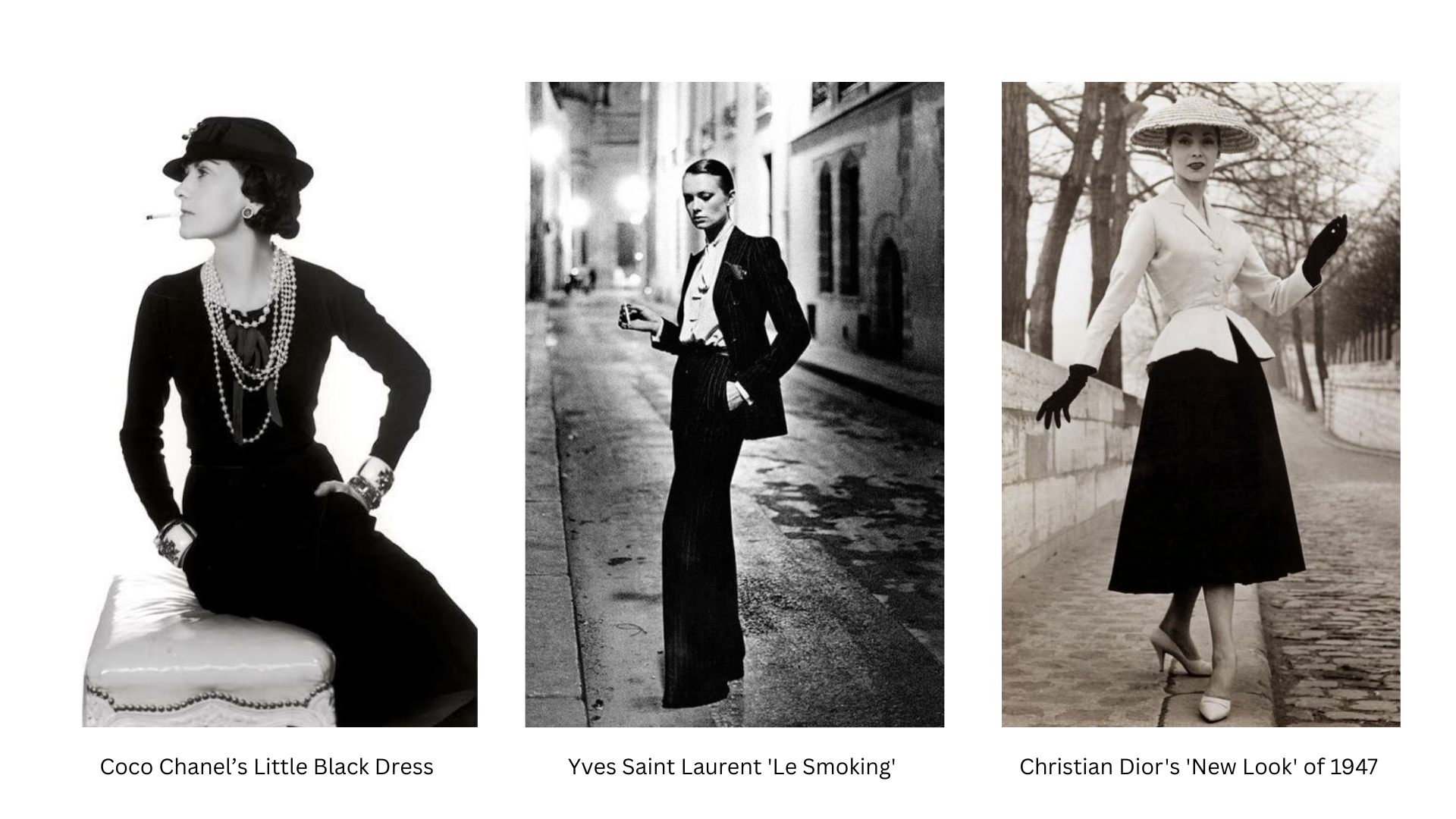
In the early 20th century, designers such as Coco Chanel revolutionised women's clothing by stripping away excess. Chanel's jersey suits and little black dresses rejected the ornate constraints of the Belle Époque, introducing comfort and practicality without sacrificing refinement.
Later, couturiers such as Yves Saint Laurent blurred the boundaries between masculine and feminine dress, embedding tailoring and sharp silhouettes into women's wardrobes. His 'Le Smoking' tuxedo suit remains a symbol of understated power.
Even the opulence of houses such as Dior was grounded in structure and proportion. While Christian Dior's 'New Look' of 1947 celebrated femininity, it was disciplined in construction and intent.
These milestones shaped a national aesthetic that values precision, proportion, and quiet confidence.
Parisian Wardrobe Staples: Quality Over Quantity
French women are often said to own fewer clothes than their British or American counterparts—though precise national wardrobe data varies. What matters more is the philosophy of acquisition.
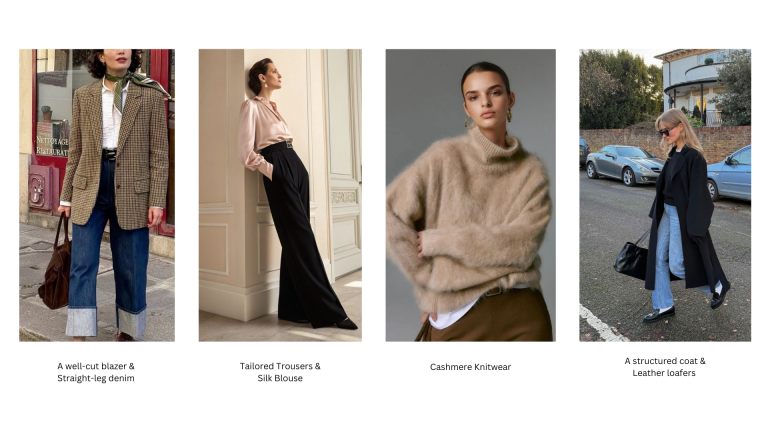
A typical Parisian wardrobe prioritises:
- A well-cut blazer
- Straight-leg denim
- Tailored trousers
- Silk blouses
- Cashmere knitwear
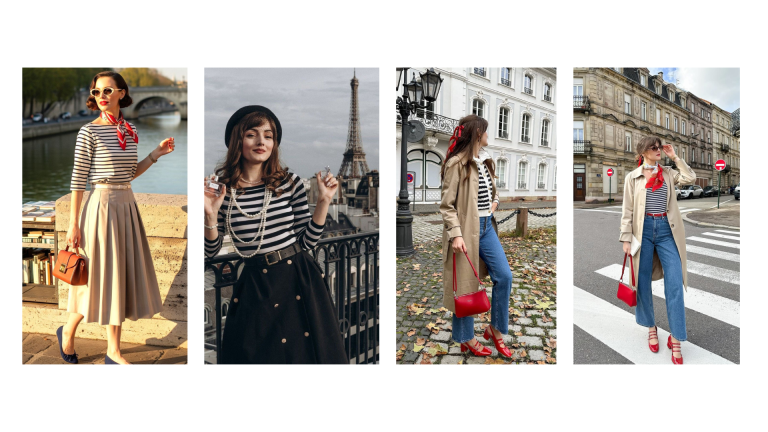
- Leather loafers or ballet flats
- A structured coat
These pieces are chosen for versatility and durability. Investment dressing is not about labels but longevity. A £450 coat worn for 10 years ultimately offers more value than multiple £90 alternatives replaced each season.
In practical terms, this approach reduces decision fatigue. When garments harmonise in colour and cut, dressing becomes intuitive.
The Role of French Fashion Houses in Shaping Identity
Major fashion houses based in Paris continue to reinforce the codes of French dressing.
Brands such as Chanel, Saint Laurent, and Celine consistently explore themes of structure, restraint, and sensual minimalism.
Under the creative direction of Phoebe Philo in the 2010s, Celine epitomised modern intellectual minimalism—neutral palettes, architectural silhouettes, and subtle power dressing. The brand's aesthetic resonated globally, but its roots were unmistakably Parisian: thoughtful, disciplined, self-possessed.
These houses do not merely produce clothes; they codify an attitude.
Craftsmanship in Paris: The Hidden Architecture of Effortlessness
Effortlessness, paradoxically, requires effort.
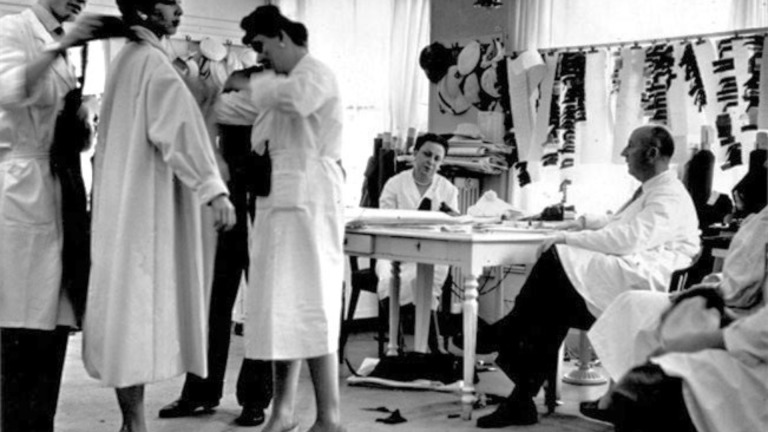
Behind the apparent simplicity of Parisian style lies meticulous craftsmanship. French ateliers — particularly those affiliated with haute couture — maintain techniques passed down through generations.
Hand-finished seams, precise tailoring, and fabric selection contribute to garments that drape naturally. When a jacket sits perfectly on the shoulders, or a silk blouse falls without pulling, the wearer appears relaxed because the garment works with the body rather than against it.
This invisible craft is central to the illusion of nonchalance.
The Cultural Context: Why Paris Shapes Personal Style
Paris is not merely a backdrop; it is a shaping force.
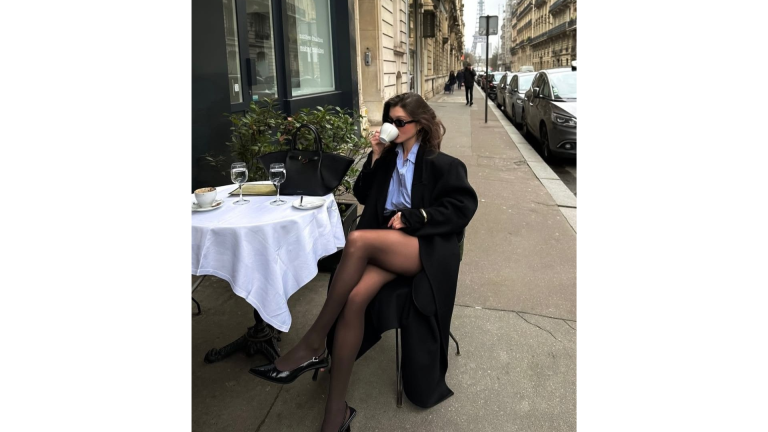
The city's architecture — limestone façades, muted boulevards, and wrought-iron balconies — creates a visual harmony that subtly informs dressing. Neutral tones dominate the urban landscape, reinforcing a preference for black, navy, beige, and cream.
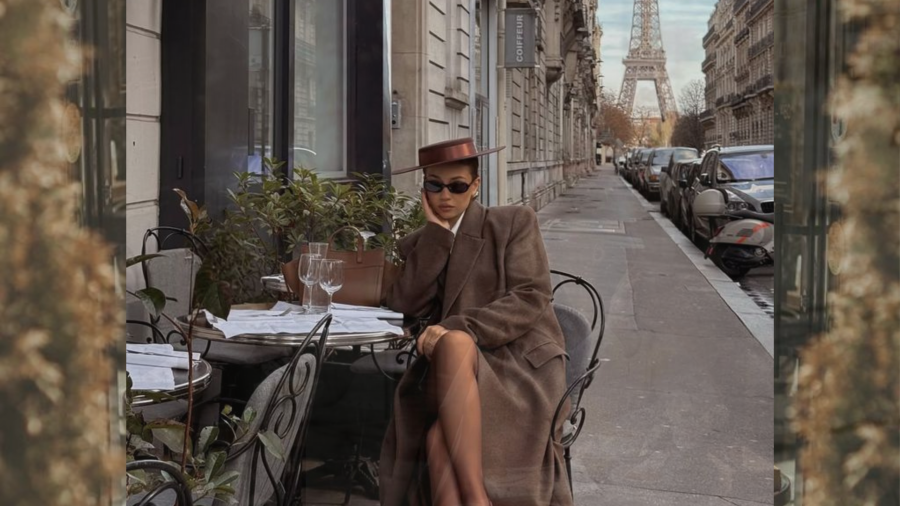
Café culture also plays a role. Public life in Paris unfolds slowly and visibly. Dressing is not about spectacle but participation in shared civic space. The emphasis is on looking considered without appearing overworked.
This balance between presence and understatement defines Parisian elegance.
The Myth and Reality of 'Effortless' French Style
It is important to acknowledge that the global image of French women's style is partly mythologised. Books, films, and social media have amplified the trope of the carefree Parisienne.
Yet myths endure because they contain truth.
The reality is less about genetics or innate chic and more about consistency. French women often develop a personal uniform early in adulthood and refine it over time. Rather than reinventing themselves seasonally, they edit.
This editorial mindset mirrors how Parisian fashion houses operate: refine, reinterpret, repeat.
Minimalism Versus Maximalism: A European Contrast
Within Europe, fashion philosophies differ markedly.
Italian style, for instance, often embraces bold colour and sensuality. British fashion frequently experiments with eccentricity and references to subcultures. French dressing, by contrast, sits between austerity and seduction.
It values subtle sensuality — an unbuttoned cuff, a slightly oversized blazer, and undone hair. The message is controlled spontaneity.
This balance reflects broader French cultural ideals: freedom within structure.
How to Build a Parisian Wardrobe: Capsule Pieces, French Brands and Timeless Style Rules
If you are building a wardrobe inspired by Parisian style, practical questions arise:
How many pieces should I own? There is no fixed number, but focus on versatility. Each item should work with at least three others.
Are French brands essential? No. Philosophy outweighs label. Fit and fabric matter more than logo visibility.
Can colour exist in a Parisian wardrobe? Yes — but often in muted or classic tones such as burgundy, forest green, or soft blue.
Is this style age-specific? Not at all. Parisian dressing evolves rather than resets, making it adaptable across decades.
Why Effortlessness Endures in a Fast-Fashion Era
In an era where micro-trends circulate weekly on social media, Parisian style offers resistance.
Its endurance lies in restraint. By prioritising identity over immediacy, French women sidestep trend fatigue. Their wardrobes function as long-term investments in selfhood.
Economically, this approach can also be rational. Fewer purchases of higher quality reduce waste and long-term expenditure. Culturally, it preserves continuity amid rapid change.
Effortlessness, then, is not laziness. It is discipline disguised as ease.
The Future of Parisian Style
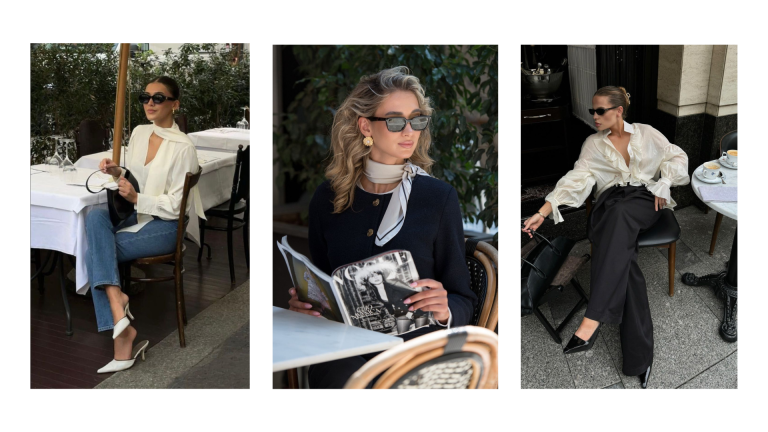
As sustainability becomes central to global fashion discourse, the French model of buying less but better feels increasingly relevant.
Younger designers across France are reinterpreting heritage techniques with modern ethical considerations—prioritising responsible sourcing, smaller production runs, and transparent craftsmanship.
The philosophy remains intact: know yourself, refine your wardrobe, invest in quality, and allow clothes to support — not overshadow — identity.
Effort as an Expression of Self
French women's wardrobes look effortless because they are grounded in clarity.
They begin with a 'why'. Why this coat? Why this silhouette? Why this version of myself?
By consistently answering those questions over time, Parisian style transforms from an aesthetic into a philosophy—one shaped by the history of couture, the discipline of ateliers, the influence of houses such as Chanel and Saint Laurent, and the lived experience of women walking the streets of Paris.
Effortless dressing, it turns out, is not about doing less. It is about knowing more — about yourself, your history, and your place in the world.