Olivia Rodrigo has spent the last few years proving she is one of pop music's biggest forces. But lately, it is not just her chart success getting people talking — it is her dresses.
More specifically, her growing love for babydoll silhouettes has sparked a surprisingly heated debate online. Some critics are accusing the singer of leaning too far into childlike fashion.
The conversation quickly snowballed into something bigger. While some social media users questioned whether Rodrigo's recent outfits felt 'too young,' others were left wondering why Sabrina Carpenter — another pop star known for flirty, feminine mini dresses — is not facing the same level of criticism.
So, what is really going on here? Is this a fair fashion debate, or are people reading too much into a trend that has been around for decades?
Olivia Rodrigo Embraces Romantic Babydoll Aesthetic
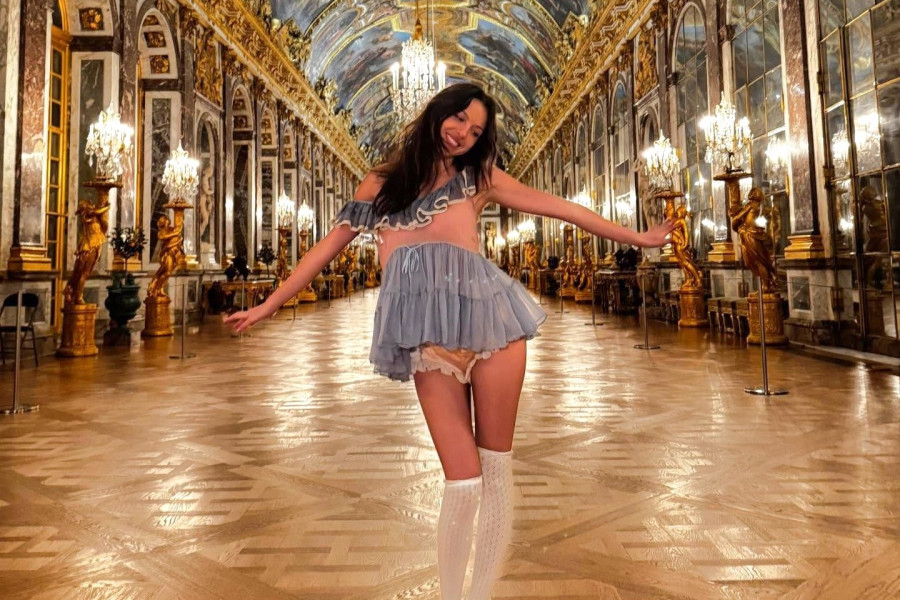
If there is one thing Rodrigo seems to love right now, it is a babydoll dress.
In April, Rodrigo reached another career milestone. Drop Dead, the lead single from her forthcoming album You Seem Pretty Sad for a Girl So in Love, debuted at No 1 on the Billboard Hot 100.
That achievement officially made her the first artist in history to have the lead singles from her first three albums — Sour, Guts and the upcoming release — all debut in the chart's top spot.
At the same time, her wardrobe has quietly entered a softer, more romantic phase. In the music video for Drop Dead, filmed inside the Palace of Versailles, Rodrigo appears in dreamy looks. This includes a Chloé pre-fall 2026 chemise and bloomers set, alongside a pearl-covered mini dress famously worn by Jane Birkin.
Even the artwork for her upcoming album leans heavily into nostalgic femininity. It shows Rodrigo swinging through the sky in a collared mini dress, black heeled shoes and socks.
For some fans, the look feels playful, vintage, and perfectly in sync with her new era. For others, it has raised eyebrows.
The History Behind Babydoll Dresses
The babydoll style originated in the 1940s as women's nightwear and surged in popularity after the 1956 film Baby Doll, starring Carroll Baker, which helped popularise the term and silhouette. The character's short, floaty nightgowns inspired a fashion movement that eventually crossed into mainstream womenswear.
Typically, babydoll dresses are loose-fitting with short hems and an empire waistline. Think puff sleeves, lace trims, bows, Peter Pan collars and soft fabrics.
Over the years, they have popped up everywhere — from 1960s mod fashion to 1990s grunge wardrobes and today's ultra-feminine 'coquette' trend dominating social media.
Fashion-wise, the appeal is pretty obvious. Babydoll dresses can feel romantic, playful, and nostalgic all at once. But because they are often linked to youthfulness, they can also become unexpectedly controversial when worn by adults.
an important thread about babydoll dresses & the history behind them 📌 pic.twitter.com/RB0OHFdsa2
— ۶ৎ ֹ ◟ clare will make you worry 🧁 (@sugarytalkin) May 11, 2026
Is Babydoll Fashion Really Problematic?
Not everyone is loving Rodrigo's latest fashion chapter.
A wave of criticism online has centred around claims that the singer is 'infantilising' herself through styling choices that some viewers feel lean too heavily into childhood imagery. Certain outfits — especially those paired with bloomers, ruffles, or doll-like details — prompted strong reactions online.
Some commenters described the look as giving 'literal toddler wardrobe,' and others criticised what they saw as adult pop stars dressing like 'sexualised infants.' A few even argued the trend reflects a wider cultural discomfort around femininity being tied to youthfulness.
Still, not everyone agrees with the backlash.
Supporters argue the criticism feels exaggerated, pointing out that babydoll dresses have existed in adult fashion for decades and regularly appear on luxury catwalks without controversy. Some believe Rodrigo's styling simply matches the dreamy and theatrical mood of her current music era.
In other words, what other people see as 'babyish,' others see as vintage-inspired storytelling.
Comment
by u/h0lych4in from discussion
in LAinfluencersnark
Comment
by u/h0lych4in from discussion
in LAinfluencersnark
The Olivia Rodrigo vs Sabrina Carpenter Debate
As Rodrigo became the centre of debate, one name kept popping up: Sabrina Carpenter.
Fans quickly pointed out that Carpenter regularly wears babydoll dresses too, often styled with bows, corsets, lace, and hyper-feminine details. So why does she not seem to get called out in the same way?
According to fans online, the answer may come down to branding and perception.
Many noted that Carpenter actually does receive criticism for her style — just perhaps not as loudly. However, because ultra-feminine fashion has long been part of her image, people are more used to seeing her in babydoll-inspired looks. For Rodrigo, whose earlier aesthetic leaned moodier and more alternative during the Sour and Guts eras, the shift feels newer and more unexpected.
Some online users also argue that styling makes a difference too. One comment read: 'Sabrina's babydolls also look more like lingerie, which offsets the possible 'babyish' connotations.'
Comment
by u/TequiIa_MockingBird_ from discussion
in Kibbe
Babydoll Dresses: Harmless Trend or Fashion Controversy?
The truth probably sits somewhere in the middle.
Fashion has always carried meaning, and people are naturally going to interpret celebrity style through their own lens. Critics are not wrong for questioning trends that blur ideas of innocence, femininity, and sexuality — especially in pop culture, where image matters.
At the same time, clothing is deeply personal and often ever-changing. Babydoll dresses are hardly new, and wearing one does not automatically signal something deeper. Sometimes, a dress is simply a dress.
Perhaps what this debate really highlights is how differently people view the exact same outfit. One person sees vintage romance. Another sees infantilisation. Someone else just sees a celebrity wearing a trending silhouette.
So, are people being too sensitive about babydoll dresses? Maybe yes, maybe no.
But one thing is certain: in the world of pop culture, even hemlines can spark a full-blown internet debate.