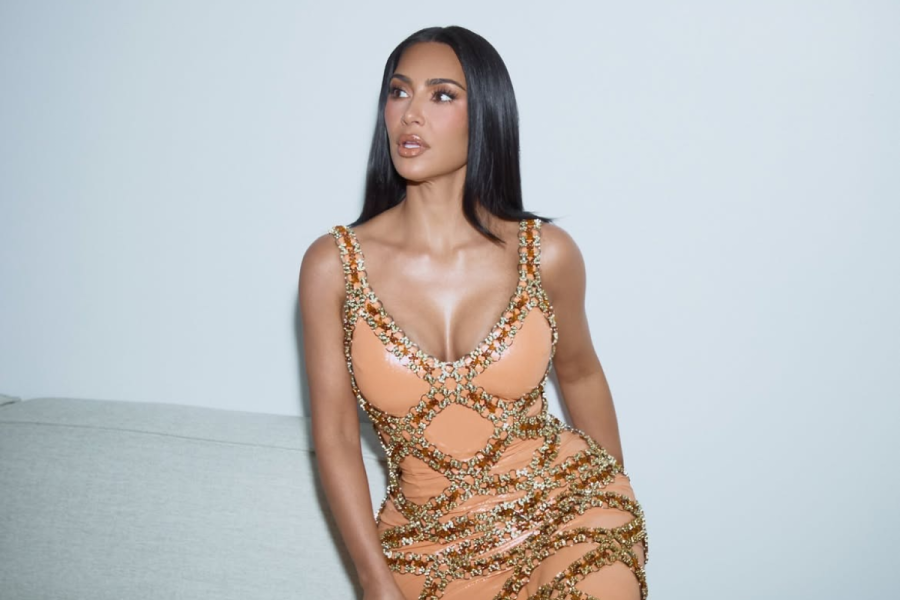
A simple question about fairness has turned into a deeply personal one: who actually gets to wear fashion history? It began when Zendaya arrived at the 2026 Governors Awards in a 2007 Giles Deacon design and drew near-universal praise for her archival gown look. One user then asked why the same crowd that applauds her turns on Kim Kardashian for doing something similar.
The post accused fans of 'selective feminism', arguing that support for women depends on who is wearing the dress rather than any consistent principle. The replies were quick and emotional, turning a stan-war flashpoint into a broader argument about women, their bodies and what they are allowed to borrow from the past.
Nobody gets mad when Zendaya wears archival fashion, but suddenly it becomes a problem when Kim Kardashian does it. Y’all aren’t pro-women; you’re pro-selective women. Your feminism shouldn’t depend on which woman you choose to support. https://t.co/LJmJeedjQt
— Prince Charming (@princecharmgrey) November 16, 2026
The Double-Standard Debate
Critics in the replies wasted no time cutting to the core issue, led by a blunt question: 'Does she ruin the dresses like Kim?' When the original poster tried to sidestep the point with 'Zendaya looks stunning af don't get mad', the thread moved straight into the mechanics of couture.
Does she ruin the dresses like Kim?
— Sika I&B100 (@BBHVHOBI) November 16, 2026
At the heart of the pushback is the claim of a 'false equivalence'. Unlike Zendaya, who 'literally wears it fresh off the hanger', Kardashian often faces criticism that her archival pulls require 'significant alterations to fit her frame', adjustments critics warn can 'cheapen the look' or 'damage a garment'.
this is a false equivalence. folks issue with Kim is that all her archival takes significant alterations to fit her frame… and often those alterations cheapen the look / can damage a garment
— CLD (@mistah_boston) November 16, 2026
Zendaya literally wears it fresh off the hanger
For preservationists, the distinction is structural, not personal. Much of the sensitivity traces back to the Marilyn Monroe dress Kardashian wore in 2022, a moment that still divides fashion watchers. Seen through that lens, praising Zendaya while questioning Kim is not a double standard: one look leaves fashion history intact, while the other is reshaped to fit.


Archival Fashion Alterations and Body-Type Bias
Follow that logic to its conclusion, though, and a harder tension emerges. Making untouched fit the price of admission means archival couture belongs, almost by default, to sample-size women. What starts as an effort to protect old clothes can quickly feel like gatekeeping, locking curvier bodies out of fashion history while slimmer ones step right in.
Zendayas body is tiny and sample size 00-2. Kims ass is huge and she tries to fit her man made disproportionate body into ONE OF A KIND size 0 ,effectively ruining one of a kind pieces. She also usually prefers wearing belongings of dead people.
— Jamesdennison (@Jamesde15668753) November 16, 2026
Those defending the rule point out that fragile, decades-old fabric has real physical limits and cannot simply adapt to every frame. Yet for the other side, the result feels unmistakably one-sided, a standard applied far more harshly to one woman than the other.
Behind the Red-Carpet Loan Approvals
Archival pieces do not leave estates, collectors and museums by accident. Someone signs off on every loan and approves any alterations that follow, yet the women on the red carpet take all the heat.
Stylists sit in that chain too. Law Roach, Zendaya's longtime stylist, began working with Kardashian in September 2026, when she wore an archival Yves Saint Laurent gown from Tom Ford's 2004 collection to the Lucas Museum of Narrative Art opening. The Marilyn Monroe dress came years before that partnership, meaning Roach now works with both women at the centre of this row. If protecting fashion history is truly the priority, the stylists and gatekeepers granting access belong in the conversation just as much as the celebrities wearing the clothes.
Even though the claims around Kardashian's alterations stem from online debate rather than confirmed reports, the reaction to Zendaya's look has exposed a deeper fault line in how fans police celebrity style. Whether every Zendaya archival gown moment proves a double standard or simply draws a line around fragile couture, one thing is certain: as long as celebrity stylists keep raiding the archives, this argument is nowhere near finished.