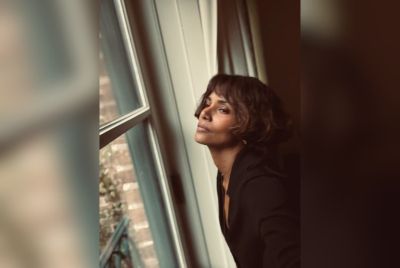
Angelina Jolie has used her huge public platform to draw attention to the destruction in Gaza, sharing before-and-after satellite images and calling for urgent humanitarian assistance as winter approaches.
The actress and longtime humanitarian campaigner directed her followers towards Google Earth, where satellite imagery shows the scale of damage across parts of the territory. Her intervention comes amid a wider pattern of prominent women using their visibility to speak about Gaza, refugees and the humanitarian consequences of conflict.
Jolie shared the images on Instagram on Saturday, 3 October, highlighting areas in Rafah, Khan Younis and Gaza City. The images compare areas before the war with more recent satellite views showing widespread destruction.
'You can now open Google Earth and see what was done to Gaza,' Jolie wrote.
She went on to describe the destruction of homes, schools, universities, hospitals, roads and water and sanitation systems.
'Whole neighbourhoods have been reduced to rubble,' she said.
The Numbers Behind the Images
The satellite images give a visual dimension to figures that can otherwise be difficult to comprehend.
Jolie cited UN Satellite Centre analysis showing that, as of 16 June 2026, 82% of structures in Gaza had been damaged, with roughly two-thirds of those damaged structures assessed as destroyed. UNOSAT's assessment recorded more than 201,000 damaged structures, including more than 134,000 classified as destroyed.
Jolie also highlighted the humanitarian situation facing civilians as winter approaches.
According to figures cited in her post, 1.98 million people, or 94% of Gaza's population, require shelter assistance and essential items. She said aid and shelter materials continue to face restrictions and delays.
But Jolie's central point was that satellite imagery can only reveal part of the story.
'Google Earth shows the physical destruction with extraordinary clarity,' she wrote. 'What it cannot show is what it means to live among it, what happened to the families who were killed, and what life is like for those who survived.'
She called for shelter before winter, humanitarian aid to reach civilians at the required scale and medical supplies for hospitals.
'The destruction is visible. The needs are known. What matters now is whether they are met.'


More Women Are Using Their Platforms
Jolie's latest intervention also places her among a growing group of prominent women using their public profiles to discuss Gaza, displacement and humanitarian concerns.
Cate Blanchett has been particularly visible in this area. The Oscar-winning actress, who has served as a UNHCR Goodwill Ambassador since 2016, spoke about Palestine at the 2026 Cannes Film Festival after an audience member thanked her for defending Palestinians.
At Cannes, Blanchett said it was a 'sad state of affairs' when film festivals became places where people could discuss wars, conflicts and genocides as though those issues could be solved there.
That matters to a fashion and culture audience because Cannes, red carpets and celebrity platforms increasingly function as spaces where public figures can make statements far beyond their professional work.
Jolie has also spent decades using her celebrity to draw attention to displaced people. She worked with the UN refugee agency for more than 20 years, first as a goodwill ambassador and later as a special envoy, before leaving the role in 2022. In January 2026, she travelled to Egypt and visited the Egyptian side of the Rafah border crossing, where she met humanitarian workers and highlighted the need for aid access.
Why Jolie's Message Stands Out
Rather than simply posting a statement, Jolie asked her followers to look at the satellite imagery themselves.
That choice makes the post particularly striking. The images provide a before-and-after record of physical destruction, while Jolie's words focus attention on what cannot be captured from above: families, survivors and people attempting to live amid the ruins.
Her intervention also arrives as the humanitarian consequences for women and girls in Gaza remain a major concern. Amnesty International reported in March that Palestinian women and girls were facing severe consequences linked to displacement, disrupted healthcare and unsafe living conditions.
For Jolie, however, the message is ultimately about what happens next.
The actress is using her voice to ask for shelter, medical supplies, humanitarian assistance and the conditions needed for communities to rebuild.
And as more influential women continue to use their platforms to raise difficult issues, Jolie's latest post underlines the power of celebrity visibility when it is directed towards a cause beyond the red carpet.
'The destruction is visible,' she wrote. 'The needs are known. What matters now is whether they are met.'