You have probably seen AI-generated cats living fictional lives, bizarre reels, and other short-form videos across social media. Now, that same technology has reached the courtroom, helping a killer allegedly challenge his sentence.
An Arizona appeals court vacated a manslaughter sentence after a judge considered an AI-generated video portraying the slain victim speaking during sentencing.
The use of AI in this context sparked significant online debate. One commenter described the video as 'Actual Black Mirror behaviour' and stated, 'We are officially letting technology cross way too many moral lines.'
A killer is being resentenced after an AI video of his dead victim forgiving him was played in court
— Dexerto (@Dexerto) October 6, 2026
The victim’s sister wrote the script, and said they “probably could have been friends” pic.twitter.com/HYI6et1yLx
The Victim Appears
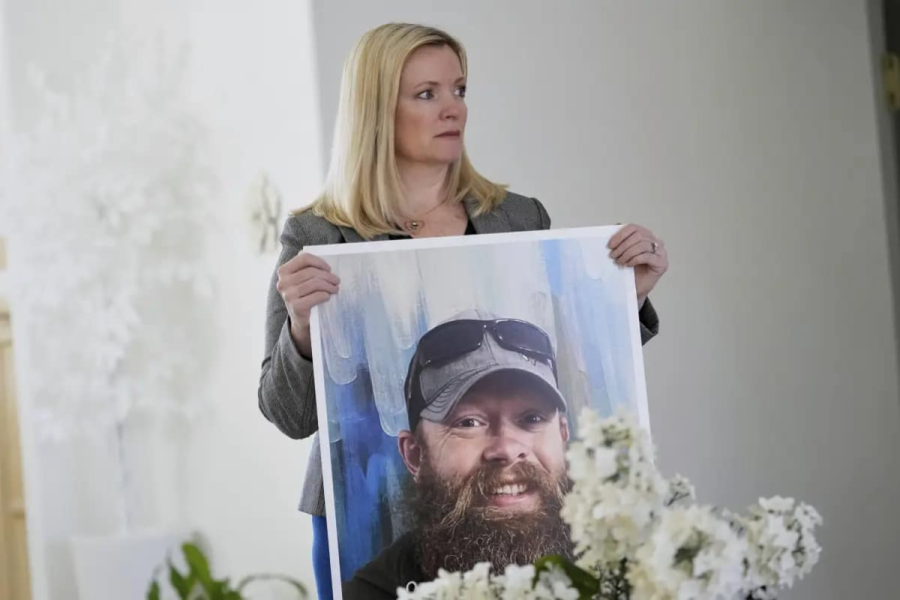
Gabriel Paul Horcasitas was convicted of manslaughter and endangerment for the November 2021 shooting death of Christopher Pelkey during a road-rage confrontation in Chandler, Arizona.
At a May 2025 hearing before Maricopa County Superior Court Judge Todd Lang, Horcasitas received a 10½-year prison sentence. During the hearing, Pelkey's family presented an AI-generated video that recreated his likeness and voice.
Pelkey's sister, Stacey Wales, created the video, which showed her brother addressing Horcasitas about forgiveness and his religious beliefs.
'In another life, we probably could have been friends,' the AI version of Pelkey said. 'I believe in forgiveness and in God, who forgives. I always have, and I still do'.
The presentation followed statements from Pelkey's family and friends about the victim's life and the impact of his death.
Horcasitas later challenged his sentence, arguing that the judge's consideration of the AI-generated video rendered the sentencing unfair. In a ruling issued on 30 September, the Arizona Court of Appeals agreed that the video had prejudiced the process.
The court upheld Horcasitas' manslaughter conviction but vacated his sentence and ordered a new sentencing hearing.


Judge Praised AI
Lang was visibly moved by the presentation before sentencing. 'I loved that AI,' Lang said. 'Thank you for that, and as angry as you are and justifiably angry as the family is, I heard the forgiveness, and I know Mr Horcasitas appreciated it, but so did I.'
The judge described the video as genuine and linked Pelkey's forgiveness to the character his family demonstrated.
The appeals court later determined that the video influenced Lang, although the record did not specify how it affected his sentencing decision. 'While the record does not reflect precisely how the AI video factored into the sentencing calculus, there is no question it played a role,' court documents state.
The Black Mirror Reference
The 'Actual Black Mirror behaviour' response prompted comparisons with Netflix episodes in which AI recreates or manipulates representations of real people.
Using AI to generate a video of a murder victim forgiving their own killer in court is actual Black Mirror behavior. We are officially letting technology cross way too many moral lines 💀
— FOSTER DVB (@FOSTER7864) October 6, 2026
In the 'Joan Is Awful' episode, AI-generated likenesses create fictional versions of real lives, blurring the line between reality and fiction. The 'Eulogy' episode further explores technology that lets people revisit memories of a deceased woman while creating her memorial.
These comparisons highlight concerns about AI blurring the boundaries between memory, interpretation, and reality. In Pelkey's case, the technology allowed a deceased man to be represented in court and to express thoughts he never recorded.
Wales also faced criticism for using AI to speak on her brother's behalf. 'If your sibling is using AI to tell your killer that you could have been friends, your sibling has lost the plot. Psych evaluation', one commenter wrote.
Another commenter broadened the criticism beyond the case, 'We need to end this false virtue of forgiving criminals. It's the narcissism of modern morality. Things are so good that you have to appear OVERLY virtuous. It's the kind of short-sighted kindness that has gotten people killed'.
We need to end this false virtue of forgiving criminals.
— Zeanxe 🇺🇸 🇮🇷 (@zeanxe) October 6, 2026
It's the narcissism of modern morality. Things are so good that you have to appear OVERLY virtuous.
It's the kind of short sighted kindness that has gotten people killed.
Court Draws Line
Horcasitas appealed, arguing that the AI video was unreliable, unfairly prejudicial, and violated due process.
The appeals court found that the video exceeded permissible victim-impact evidence and unfairly prejudiced the defendant. The court noted that it did not depict an actual event or Pelkey's own words but instead used an AI-generated recreation of his appearance and thoughts.
The court concluded that admitting the video was a fundamental error and that Lang's reliance on it made the sentencing procedure unfair. 'On this record, the judge's consideration of the AI video so prejudiced Horcasitas as to render the sentencing procedure fundamentally unfair,' the judges wrote.
The court vacated Horcasitas' manslaughter sentence and ordered a new sentencing hearing but left his conviction in place. The court has not set a new sentencing date.
Wales defended the video, telling ABC News that Pelkey 'did not have a chance to speak because he was permanently silenced'. She also indicated she is prepared to return to court and read the script herself at resentencing.