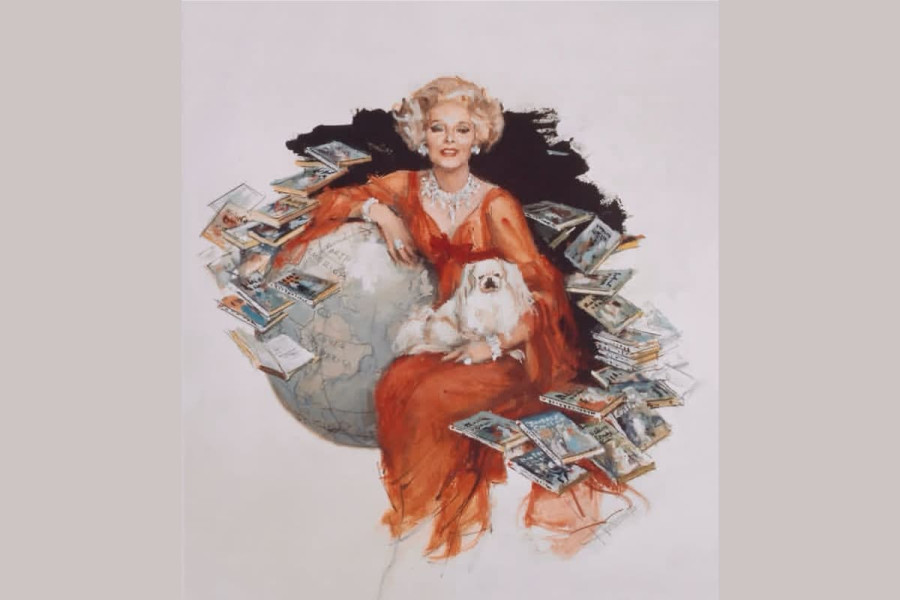
Barbara Cartland built her reputation on romantic stories filled with beautiful heroines, handsome men and marriages that ended happily ever after. But the famously pink-clad novelist also held some strikingly traditional views about romance, relationships and sex, including a very different standard for men and women when it came to virginity.
Cartland, who died in 2000 aged 98, was known for insisting that her female characters remained virgins until marriage. Yet her own comments about men were considerably less restrictive.
In a remark that has been repeatedly attributed to the romance novelist, Cartland said: 'A man should certainly not be a virgin on his wedding night. You want one person who knows what he is doing.' The quotation appears in the Guardian's obituary of Cartland and was also reproduced in a 2001 account about her work and legacy.
Cartland Had Different Expectations for Men and Women
Cartland's position was rooted in a traditional view of romantic relationships that placed different expectations on men and women.
Her novels were famous for featuring virginal heroines whose romantic journeys ultimately led to marriage. Contemporary accounts of her work repeatedly note the importance she placed on female chastity before marriage. Wired, reporting on her death in 2000, described her books as featuring young virginal heroines who married their romantic heroes and lived happily ever after. It also noted that Cartland herself advocated celibacy before marriage.
Her views were not limited to fiction. In a 1986 interview published by El País, Cartland said women were advised to reach marriage as virgins because she believed it gave greater stability to marriage. In the same interview, she argued that men could have sexual experiences outside marriage without necessarily being affected in the same way as women.
That makes her comment about male virginity particularly notable. Rather than applying the same standard to both sexes, Cartland argued that a prospective husband should have sexual experience before his wedding night.
Her Romance Novels Were Built Around Virgin Heroines
Cartland's ideas about virginity were closely tied to the formula that made her one of the most recognisable romance writers of the 20th century.
She published hundreds of novels during her career, with the Guardian noting that she produced 723 books during her lifetime. Her stories generally revolved around romantic love, courtship and marriage, while explicit sex was deliberately kept out of the narrative.
Cartland herself explained that she wanted to write about love rather than lust. In a 1987 interview, she said she did not allow her heroines to go to bed before they were married and argued that what she offered readers was 'beauty and love'.
The contrast between her fiction and her comments about male experience therefore stands out. Her heroines were expected to enter marriage untouched, while Cartland saw advantages in a man having prior sexual experience.


Cartland Was Outspoken About Sex and Marriage
Although her books were associated with innocence and romantic fantasy, Cartland was far from shy when discussing relationships.
The Los Angeles Times reported in 1987 that she allowed her characters to go to bed only after they were married, describing the intimacy in her stories in deliberately romantic rather than explicit terms.
Her public comments also reflected her belief that men and women were fundamentally different. In a 1987 UPI interview, Cartland said she believed men and women were 'not made equal' but 'made different by God'. She also argued that sexual experiences could have different emotional consequences for men and women.
Those views help explain why she could simultaneously champion virginity for her female characters while arguing that a man should have experience before marriage.
A Very Different Attitude From Modern Relationships
Cartland's comments were made in a social context very different from today's discussions about relationships and sexual experience.
She belonged to a generation in which ideas about marriage, gender roles and premarital sex were often framed through traditional expectations. Her own public persona was strongly connected to old-fashioned romance, femininity and courtship.
The Guardian noted in her obituary that Cartland remained committed to standards that some people considered outdated, while continuing to defend her particular version of romantic love.
That does not mean her views represented a universal rule or medical fact. They were Cartland's personal opinions, expressed within the cultural framework of her time.
Barbara Cartland's Legacy Remains Tied to Romance
Cartland died on 21 May 2000 at her home in Hertfordshire, aged 98. She left behind an enormous body of romantic fiction and a distinctive public image that included her trademark pink clothing and elaborate hats.
Her daughter, Raine, later became the stepmother of Diana, Princess of Wales, adding another connection between Cartland's life and Britain's royal history.
But beyond the pink dresses and record-breaking number of novels, Cartland's views on love and marriage remain an important part of her legacy. Her belief that female characters should enter marriage as virgins was central to her romantic formula, while her separate insistence that men should have experience before their wedding night revealed a striking double standard.
For a writer whose fictional world was built around idealised romance, it was an unusually blunt view and one that has continued to attract attention long after her death.