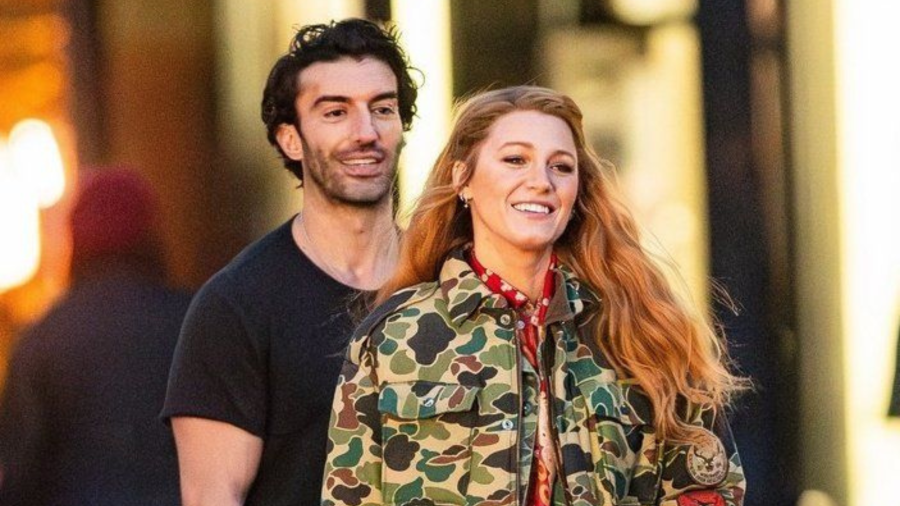
On Wednesday morning in New York City, Blake Lively and Justin Baldoni arrived for a closed hearing linked to their ongoing legal dispute—and observers quickly noted an unexpected detail. Both wore variations of army green, punctuated with soft pink accents, creating a visual symmetry that felt striking against the gravity of the occasion.
The pair have been embroiled in a public conflict since before the 2024 release of It Ends With Us, the adaptation of Colleen Hoover's bestselling novel in which they starred. In December 2024, Lively filed a lawsuit accusing Baldoni of sexual harassment during production, allegations he has firmly denied. Baldoni filed a counterclaim in January 2025, but the case was later dismissed. The dispute continues, with a trial expected in May.
Yet before proceedings even began, fashion became part of the narrative.
Blake Lively's Layered Message
Lively, 38, chose an oversized olive blazer with matching tailored trousers. Underneath, she layered a pale green striped knit over a pink striped button-up shirt, finishing the look with a pink floral pin fastened neatly at her lapel. A suede bag and boots in tonal green completed the ensemble.
The styling felt considered rather than incidental.
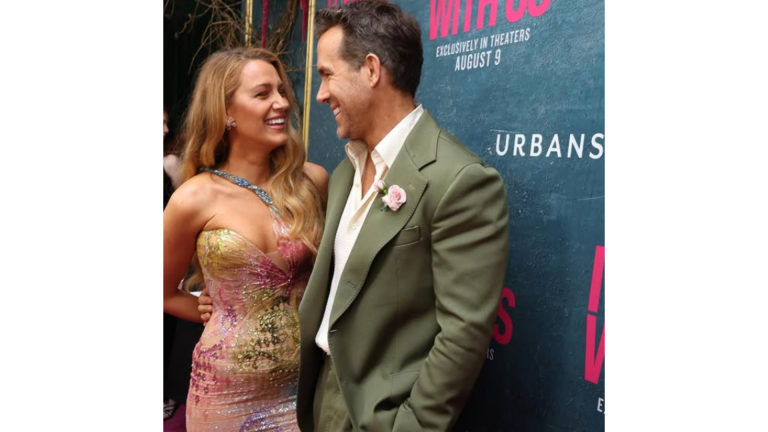
Throughout the promotional tour for It Ends With Us, Lively incorporated florals into her wardrobe as a nod to her on-screen role as a florist. According to Page Six, her husband, Ryan Reynolds, wore a green suit with a floral accent to the film's New York premiere in August 2024, prompting speculation that her courtroom attire may have echoed that earlier moment.
Army green carries weight. Historically rooted in military uniform, the shade has come to symbolise discipline, endurance, and steadiness. In tailoring, it offers authority without the severity of black or the predictability of navy. It suggests seriousness—yet with nuance.
The pink accents softened that message. In contemporary fashion, pink has been reclaimed as a colour of confidence rather than fragility. Designers across Europe have reframed it as assertive and modern, capable of balancing structure with sensitivity.
Baldoni's Parallel Palette
Baldoni arrived in grey windowpane trousers and a white crewneck shirt, layered beneath an olive overcoat and styled with a salmon pink scarf. The tonal overlap with Lively's outfit did not go unnoticed.
His look leaned more relaxed, yet the olive outerwear anchored the same visual language. His wife, Emily Baldoni, appeared in neutral tones — a tan coat over a beige sweater dress — reinforcing an atmosphere of restraint.
Whether the colour coordination was deliberate or coincidental remains unclear. However, in high-profile legal settings, wardrobe choices are rarely dismissed as irrelevant.
When Courtroom Dress Becomes Cultural Language
In moments of public scrutiny, clothing becomes a form of communication.
Courtroom attire traditionally favours muted palettes and structured silhouettes to project composure and credibility. Olive green is consistent with that framework. Less stark than black and less corporate than navy, it signals resilience without theatricality.
The addition of pink — through a floral pin or scarf — introduced warmth into what could otherwise read as austere. It tempered the symbolism of defence with a hint of personality.
For fashion observers, the shared palette inevitably invited interpretation. Colour, after all, is rarely neutral.
Image, Identity and Legal Theatre
High-profile disputes often unfold in two arenas: the courtroom and the court of public opinion.
Visual presentation plays a subtle but powerful role in shaping perception. From sharply tailored suits to carefully chosen accessories, public figures frequently use clothing to reinforce a sense of credibility, relatability, or resolve.
In this case, both Lively and Baldoni appeared to opt for steadiness over spectacle. There were no bold statements, no headline-grabbing embellishments—only measured tailoring in a restrained palette.
Unsealed communications connected to the dispute have reportedly drawn several prominent names into the wider conversation, including Taylor Swift, Scarlett Johansson and Ben Affleck. As media interest intensifies, so too does attention to every visual detail.
Fashion cannot determine legal outcomes. But it does influence narrative framing.
The Quiet Power of Coordination
The mirrored use of army green may have been a coincidence. Yet in an era where images circulate globally within minutes, visual parallels resonate quickly.
Army green, a colour associated with endurance, became an unexpected focal point in a dispute marked by public accusation and denial. Pink, often dismissed in the past as decorative, appeared as a subtle counterbalance—humanising, perhaps, or simply softening.
For those who follow fashion closely, the moment underscored a familiar truth: clothing speaks before statements are issued. It conveys mood, intention, and positioning without a single word.
As the case approaches its May trial, further appearances will no doubt be scrutinised through the same lens. In the meantime, this curious instance of courtroom coordination serves as a reminder that even in the most formal of settings, style remains a language—and army green, on this occasion, spoke volumes.