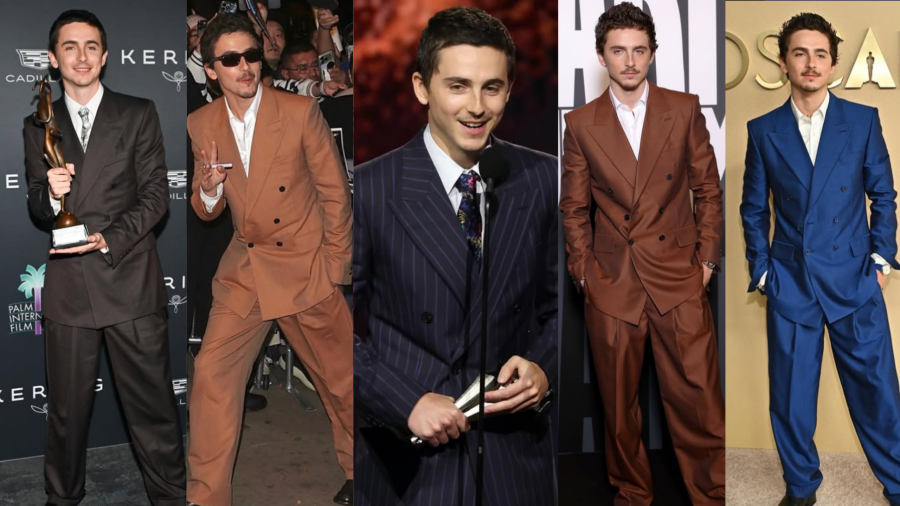
Menswear has evolved beyond novelty and spectacle. One of the clearest lessons in modern dressing is the power of repetition—not mindless copying, but deliberate consistency. Timothée Chalamet has demonstrated this principle while promoting his latest film, Marty Supreme, wearing the same Givenchy suit in five distinct colours. The cut — slim lapels, structured shoulders, and a tapered leg — remains constant, allowing colour to carry the expressive weight.
What makes this approach noteworthy is that it shifts the focus from the celebrity wearing the suit to the suit itself—its structure, versatility, and its capacity to communicate subtly through colour. In an era when menswear can lean either toward ostentation or uniformity, Chalamet's example offers a practical lesson: once you have a garment that works, exploring it through colour is an intelligent way to expand a wardrobe without unnecessary risk.
Across public appearances, Chalamet has been photographed in each colour iteration, showing how a single silhouette can adapt to different moods and settings while remaining visually striking. The design's simplicity allows the colour to become the focal point, showing how subtle variations can transform a single garment into multiple statements without ever feeling repetitive.
Why a Single Suit in Multiple Colours Works
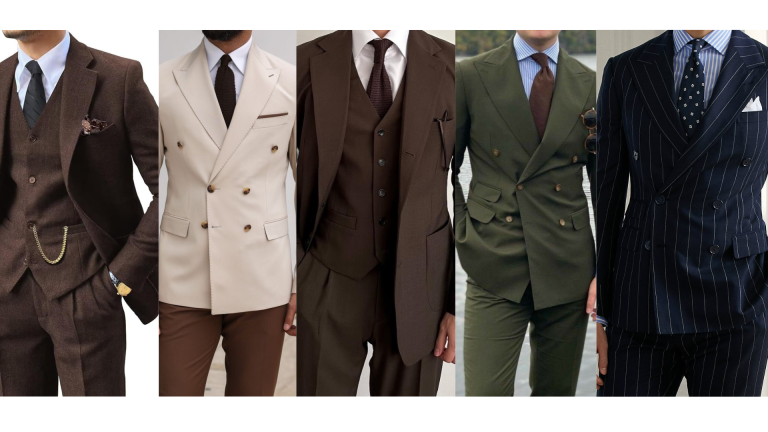
Once a garment fits perfectly, complements posture and proportion, and delivers consistent comfort, it becomes a building block for a versatile wardrobe. Investing in multiple colours of the same suit eliminates daily guesswork while offering flexibility. Darker shades, such as navy or charcoal, communicate formality and authority. Mid-tones like olive provide understated modernity, while lighter or warmer tones, such as cream or burgundy, introduce personality without sacrificing composure.
This principle mirrors European tailoring philosophy. British houses, from Savile Row's Gieves & Hawkes to Anderson & Sheppard, emphasise proportion, structure, and subtle tonal variation. By keeping the cut consistent and experimenting with colour, a single garment becomes multiple solutions for a range of occasions — daytime screenings, gala events, or press appearances — without ever feeling repetitive.
Repetition as a Tool, Not a Constraint
Repetition in menswear is often misunderstood. Buying the same garment in different colours is not a sign of laziness or lack of imagination. It is a strategy for consistency, efficiency, and self-expression. Once a cut works, it becomes a signature — a shorthand for confidence. Fashion history offers ample evidence: Giorgio Armani's devotion to fluid tailoring and Tom Ford's insistence on clean, assertive lines both show that mastery lies in discovery and refinement, not constant novelty.
Using the same garment across multiple colours also reduces cognitive load. For busy professionals or public figures, relying on proven silhouettes frees mental energy for other decisions. The consistency ensures the garment behaves predictably: it hangs correctly, photographs well, and remains comfortable throughout the day. Colour, then, becomes the primary tool for personal expression. Olive, burgundy, cream — each shade tells a story without altering the trusted foundation of the cut.
Colour as Controlled Experimentation
Colour is the arena where nuance enters. Men may adopt subtle variations — olive instead of beige, burgundy instead of black — as a form of experimentation within safe boundaries. Neutral tones such as black, navy, or grey remain anchors, while one or two accent colours can refresh the look. Modern menswear brands like Sunspel, Uniqlo U, and Brunello Cucinelli understand this instinct: men prefer evolution over risk, and a familiar garment in a new tone allows experimentation without compromising reliability.
The emotional connection to clothing also plays a role. A jacket worn to a memorable event, a shirt that consistently earns compliments, or trousers that complement posture and proportion all accrue personal value. Rebuying these pieces in new shades allows a man to preserve both practical utility and aesthetic memory, making repetition a conscious, thoughtful choice.
Practical Takeaways for Modern Dressing
- Invest in fit first: A well-tailored cut forms the foundation; colour enhances it.
- Use repetition strategically: Proven silhouettes provide consistency and confidence.
- Let colour express personality: Experiment with subtle variations while retaining a familiar structure.
- Keep accessories minimal: Shoes, belts, and pocket squares should complement, not compete with, the garment.
- Balance efficiency and nuance: Using one cut in multiple shades saves effort while allowing visual variety.
Chalamet's approach illustrates these principles in action. By rotating the same suit across five colours, he demonstrates that style is less about novelty and more about deliberate, considered choices. Structure provides the canvas; colour offers controlled expression; repetition preserves reliability.
How Repetition Becomes Refinement in Men's Style
This lesson applies to anyone looking to elevate a wardrobe. The suit — once mastered — can function as a versatile tool across events, seasons, and settings. Modern menswear is about intelligence, awareness, and self-knowledge. A single, well-cut suit in multiple colours is not repetition; it is refinement.
Ultimately, mastery in menswear comes from understanding what works, trusting it, and using colour as a means of measured expression. It's a lesson in consistency, versatility, and controlled creativity — one that every man can apply, celebrity or not.