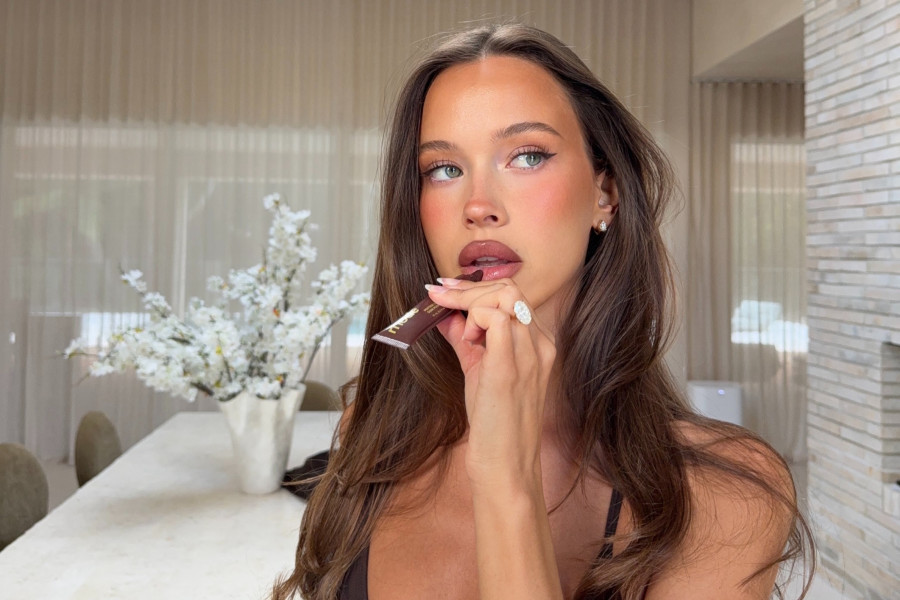
Isabelle Mathers is a 27-year-old Australian model and social media influencer known for her fitness-focused content, swimwear shoots, and lifestyle posts that often rack up millions of views across Instagram. She has built a strong online following through curated fashion imagery, brand collaborations, and a consistent aesthetic that leans heavily into athleisure and beachwear styling.
But recently, she's found herself back in the online conversation.
Claims spread across social media suggesting that one of her Instagram photos may have been digitally altered. And fans online certainly have plenty to say about it.
Did This Influencer Edit Her Abs?
The photo in question was part of a carousel featuring monochromatic athleisure outfits shared in collaboration with CSB (Crop Shop Boutique), a brand known for its home and activewear sets.
Her post is exactly the kind of content you'd expect from a fitness and fashion influencer. It looks neat, aesthetic, and effortlessly styled.
But things took a turn when users began zooming in on one specific image where her abs appeared unusually flat. That's where the speculation started. They pointed out what looked like slightly warped chair legs in the background, which they claimed could hint at digital manipulation.
Still, it's worth stressing that there has been no confirmation from Mathers or any credible source that the photo was edited. Everything so far remains based on online observation and interpretation.
Fans React to Alleged Photo Editing
As expected, the internet didn't hold back.
Some users expressed frustration, questioning why influencers would feel the need to alter already fit and healthy-looking bodies. Others shared a more personal angle, saying that edited images can quietly mess with self-esteem—especially when you're scrolling casually and suddenly comparing yourself to something that might not even be real.
One widely shared sentiment pointed out how younger audiences, particularly teens, could be affected by this kind of content. There were also comments suggesting that social media has turned into a kind of 'body-check competition'.
At the same time, many defended Mathers, arguing she likely has a naturally athletic physique and doesn't need heavy editing.
The discussion quickly expanded beyond one influencer, becoming more about the culture itself than a single post.
Comment
by u/reginapetite from discussion
in LAinfluencersnark
Comment
by u/reginapetite from discussion
in LAinfluencersnark
Comment
by u/reginapetite from discussion
in LAinfluencersnark
Comment
by u/reginapetite from discussion
in LAinfluencersnark
Behind Influencers' Editing Culture
Editing tools are now deeply embedded in social media culture. From subtle lighting adjustments to more advanced body reshaping features, apps make it easier than ever to perfect an image before posting.
True enough, digital enhancement has become increasingly normalised in influencer marketing and online self-presentation.
And it's not always obvious. A post can look natural at first glance, but small tweaks — whether through professional editing or mobile apps — can significantly change how a body or scene appears.
And honestly, that lack of transparency is exactly what fuels public debate.
The Rise of Hyper-Perfect Social Feeds
Zooming out, this isn't just about one Instagram post. It's about where we are heading with AI-driven image tools and hyper-curated online identities.
AI editing has made it incredibly easy to adjust facial structure, smooth skin, or subtly reshape bodies with just a few taps. Platforms like Instagram and TikTok now offer built-in filters that can change appearance in real time, blurring the line between what's captured and what's constructed.
This shift has contributed to a growing expectation of 'perfect visuals' online. The problem is, perfection online often doesn't exist offline—and audiences are increasingly aware of that gap.
As these tools improve, the issue is no longer whether editing is used, but how openly creators choose to admit it.
How Much of Social Media Is Real?
The conversation around Isabelle Mathers' Instagram post says less about one individual and more about a much bigger cultural tension online. There is no confirmed evidence that the images were edited, but the reaction shows how quickly audiences now question visual authenticity.
What's clear is that influencer culture is operating in a space where aesthetics, branding, and digital enhancement often overlap. As AI tools and editing apps become even more advanced, that overlap will only grow.
At the heart of it all is a simple issue: How much of what we see online is real, and how much of it is refined for the scroll?
And in a world where images shape perception faster than ever, that question isn't going away anytime soon.