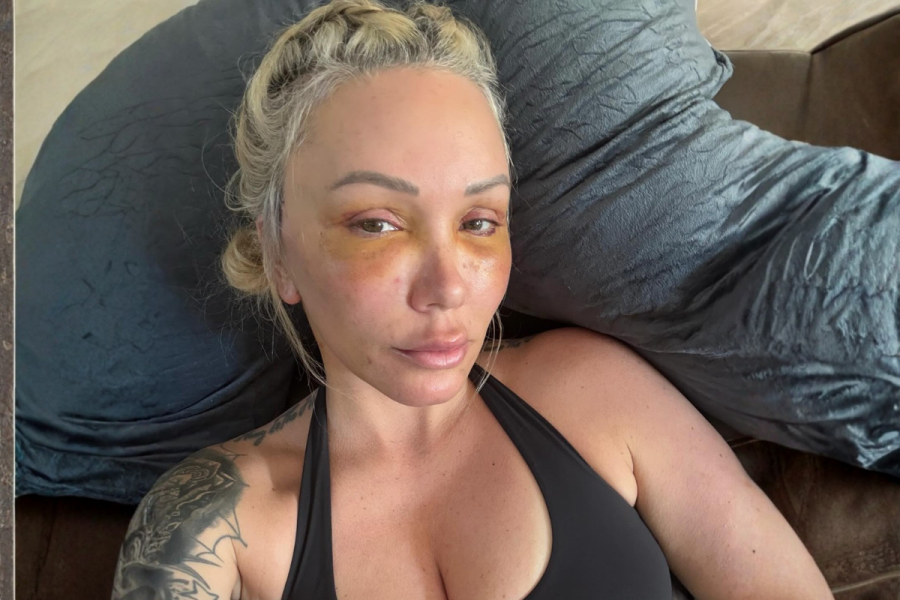
Bunnie Xo has called on celebrities and influencers to disclose their cosmetic procedures, arguing that presenting surgically altered appearances as natural can deepen false beauty standards for young women and girls.
The Dumb Blonde podcast host made the comments during a 3 August episode with Wild Things and Starship Troopers actress Denise Richards, saying public figures who share their lives online owe their audiences honesty. 'I never want a little girl to look at me and be like, "I want to just look like her." Like, girl, I don't even look like me,' Bunnie said.
Bunnie Xo Calls for Full Transparency
Richards began the exchange by praising Bunnie for speaking openly about her facelift, telling her she was 'so happy' to see that transparency. Bunnie responded that anyone choosing to have work done should 'just be honest about it', while stressing that her comment was not intended as criticism of any specific celebrity.
She described disclosure as part of the responsibility carried by people who build careers around sharing their image, routines and personal lives online.
For Bunnie, the issue is not whether women should change their appearance, but whether audiences are given enough context to understand what they are seeing. Filters, injectables, surgery, lighting and professional styling can all sit behind an image presented as effortless or natural.
Her warning focused particularly on younger viewers, who may compare their developing faces and bodies with highly managed celebrity content without knowing how those results were created.
The 46-year-old podcaster, author and founder of Dumb Blonde Productions has documented her own cosmetic work rather than limiting followers to polished after-images. In March, she posted footage taken before and after her facelift, including visible swelling and bandaging during the early stages of recovery.
She later discussed receiving smaller breast implants following a 20-pound weight loss, saying in July: 'I'm all for advocating for women to do whatever they want with their bodies.'
Anna Akana Shares Her Perspective
Akana, 35, agreed that openness can help women understand that celebrity and influencer appearances are often shaped by filters, editing, professional styling and other enhancements that are not always visible to audiences in everyday life.
The actress, filmmaker and comedian has previously spoken about body image pressures and the impact of social media on self-esteem, particularly for younger viewers growing up online.
She noted that digital platforms can blur the line between natural appearance and curated presentation, making it difficult for audiences to distinguish what is real and what has been altered.
Akana has also discussed the importance of creators being transparent about the tools and processes behind their content, arguing that honesty can help reduce comparison culture and unrealistic expectations.
Her perspective aligned with Bunnie's central point that greater disclosure is not about judgement, but about helping audiences better understand the standards they are being shown.
Cosmetic Procedures Remain Widespread
The discussion comes as cosmetic procedures remain deeply embedded in beauty culture. Figures released by the American Society of Plastic Surgeons show that nearly 1.6 million cosmetic surgical procedures and more than 28.5 million minimally invasive procedures were performed in the US in 2024. Breast augmentation accounted for 306,196 surgeries, while neuromodulator injections and hyaluronic acid fillers together exceeded 15 million treatments.
Bunnie's argument separates personal choice from public presentation. She has repeatedly said women should be free to alter their bodies if doing so makes them happy, but maintained that celebrities should not allow audiences to mistake purchased or surgical results for genetics, skincare or discipline alone. By placing her own before-and-after images, recovery and regrets in public view, she is asking the beauty conversation to include the work behind the finished face.