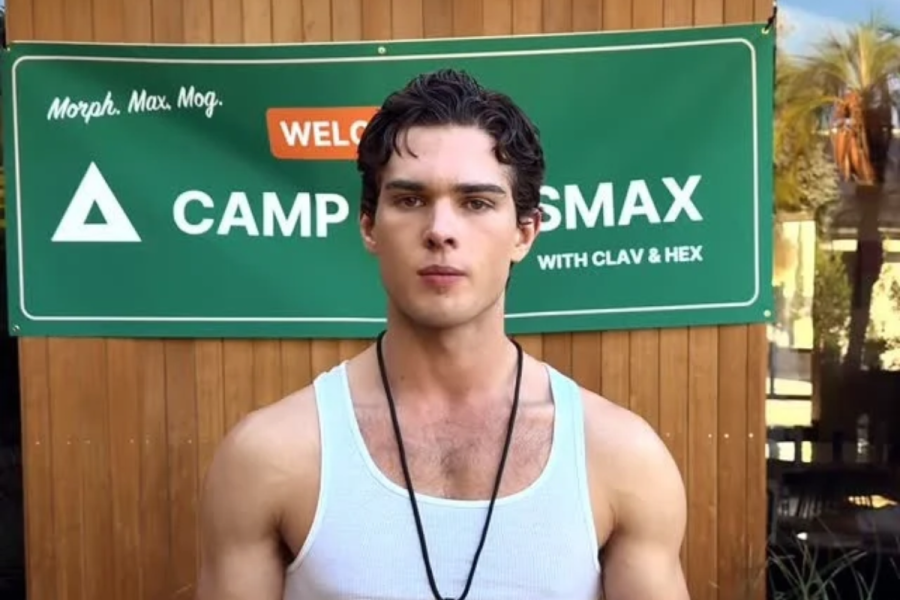
When William Munro's parents walked into his bedroom and found it empty, they rang him in a panic as he waited at Toronto Pearson Airport. The 19-year-old business student from London, Ontario, initially claimed he had won a YouTube giveaway. He eventually confessed the truth: he had secretly booked a trip to Los Angeles to attend Clavicular's looksmaxxing bootcamp.
The trip cost $7,000 (£5,200), including $5,000 for entry and $2,000 for flights, funded by years of odd jobs and gambling winnings. Munro returned home planning to spend another $40,000 (£30,000) on double jaw surgery, describing the entire experience as a 'radical choice.'
Inside Clavicular's 'Camp Looksmax'
Clavicular livestreamed the seven-day event around the clock on its official Kick channel, turning every awkward moment into public content. According to Munro, participants shared personal statistics, including penis size, and were sent door-to-door to sell casino deals, activities with little connection to traditional grooming.
Forcing young men to broadcast their body measurements and perform high-pressure sales pitches creates an intense environment of public comparison. The format conditions attendees to expose their insecurities while competing for approval from the group and the influencer running it, rewarding brand loyalty over any genuine aesthetic improvement.
Clavicular's side rejects any blame. Spokesperson Mitchell P. Jackson said: 'The student was a 19-year-old adult. Clavicular is not responsible for checking if a 19-year-old called mommy and daddy before buying a ticket to Camp Looksmax, especially when the student says he had a happy experience.'
Why Men Spend Thousands on Looksmaxxing
Munro frames his secret trip as a bold step toward self-improvement, mirroring the empowering language these camps use to make heavy spending feel like taking control.
Yet the underlying narrative points to a different reality. What began with a lie to his family ended in a week of public evaluation and high-stakes sales pitches, leaving a teenager considering a $40,000 (£53,500) surgical procedure after a single event. It shows how a targeted sales funnel can turn online insecurity into costly real-world decisions.
Softmaxxing vs Hardmaxxing Explained
Looksmaxxing is the online subculture focused on maximizing physical attractiveness. It divides into two categories: 'softmaxxing,' which covers accessible daily habits like skincare, grooming, and exercise; and 'hardmaxxing,' which involves invasive surgical procedures.
The scene relies on pseudo-clinical jargon. Followers discuss 'canthal tilt' (the angle of the eyes) and 'mewing' (a tongue-posture technique claimed to reshape the jawline, despite a lack of supporting evidence). The extreme fringe even advocates 'bone-smashing,' which involves deliberately striking the face to alter bone structure. This clinical language legitimizes an online male-face ranking system that urges young men to pay to climb the ladder.
The Hidden Risks of Jaw Surgery
Double jaw surgery, known medically as orthognathic surgery, requires cutting and repositioning both the upper and lower jaws. It carries severe risks, including permanent nerve damage, chronic pain, lasting numbness, altered airways, and an arduous recovery process. Surgeons typically reserve the operation for significant functional bite or breathing impairment.
Undergoing major surgery to chase an online trend retains every clinical risk while eliminating the medical necessity for taking them. A $40,000 (£30,000) procedure inspired by a livestream requires rigorous assessment by a qualified surgeon, not an influencer's pitch.
Munro's story highlights the growing reach of online trends that promise total personal transformation at a steep financial and physical price. As these bootcamps continue to blur the line between self-improvement and high-pressure marketing, stories like his serve as a stark reminder of how easily online insecurities can escalate into life-altering decisions.