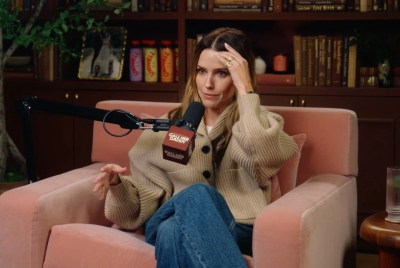
Christina Ricci has delivered a brutal three-word verdict on Joe Rogan's podcast, telling social media users she would 'rather die' than listen to The Joe Rogan Experience. The Yellowjackets and The Addams Family actress posted the reply on Threads on 16 July after a Black-owned online bookstore celebrated people who had never tuned into the controversial show.
The original post read: 'Shoutout to anyone who has NEVER listened to the Joe Rogan podcast!' Ricci, who uses the handle @riccigrams, responded directly underneath: 'I'd rather die.' Her remark quickly spread beyond Threads as users praised the actor's refusal to soften her opinion.
Christina Ricci Delivers a Three-Word Verdict
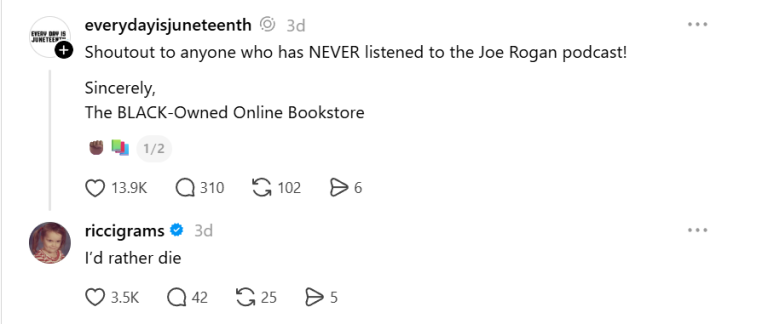
Ricci did not explain whether her criticism concerned a particular episode, guest or statement made by Rogan. Instead, the brevity of her response appeared to be the point, turning an ordinary Threads exchange into another viral celebrity moment. One user replied, 'You and me both, sister', while another described Ricci as one of the few stars they had admired both as a child and as an adult.
The comment also fits Ricci's increasingly direct social media presence. The Emmy-nominated actress, known for playing Wednesday Addams in The Addams Family films and Misty Quigley in Yellowjackets, has recently used her accounts to challenge public figures and commentary she considers harmful. Her Joe Rogan response contained no detailed accusation, but it placed her firmly among online users who view refusing to listen as a statement in itself.
That distinction matters because The Joe Rogan Experience remains enormously popular despite years of criticism. Rogan's verified YouTube channel continues to release several long-form episodes each week, frequently attracting hundreds of thousands or millions of views. Recent guests have included comedians, politicians, scientists and figures connected to some of the internet's most persistent conspiracy theories.
Why Joe Rogan's Podcast Remains Divisive
Rogan launched The Joe Rogan Experience in 2009, eventually turning the long-form interview programme into one of the podcast industry's most recognisable titles. The show features conversations with comedians, actors, politicians, scientists, athletes and online personalities, with individual episodes often lasting several hours.
Its informal format has attracted a vast audience, but it has also generated sustained scrutiny over claims made by Rogan and some of his guests. Critics have argued that lengthy, minimally edited conversations can give misleading or unverified statements considerable reach. Supporters, meanwhile, have defended the programme as a space for open-ended discussion and perspectives that may receive less attention elsewhere.
That debate became particularly prominent during the COVID-19 pandemic. In January 2022, Spotify acknowledged concerns raised by medical professionals and listeners before announcing that it would add content advisories to podcast episodes discussing COVID-19. Spotify chief executive Daniel Ek said the company had a responsibility to support creator expression while balancing it with 'the safety of our users'.
Spotify also admitted that it had not previously been transparent enough about the policies governing content on its platform. The company said advisories would direct listeners towards information provided by scientists, doctors, academics and public health authorities. It stopped short of removing Rogan's programme, which remained one of its most commercially significant podcasts.
The Podcast's Reach Has Not Disappeared
Despite repeated controversies, The Joe Rogan Experience continues to command a substantial online audience. Rogan's official YouTube channel has approximately 21 million subscribers and hosts thousands of videos, with recent episodes continuing to attract hundreds of thousands or millions of views.
Ricci's remark therefore does not suggest that Rogan's influence is fading. Instead, it reflects the sharp cultural divide that has followed the programme alongside its commercial success. For some audiences, listening to Rogan represents curiosity about long-form and unfiltered conversations; for others, refusing to listen has become an equally deliberate position.
Ricci did not launch a detailed critique or call for the podcast to be removed. Her contribution was simply a three-word refusal, delivered beneath a social media post. Yet the force of 'I'd rather die' ensured that her position required no further translation.