
Zendaya has turned the promotional tour for Christopher Nolan's The Odyssey into a modern lesson in Grecian fashion, appearing throughout July 2026 in draped gowns, sculptural bodices, metallic accessories and dramatic white silhouettes inspired by mythology. The Emmy-winning Euphoria actress, who plays the Greek goddess Athena in the film, has worked with stylist Law Roach to connect each appearance with the ancient world as the blockbuster arrives in cinemas on 17 July.
zendaya at the premiere of the odyssey pic.twitter.com/WljjW5GluP
— ˖᯽ ݁˖ pop backup ˖᯽ ݁˖ (@popbackupp) July 14, 2026
The strongest example came at the film's New York premiere on 14 July, where Zendaya wore a white Matières Fécales gown with enormous wings and a feather-like train. Earlier appearances included a sculpted Schiaparelli couture dress, a crisp white custom look for a London photocall and a vintage gold Zuhair Murad skirt suit that resembled contemporary goddess armour.
What Does Grecian Fashion Mean?
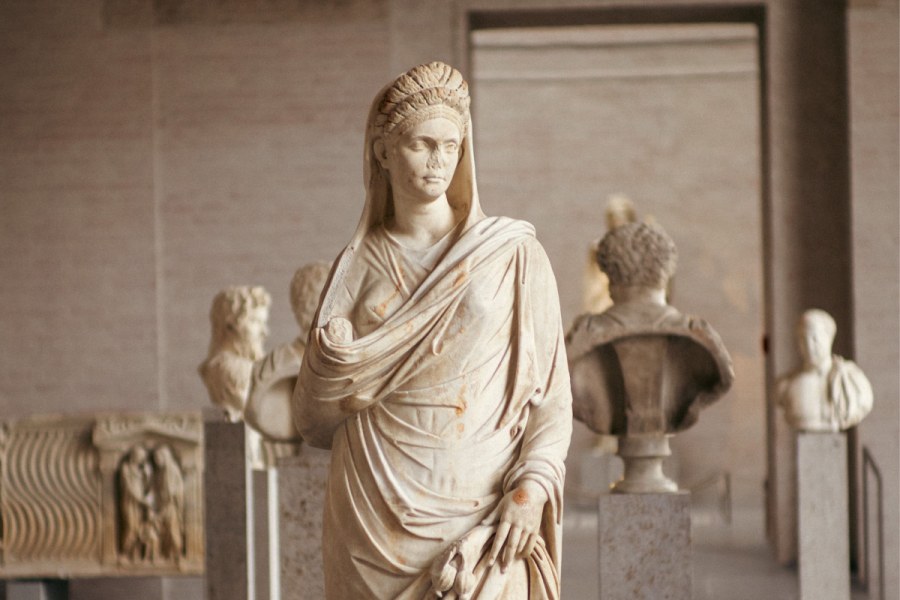
Modern Grecian fashion usually refers to clothing featuring loose draping, gathered fabric, pleats, asymmetrical necklines, high waists and long column-like shapes. However, those details are modern interpretations of several garments worn in ancient Greece rather than one single historic dress.
The Metropolitan Museum of Art identifies three major forms of ancient Greek women's clothing: the chiton, peplos and himation. It describes the chiton as a garment created from rectangular fabric joined at the sides and fastened around the shoulders, while the peplos used a folded overlayer and shoulder pins. The himation was a larger rectangular cloak that could be wrapped around the body in different ways.
Ancient clothing involved surprisingly little cutting, meaning its shape largely came from how fabric was pinned, belted, folded and arranged around the wearer. The museum notes that the himation's 'range of draping and wrapping possibilities' became one of the clearest sources for later Grecian-inspired fashion.
Zendaya Reworks the Greek Goddess Look
Zendaya attends the world premiere of "The Odyssey". pic.twitter.com/dZiCVUA6kr
— ˚ʚ♡ɞ˚ (@metgalacrave) July 6, 2026
Zendaya's The Odyssey wardrobe does not attempt to recreate ancient clothing exactly. Instead, Roach and the participating fashion houses have used recognisable visual codes, including flowing white fabric, gold surfaces, pleating, breastplate-like structures and sandals reminiscent of gladiator footwear.
At the London premiere, Zendaya wore the closing look from Schiaparelli's autumn 2026 couture collection. Its sculpted torso, decorated surface and narrow column silhouette gave the appearance of a statue or ceremonial breastplate, connecting her role as Athena with the goddess's association with wisdom and warfare.
Her gold Zuhair Murad ensemble offered a more wearable interpretation. The plunging brocade jacket and thigh-high split skirt used metallic fabric rather than literal draping, while gold jewellery and heels continued the mythological theme. The outfit showed that Grecian fashion can move beyond toga-like dresses through armour references, jewellery, symmetry and colour.
The winged New York premiere gown pushed the concept towards fantasy. Although wings are not a defining element of ancient Greek clothing, they strengthened the supernatural imagery surrounding Zendaya's Athena and gave the press tour a clear visual finale.
Ancient Greece Was Not Only White
The familiar image of Grecian fashion as white, minimal and marble-like is partly misleading. Ancient Greek clothing was often made from wool or linen and could feature vivid colours and elaborate decoration, while traces of pigment show that Greek sculpture was originally painted rather than uniformly white.
The pale goddess look became more dominant because ancient statues lost much of their colour over time. The Met explains that white and beige later became closely associated with classical fashion because of 'the bleaching out of ancient, originally polychromed marbles'.
Designers have continued returning to Greek dress because its basic construction allows fabric to move around the body without relying on heavily fitted tailoring. Paul Poiret, Madame Grès, Yves Saint Laurent, Alexander McQueen and Gianni Versace are among the designers who have interpreted classical draping, peplos shapes, armour and Greek motifs across different periods.
Zendaya's The Odyssey looks have now brought those references back into a celebrity-fashion cycle. Rather than reviving one authentic ancient outfit, the tour presents Grecian fashion as a flexible vocabulary of draping, metallic details, column silhouettes and mythological symbolism that can still be rewritten thousands of years later.