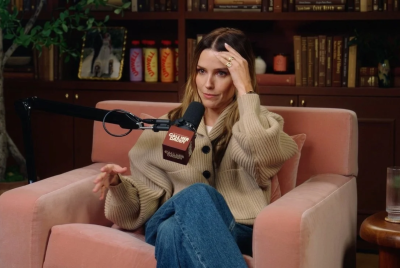
A woman who openly declared herself 'fatphobic' has sparked a furious debate online after saying 'fat people scare me' and insisting she will not pretend someone living with obesity is 'skinny' or praise them for what she considers neglecting their health.
In a blunt TikTok video, the woman questioned what she described as a growing expectation to support people's bodies regardless of their weight. She said she was not interested in telling people what they wanted to hear and argued that being honest about obesity should not automatically be labelled bullying.
Her comments have since drawn a strong response from an obesity doctor, who accused her of confusing public shaming with genuine accountability and argued that weight stigma can actually have damaging consequences.
Woman Defends Her 'Fatphobic' Views
The woman began her video by declaring: 'Fat people scare me. I am fatphobic.' She then questioned why people should be expected to look at someone who is clearly overweight and tell them they are 'so skinny' or offer praise simply to protect their feelings.
In a sarcastic comparison, she asked whether people would similarly encourage someone with a broken leg to run a marathon simply because it might make them feel better. She also insisted that her views were informed by personal experience, revealing that she had previously been 'almost obese'. She recalled hating shopping, having photographs taken and running out of breath while doing basic activities.
'I will not tell you things you wanted to hear,' she said, adding that she was not interested in handing out 'participation trophies' for what she viewed as neglecting health.
Her most provocative remark came when she addressed people who object to being called 'fat'.
'Getting called fat hurt your feelings? I don't care,' she said. 'You're fat. Don't want to be fat anymore? Do something about it.'
Obesity Doctor Calls Out 'Ridiculous' Argument
An obesity doctor responding to the video said he had 'so many things' to address and rejected the idea that people with obesity expect others to pretend they are thin.
'My patients with obesity already know that they have obesity,' he said.
The doctor explained that some patients may choose to describe themselves as 'fat', but that does not mean they expect everyone around them to deny their weight. His biggest criticism was aimed at the woman's use of the word 'accountability'.
He argued that genuine accountability normally comes from an appropriate source, such as a doctor, coach or someone a person has specifically asked for help.
Random strangers telling someone online to 'put the fork down' or lose weight, he said, is not accountability.
'That's shame, that's not actually accountability,' the doctor said.
He added that if someone with obesity specifically asks for advice about improving their fitness, health or weight, that is a different situation. Unsolicited insults, however, do not constitute medical guidance.
@drspencer Fat people scare her? Obesity Doctor reacts 👆 One of my harder watches of this year
♬ original sound - Dr. Spencer Nadolsky
Research Challenges the Idea That Shame Works
Research supports the doctor's argument by examining weight stigma and its effects.
A systematic review found evidence linking internalised weight stigma with adverse outcomes including body shame, body dissatisfaction, disordered eating and poorer healthcare experiences, although researchers noted that evidence for some outcomes remains mixed.
A more recent systematic review also found evidence that weight stigma can cause physical and psychological harm, including increased physiological stress and difficulties with dietary control following stigmatisation.
Research has also suggested that weight stigma may be associated with reduced physical activity, with several studies finding links between discrimination or internalised stigma and lower levels of activity.
That does not mean obesity should be dismissed as harmless. The US Centres for Disease Control and Prevention describes obesity as a complex chronic disease influenced by factors including health behaviours, stress, medical conditions, medication, genetics and a person's environment. Conditions such as polycystic ovary syndrome and an underactive thyroid can also contribute to weight gain or insulin resistance.
TikTok Users Hit Back
The woman's video also prompted commenters to highlight the factors they said were missing from the discussion.
One wrote: 'Skinny doesn't equal healthy.'
Another pointed to 'kids, depression, PTSD, metabolism, GENES, health issues, life situations' as potential influences on weight.
Others shared personal medical experiences. One commenter said they had hypothyroidism, PCOS and diabetes and struggled to lose weight, while another referred to PCOS and insulin resistance.
The comments underline the central dispute: while the woman frames weight primarily through personal responsibility and accountability, critics argue that obesity can involve a complicated combination of biological, medical, psychological and environmental factors.
The CDC likewise states that obesity is influenced by factors including genetics, stress, sleep, access to affordable food, safe places to exercise and healthcare, alongside individual health behaviours.
For the doctor, however, the issue is not whether obesity can affect health. His objection is that strangers believe humiliation is an effective treatment.
'Please, anybody that's watching this, don't ever be like this person,' he concluded.
The clash has reignited a familiar but increasingly heated online argument over obesity, body image and personal responsibility—and whether confronting someone about their weight is genuine accountability or simply weight stigma dressed up as concern for their health.