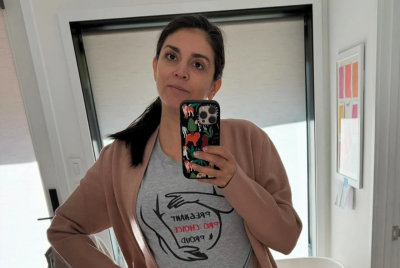
Grace Graham has hit back at claims that her appearance helped her climb the construction career ladder, insisting that the years of work, training and qualifications behind her success are too often overlooked.
The 25-year-old project manager from Middlesbrough says she has faced assumptions about her abilities because she is a young woman working in a traditionally male-dominated industry. But she believes the biggest frustration is being judged differently for behaviour that might be viewed as confident and professional if she were a man.
Graham's experience raises a wider question about whether women can face a double standard at work even when they have earned their position through experience and qualifications. For her, being described as 'bossy' or 'emotional' can feel like the opposite side of the same stereotype that sees attractive women accused of benefiting from 'pretty privilege'.
'I Would Have Been Called Assertive'
One of Graham's strongest criticisms centres on the language used to describe her at work.
She says she has been called 'emotional', 'bossy' and accused of trying to prove a point when dealing with people professionally.
'I knew if I was a man I would have been called assertive,' Graham said.
The comment captures the double standard she believes women can encounter when they take charge. Being direct, confident and prepared to stand their ground can be interpreted as leadership in a male colleague, but as difficult behaviour in a woman.
Graham says the experience has taught her to develop a 'thick skin', even though she believes women should not have to tolerate such assumptions simply to succeed.
Why 'Pretty Privilege' Annoys Her
The suggestion that Graham's looks played a role in her career progression is particularly frustrating because of the work she has put into reaching project management.
She began working in construction at 17, starting in an administrative role at a housing company before completing a degree apprenticeship. She later earned an APM Project Management Qualification and additional credentials before being promoted to project manager in August 2025.
Graham says some people nevertheless assume that her appearance has helped her get ahead.
'Sometimes I think how I look plays a part. People assume it's "pretty privilege" and this really annoys me as they don't realise how hard I've worked to get where I am,' she said.
For Graham, that assumption reduces years of professional development to something she cannot control: her appearance.
There is also a contradiction at the heart of her experience. If an attractive woman succeeds, people may suggest her looks have given her an advantage. Yet Graham says her appearance can also lead people to question whether she is capable of holding authority in the first place.
Doubts in the Meeting Room
Those assumptions have followed Graham into professional meetings. She says men have sometimes appeared surprised when she walks into a meeting or takes the lead, with some questioning why she is there.
'I think men do a double take sometimes when I'm hosting a meeting or walk into a meeting room and question why I'm there,' she said.
Graham has also faced comments questioning whether a woman can manage a team of men.
'Throughout my career, I've had people say I can't be a woman and manage a team of men,' she added.
For a project manager whose role involves leadership and responsibility, Graham says those reactions can make it harder to establish credibility before she has even had the opportunity to demonstrate her expertise.
'People Don't Believe Me'
The assumptions are not limited to construction sites or meetings. Graham says people outside the industry have sometimes struggled to believe that she works in construction at all.
'When I'm not at work, and I tell people I work in construction, I've had people not believe me. I've had to show pictures before,' she said.
The reaction illustrates how strongly certain careers can still be associated with men. Rather than simply being asked what she does, Graham can find herself having to prove it.
Yet she is keen to stress that her experience does not represent every man she has worked with.
Most of Her Colleagues Have Supported Her
Graham says around 90% of her team and other people she has encountered in construction have been 'brilliant'. She also makes a point of acknowledging that many men have actively helped her career and that she gets on well with colleagues.
Her criticism, is not that construction is universally hostile to women. Instead, she says there are still moments when she has to work harder to be taken seriously.
'Don't get me wrong, many men have really helped me in my career. But it is sometimes a fight to get through, and you're not taken seriously,' she said. That distinction makes Graham's story less about blaming an entire industry and more about challenging the assumptions that can affect women within it.
Her Ambitions Are Only Getting Bigger
Graham has no intention of allowing those experiences to determine how far she goes. She hopes to become a senior project manager within the next 18 months, with an eventual ambition of becoming an operational director.
'I know that'll happen. There's no stopping me,' she said.
She is also encouraging young women to consider construction and explore its many different career paths, particularly apprenticeships that allow people to learn while gaining practical experience.
For Graham, the message is simple: her appearance should not determine how seriously her achievements are taken.
At 25, she has already spent eight years building a career in construction. And if being confident, decisive and capable of leading a team makes her 'bossy' to some, she is determined to keep proving that those same qualities can make her an effective leader.