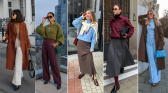
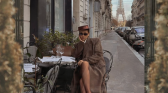
Not every style needs to shout to be noticed.
Some linger quietly in the background, reappearing every so often with a kind of steady confidence—never entirely gone, never entirely reinvented. Equestrian dressing sits firmly in that category. It doesn't rely on trend cycles in the same way other aesthetics do. Instead, it endures.
You'll see it in passing without always naming it. A pair of well-worn riding boots on the Tube. A tweed jacket thrown over something unexpectedly modern. A silk scarf tied in a way that feels more instinctive than styled.
It's not really about horses, at least not anymore. It's about a way of dressing that feels grounded—practical, yes, but also quietly expressive. The kind of wardrobe that suggests a life beyond the obvious.
And perhaps that's why it keeps coming back.
Where the Aesthetic Really Comes From
Before it was ever considered a 'look', it was simply clothing designed for a purpose.
Equestrian dress developed out of necessity—garments that allowed for movement, durability, and a certain level of protection while riding. Over time, particularly within European aristocratic circles, those practical pieces took on a more refined quality. Structure became sharper. Fabrics became more luxurious. But the essence remained the same.
That blend — function with a touch of formality — is what still defines the aesthetic today.
There's also a cultural layer to it. In Britain, especially, equestrian references have long been associated with ideas of countryside life, heritage, and a certain understated wealth. Not flashy, not overt, but recognisable all the same.
Brands like Hermès carry that history quite literally, having started as a harness workshop before evolving into a global name. Meanwhile, Burberry has built much of its identity around similar codes—outerwear designed for the elements, softened into everyday wear.
Why Do People Keep Returning To It
There's a reason this style resonates across generations, even for those who've never set foot near a stable. It offers a sense of ease.
Not the kind that feels careless, but the sort that comes from knowing your clothes will do what you need them to do. There's very little excess. Pieces tend to be chosen with intention, worn repeatedly, and allowed to age naturally.
In a way, it's the opposite of fast fashion. It encourages patience—buying less, choosing better, letting things develop character over time. And then there's the emotional side of it.
Equestrian dressing often carries a sense of escapism. Even in the middle of a city, it hints at open space, fresh air, and slower mornings. You don't have to live that life for the clothes to suggest it.
The Foundations: Pieces That Quietly Define The Look
If you strip everything back, the horse-girl aesthetic isn't built on many items—but the ones it does rely on tend to matter.
A good pair of riding boots is usually where it starts. Not overly polished, not pristine. The best ones show a bit of wear, a bit of life. Brands such as Penelope Chilvers have built a following precisely because their boots feel like they're made to last, not just to be seen.
Then there are jackets—tweed, wool, sometimes waxed cotton. Something that sits comfortably on the shoulders without feeling stiff. It's less about sharp tailoring and more about structure that moves with you.
Trousers tend to follow a similar logic. Slightly relaxed, often high-waisted, occasionally nodding to traditional breeches without fully committing to them.
And then, almost as an afterthought, the details: a silk scarf, a leather belt, a knit draped rather than worn. None of it feels forced. That's the point.
Three Ways The Aesthetic Tends To Show Up
People rarely wear equestrian style in a single, fixed way. It shifts slightly depending on mood, setting, and personality. Still, there are a few recognisable directions it often takes.
The Polished Equestrienne
This is the version most closely tied to tradition. It leans into a neutral palette — creams, browns, soft greys — and focuses on clean, composed silhouettes. Boots are usually knee-high, trousers neatly cut, jackets structured without being rigid.
There's a quiet discipline to it. Nothing feels accidental, but nothing feels overworked either.
It's the sort of outfit that carries itself well in almost any setting—a meeting, a lunch, a walk through the park. Adaptable, without losing its identity.
The Western-Leaning Variation
A slightly looser interpretation brings in elements from American ranch style—denim, suede, a touch of roughness around the edges.
This version feels less contained. Shirts are oversized, jeans sit a bit lower or wider, and footwear shifts towards cowboy boots or ankle styles.
It's still connected to the same roots — practicality, durability — but expressed in a more relaxed, sometimes playful way. The key is restraint. A hint of Western influence tends to work better than a full head-to-toe commitment.
The English Countryside Approach
Then there's the version that feels most lived-in.
It's not especially polished, and that's exactly the appeal. Quilted jackets, slightly baggy trousers, boots that have clearly been through more than one muddy field.
There's a sense of routine in it—clothes that belong to daily life rather than special occasions.
It's also perhaps the most personal interpretation. No two wardrobes in this category look quite the same, because they're shaped by habit rather than styling.
How To Make It Your Own (without overthinking it)
One of the easiest ways to get this aesthetic wrong is to try too hard.
Layering every 'horsey' reference at once — boots, blazer, scarf, belt — can tip it into costume territory surprisingly quickly. It works better when it's broken up.
Pair something traditional with something more modern. A structured jacket with relaxed denim. Riding boots with a simple knit dress. Let one piece do the talking, rather than all of them at once.
And don't worry too much about polish. A slightly creased shirt, boots that aren't perfectly cleaned—these things often add more to the look than they take away.

The Role of Craftsmanship and Materials
Part of what gives equestrian-inspired clothing its staying power is the way it's made.
These pieces were never designed to be disposable. Leather is meant to soften with time. Wool holds its shape. Cotton wears in rather than wears out.
There's a tactile quality to it—fabrics that feel substantial, details that serve a purpose rather than decoration.
It's also why investing in fewer, better pieces tends to make sense here. They're not meant to be replaced every season.
A Style That Doesn't Demand Attention
Perhaps the most interesting thing about the horse-girl aesthetic is that it doesn't try to be interesting. It doesn't chase novelty or rely on constant reinvention. It simply exists, evolving slowly, adapting quietly.
And in a landscape where so much fashion feels designed for immediate impact, that restraint can feel refreshing.
You don't have to commit to it fully. Most people don't. But even a small nod — a pair of boots, a jacket, a scarf — can shift the tone of an entire outfit. Not dramatically. Just enough.