
Why does a pair of Italian leather shoes carry an authority that few others can match?
The answer is not simply quality control or clever branding. It is philosophy. In Italy, shoemaking has never been viewed as mere production; it is a cultural practice shaped by Renaissance guild systems, Catholic notions of craft as devotion, and a national understanding that beauty and function must coexist. To understand why Italian leather shoes are considered the best in the world, we must look beyond retail shelves and into the intellectual and artisanal traditions that underpin them.
In workshops across Florence and the Marche region, shoemakers continue to cut, stitch, and burnish leather in ways that have changed little for generations. These ateliers are not nostalgic curiosities; they are living institutions. Italy's footwear supremacy is grounded in place—in Tuscan tanning districts, Adriatic manufacturing hubs, and Milanese design studios where aesthetics are debated as rigorously as construction methods.
Italian leather shoes endure because they represent an idea: that craftsmanship is identity made visible.

Fashion Philosophy: Why Craft Defines Italian Luxury
At the heart of Italian footwear lies a philosophical distinction. Italian luxury has historically prioritised sprezzatura—an effortless elegance that conceals labour behind apparent ease. A finely constructed loafer or oxford should never look overworked. It should appear natural, almost inevitable.
This contrasts with more industrial fashion cultures, where efficiency often outweighs tactility. Italian shoemaking insists that the object must feel alive in the hand. The leather must breathe; the sole must flex; the finish must mature over time.
The concept of patina is particularly revealing. Italian vegetable-tanned leather is prized not because it resists ageing, but because it records it. Creases, darkening, and subtle tonal shifts become markers of personal history. In that sense, the shoe becomes autobiographical.
For fashion thinkers and collectors, this explains the emotional loyalty Italian footwear inspires. It is not disposable. It evolves alongside its wearer.
History: From Renaissance Tanneries to Modern Manufacturing Districts
Italy's leather heritage dates back to the Renaissance, when Florence emerged as a centre of tanning excellence. The Arno River provided essential water resources, while guild systems ensured standards of quality and training.
Today, Tuscany remains a focal point for vegetable tanning. The Consorzio Vera Pelle Italiana Conciata al Vegetale protects and certifies traditional processes that rely on natural tannins derived from tree bark. This slower method can take weeks rather than days, but it produces leather that is durable, biodegradable, and capable of developing a rich patina.
Meanwhile, the Marche region evolved into one of Europe's most important footwear manufacturing districts. Rather than centralising production in vast factories, Italy cultivated networks of specialised workshops—one focusing on uppers, another on soles, and another on finishing. This decentralised system preserved artisanal knowledge while allowing scale.
According to the Italian Trade Agency, Italy remains one of the world's leading exporters of high-quality footwear, with luxury leather shoes forming a significant share of production.

Craft: What Makes Italian Leather Shoes Technically Superior?
For the discerning buyer, philosophy must translate into tangible quality.
Leather selection is paramount. Italian tanneries prioritise full-grain hides, preserving natural fibre structure. This ensures strength without sacrificing softness.
Construction techniques further distinguish Italian shoes. Blake stitching — widely used in Italy — creates a flexible, lightweight sole by stitching directly through the insole, upper, and outsole. The result is a sleek profile suited to contemporary tailoring.
Higher-end makers may employ Goodyear welt construction, which enables resoling and extends the lifespan. While Britain popularised the method, Italian artisans refined it to maintain a slimmer silhouette.
Hand-finishing remains crucial. Edges are burnished, soles stained, and uppers polished individually. Subtle tonal variations are intentional, not defects.
Brands such as Salvatore Ferragamo built reputations on technical innovation, while houses like Gucci and Prada merge craftsmanship with modern design language. Meanwhile, Tod's exemplifies the marriage of comfort and artisanal production in its iconic driving shoes.
The superiority of Italian leather shoes is therefore cumulative: materials, method, and finishing converge.
Houses: How Italian Brands Shape Global Footwear Standards
Italian fashion houses do not treat footwear as secondary to clothing; it is central to their identity.
In Milan, shoes are considered foundational to the silhouette. A sharply tapered oxford elongates the line of a tailored suit. A supple leather loafer softens formalwear. Women's footwear — from sculptural pumps to minimalist sandals — is designed with proportion in mind.
Italian houses also influence global expectations of luxury. When consumers worldwide imagine premium leather shoes, they often envision Italian manufacture. This perception has been reinforced through decades of consistent quality and aesthetic coherence.
Importantly, many brands continue to produce domestically despite global supply-chain pressures. 'Made in Italy' is not merely a label; it reflects adherence to regional expertise.
Types of Leather Shoes by Style (Design)
This refers to the shoe's silhouette and function.
1. Oxford Shoes
A formal lace-up shoe defined by a closed lacing system. Sleek and structured, Oxfords are typically worn with tailoring or formalwear.
- Best for: business, black-tie events, formal occasions
- Most common in: British and Italian shoemaking traditions

2. Derby Shoes
Often confused with Oxfords, Derby shoes feature an open lacing system, making them slightly less formal and more comfortable for wider feet.
- Best for: office wear, smart-casual outfits
- More versatile than Oxfords

3. Loafers
A laceless slip-on style that originated as leisure footwear but has become a staple of European elegance.
- Penny loafers
- Tassel loafers
- Horsebit loafers (popularised by Gucci)
Best for: smart-casual dressing, summer tailoring, travel.

4. Monk Strap Shoes
Recognisable by their buckle closure instead of laces.
- Single monk strap
- Double monk strap
They offer a refined but slightly fashion-forward aesthetic.

5. Brogues
Technically, a decorative style rather than a shape. Broguing refers to perforated detailing.
- Full brogue (wingtip)
- Semi-brogue
- Quarter brogue
Originally functional in rural Scotland and Ireland, now decorative.

6. Boots
Leather boots include:
- Chelsea boots
- Chukka boots
- Combat boots
- Knee-high boots (for women)
Italy and Britain both excel in the manufacture of refined leather boots.

Types of Leather by Material
The quality of leather dramatically affects durability, comfort, and price.
1. Full-Grain Leather (Highest Quality)
- The strongest and most durable part of the hide
- Develops a natural patina
- Common in luxury Italian shoes
Best for: long-term investment pieces.
2. Top-Grain Leather
- Slightly sanded to remove imperfections
- Smoother appearance
- Still high quality but less durable than full-grain
3. Suede
Made from the underside of the hide.
- Soft, velvety texture
- More casual aesthetic
- Requires weather protection
4. Nubuck
Similar to suede but made from the outer hide and lightly sanded.
- Durable but soft
- Often used in premium casual shoes
5. Patent Leather
High-gloss, coated finish.
- Used for evening wear and formal occasions
- Less breathable
6. Corrected or Bonded Leather
Lower quality.
- Heavily processed
- Less durable
- Common in mass-market footwear
Types of Construction (Why This Matters)
Construction determines how long a shoe lasts.
Blake Stitch
Common in Italy.
- Lightweight
- Flexible
- Sleek silhouette
- Easier to wear straight away
Goodyear Welt
More structured and durable.
- Sole can be replaced
- Excellent water resistance
- Heavier but long-lasting
Cemented Construction
- Glued sole
- Cheaper production
- Not constructed for sole replacement
- Shorter lifespan
For Women: Are There Different Categories?
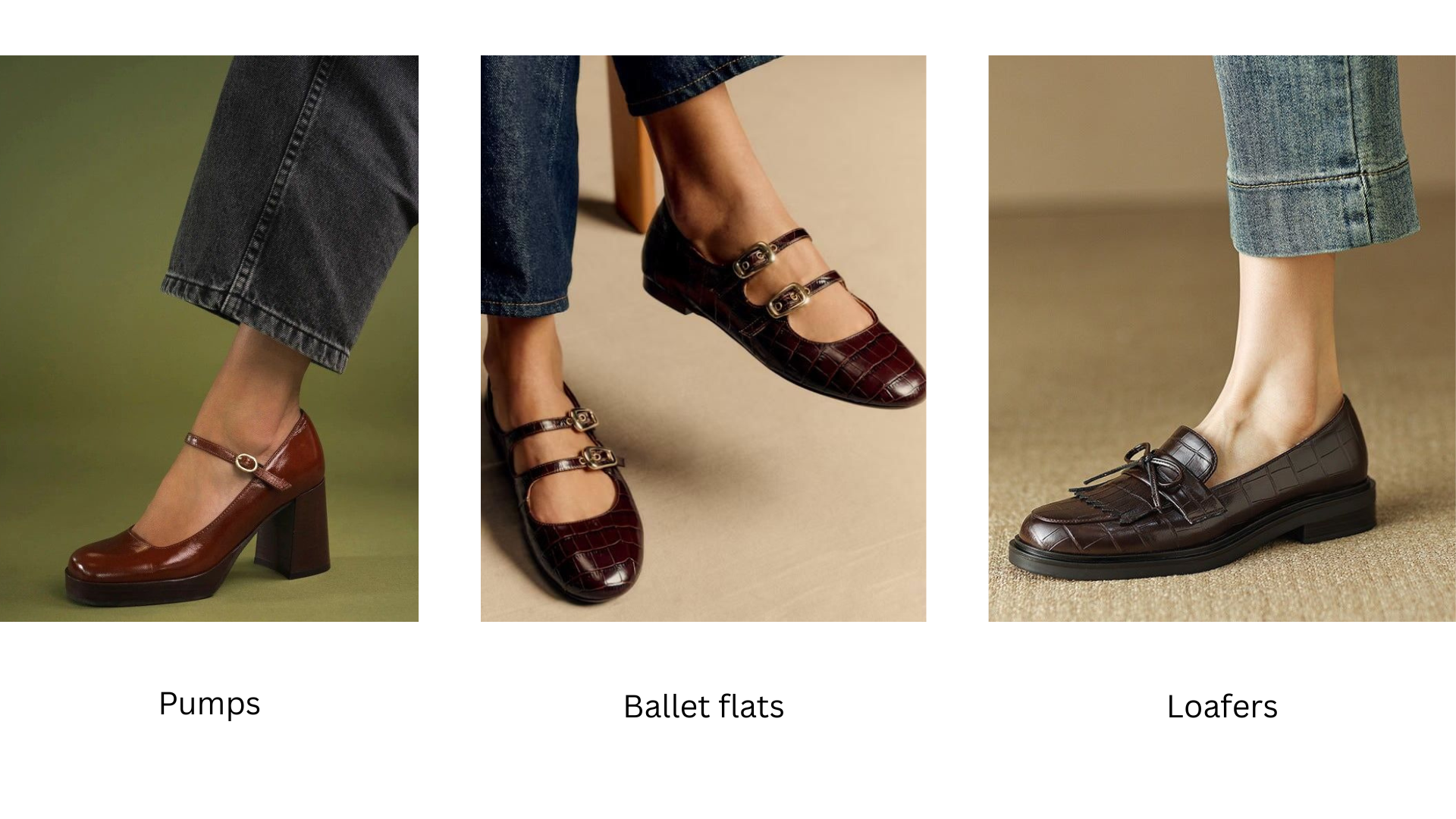
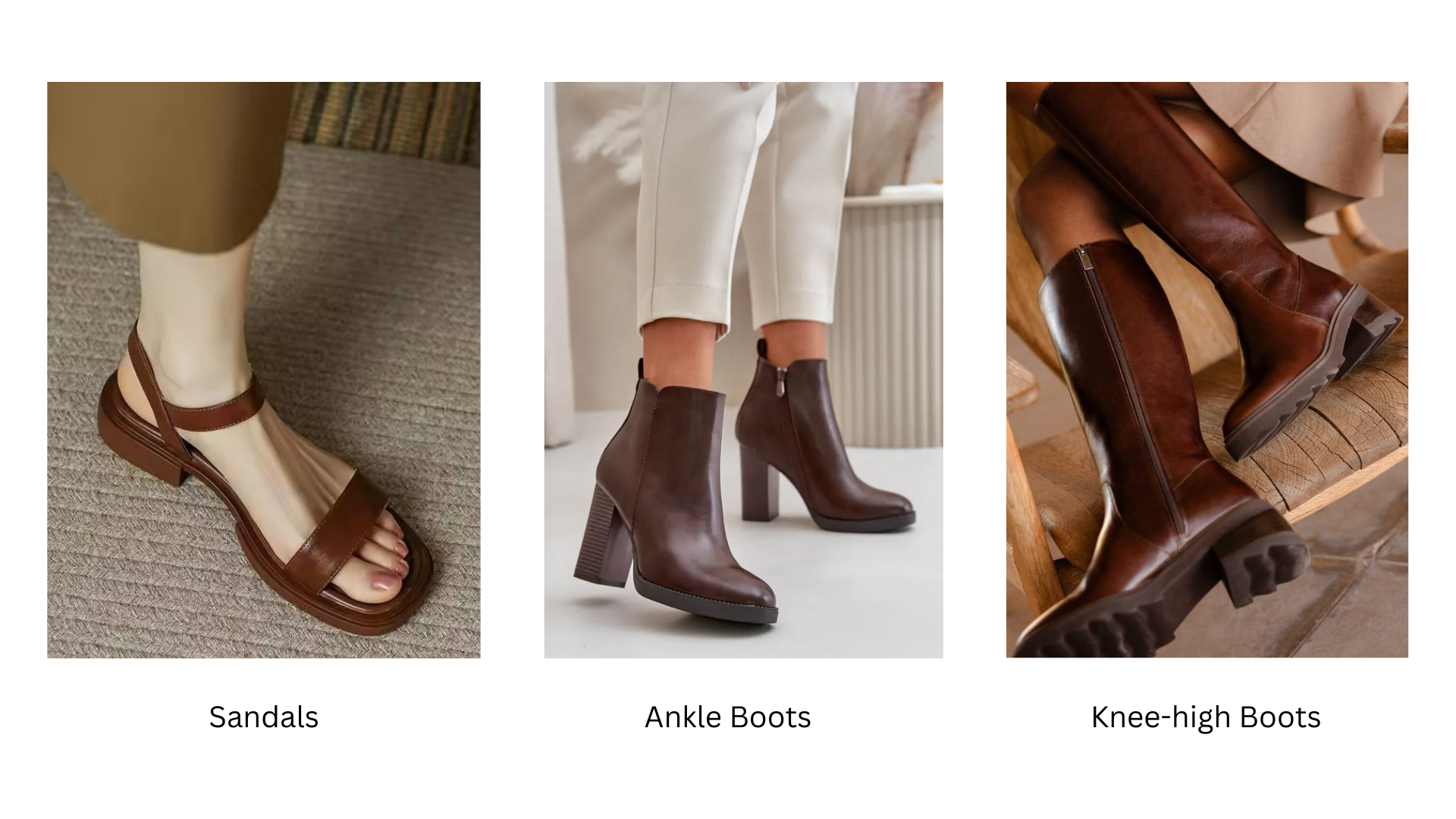
Yes. Women's leather shoes span:
- Pumps
- Ballet flats
- Loafers
- Sandals
- Ankle boots
- Knee-high boots
In high-end Italian footwear, women's designs often prioritise sculptural lines and soft leather that adapts to the foot.
How Do You Choose the Right Type?
Ask yourself:
- Is this for formal or casual wear?
- Do I want longevity or trend-driven style?
- Am I prioritising comfort, durability, or design?
- Can the sole be replaced to extend its lifespan?
For example:
- A full-grain leather Oxford with Goodyear welt = long-term investment.
- A suede loafer with Blake stitch = lightweight elegance.
- A cemented fashion boot = seasonal wear.
Why This Knowledge Matters
Understanding leather shoes is about more than shopping smartly. It changes how you relate to fashion. Instead of treating shoes as disposable, you begin to see them as crafted objects shaped by material science, regional tradition, and design philosophy.
In European fashion culture — especially in Italy — footwear is foundational. It completes proportion, anchors tailoring, and signals identity.
And once you understand the difference between a Blake-stitched suede loafer and a full-grain Goodyear-welted Oxford, you never look at a pair of leather shoes the same way again.
Where to Buy Authentic Italian Leather Shoes for Men and Women
For readers seeking to invest, where should one begin?
Luxury boutiques: Gucci, Prada, and Ferragamo operate flagship stores across Europe and the UK, as well as online. These offer seasonal collections and aftercare services.
Department stores: Retailers such as Selfridges curate Italian-made footwear for men and women, thereby enabling cross-brand comparisons.
Specialist brands such as Tod's and independent Florentine shoemakers, sell directly via their websites, often detailing construction methods and sourcing practices.
Bespoke ateliers: Travellers to Florence can commission custom pairs from local craftsmen, selecting leather type, sole construction, and finish. This option appeals to those seeking individuality and long-term investment.
When purchasing, verify production transparency. Authentic Italian leather shoes should disclose manufacturing origin and, ideally, construction technique.
Sustainability: Tradition Meets Responsibility
Italy's leather sector operates under European Union environmental regulations that govern the use of chemicals and waste management. Vegetable tanning reduces reliance on heavy metals and supports biodegradable outcomes.
Smaller-scale production models can also limit overproduction—a growing concern in global fashion. By focusing on durability and reparability, Italian shoemaking aligns with contemporary sustainability discourse.
Investing in one resoleable pair rather than multiple disposable ones reflects a shift from consumption to stewardship.
Why Italian Leather Shoes Still Lead the World
Italian leather shoes are considered the best in the world because they synthesise history, philosophy, and craft into a single object.
They are born of Renaissance guild traditions and refined in modern ateliers. They embody a design ethos that values elegance without ostentation. They prioritise materials that improve with age. They are anchored in regions where craft remains a cultural identity, not merely marketing rhetoric.
For those who see fashion as more than trend — as an intellectual and material practice shaped by Europe's long artistic lineage — Italian leather footwear offers something enduring.
Not just a shoe, but a story shaped by place, perfected by hand, and worn as an expression of self.