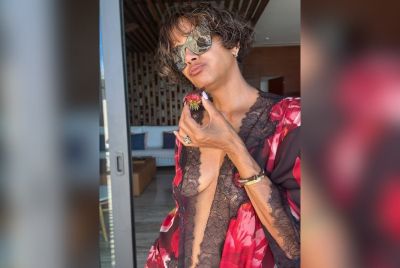
Jackie Aina has pushed back against the idea that being told she looks 27 at 40 should automatically be considered a compliment. The beauty influencer's views prompted a wider discussion about why looking younger has become so closely tied to female beauty.
Aina, who is currently 39 and preparing to enter her 40s, became the subject of discussion on Reddit's BeautyGuruChatter after an exchange about her appearance circulated online. While some users viewed the comment as an obvious compliment, others questioned why looking significantly younger than one's actual age is automatically treated as a positive achievement.
Embracing Her 40s
The debate comes as Aina has been particularly open about embracing her age. In a September interview following her appearance at Bulgari's Serpenti Infinito event during New York Fashion Week, she said she had just turned 39 and was entering the final year of her 30s.
Rather than describing 40 as something to avoid, Aina framed the milestone as a period of renewal and said she was looking forward to the increased confidence she expected to gain during the next decade. She also said she was part of a generation that was no longer running away from turning 40.
The beauty creator's views on ageing gracefully made the 'you look 27' debate more complicated than a simple question of whether the statement was flattering.
The Debate on Ageism
For decades, youth has been closely associated with female attractiveness. Visible signs of ageing such as wrinkles and grey hair have frequently been treated as characteristics women are expected to minimise. Looking young has been marketed as something desirable to preserve.
The World Health Organisation and the United Nations' Global Report on Ageism have documented how age-related stereotypes influence the way people are perceived and treated. The report warns that language and cultural assumptions about age can reinforce ageism and affect how people view themselves.
There is also research showing that looking younger can have a measurable connection with how people experience ageing.


How Do Women View Growing Old?
A 2024 study published in Psychology and Aging examined nationally representative data from 2,006 US adults aged between 50 and 80. Researchers found that 59 per cent of participants considered themselves relatively younger-looking than their peers, while 35 per cent considered themselves about the same age and 6% believed they looked older.
Those who viewed themselves as younger-looking reported more positive and fewer negative experiences of ageing. However, the researchers specifically cautioned against treating youthful appearance or efforts to look younger as entirely positive or negative.
That distinction matters when considering why somebody might intend 'you look younger' as praise.
Is Looking Young Actually Praise?
The compliment is generally based on the cultural assumption that youth equals attractiveness. Telling a 40-year-old that they look 27 can be interpreted as saying they have retained characteristics traditionally associated with youth, rather than simply observing that their appearance differs from their chronological age.
There is evidence that this expectation is particularly strong among women. A 2025 study of patients undergoing blepharoplasty found that looking younger was overwhelmingly reported as a motivation among female participants, with 89.3 per cent of women in the study citing it compared with 10 per cent of men.
Beauty and cosmetic culture can reinforce that association. Treatments and products are frequently marketed around reducing visible signs of ageing, while research has examined how changes to facial appearance can affect perceptions of age and attractiveness.
Research into perceived age has also identified physical factors that can contribute to a more youthful appearance. A 2024 observational study involving 250 women found associations between perceived younger appearance and factors including exercise, sunscreen use and lower levels of photodamage.
How Society Views Ageing
None of that means looking younger is inherently better. It explains why the statement is normally intended as praise. Society has spent decades teaching people, particularly women, that maintaining a youthful appearance is desirable. Aina's response challenges the assumption that she should automatically share that value judgement.
Her comments about approaching 40 suggest that she does not see the milestone as something requiring concealment. Instead, she has spoken positively about the confidence and self-assurance that can come with getting older.
The Reddit reaction remains divided. Some users argued that Aina was being unnecessarily defensive about a compliment, while others questioned the underlying assumption that looking 27 is necessarily preferable to looking 40.
The disagreement ultimately reveals the difference between intention and interpretation. A person saying 'you look 27' may genuinely mean that Aina looks youthful and attractive. But the person receiving the comment is not required to regard youth as the standard against which her appearance should be measured.
For Aina, turning 40 appears to be something she is prepared to embrace rather than apologise for. The controversy surrounding the compliment raises a bigger question about ageing: if looking younger is considered praise, what does that say about how society views looking one's actual age?