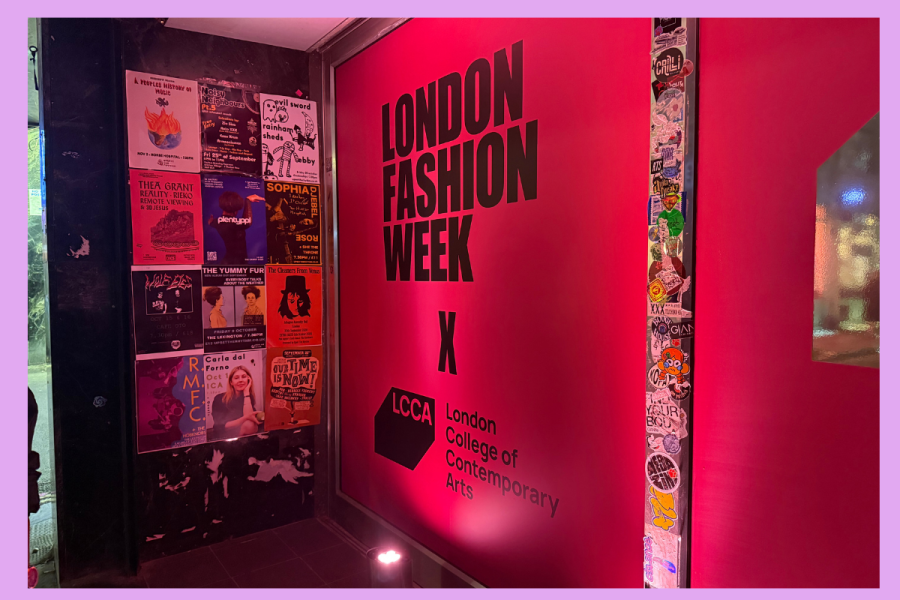
The London College of Contemporary Arts (LCCA) brought its graduate designers onto the official London Fashion Week schedule on 18 September 2026, using LCCAFest to connect fashion with graphic design, gaming and wider creative practice. The day began at The Vinyl Factory in Soho with an industry showcase and programme of talks before the evening's LCCA Fest Runway Show at Phonica Records. Selected graduate collections moved from studio to catwalk.
The British Fashion Council listed the runway as an RSVP evening event during its 17 to 21 September season. LCCA's invitation gave doors at 20:00 and the show at 20:15. Earlier, the festival showcased final-year work across Fashion, Graphic Design and Computer Games Art, placing the collections within a wider conversation about the overlap between creative disciplines.
Fashion as a Language
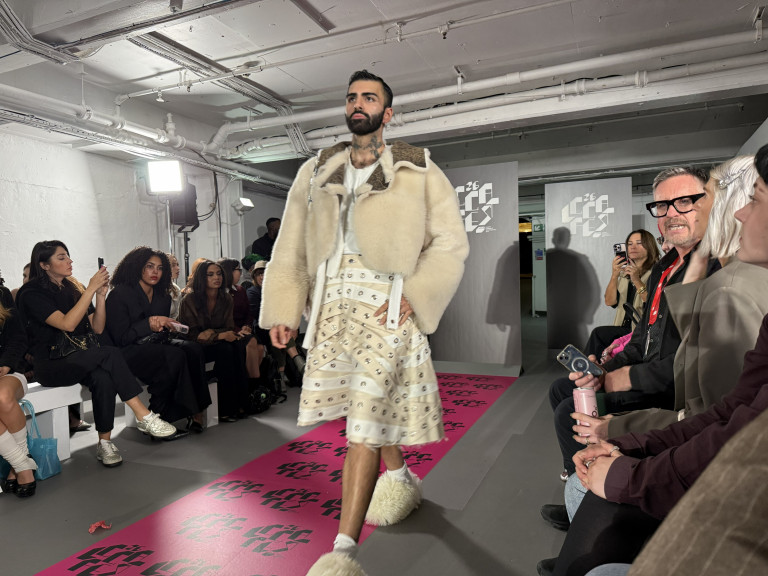
The runway did not present one shared aesthetic. Its strength lay in the range of ideas translated into silhouette, surface and material. Post-show coverage counted 17 graduate collections, with designers exploring environmental responsibility, emotional recovery, heritage, body image and performance.
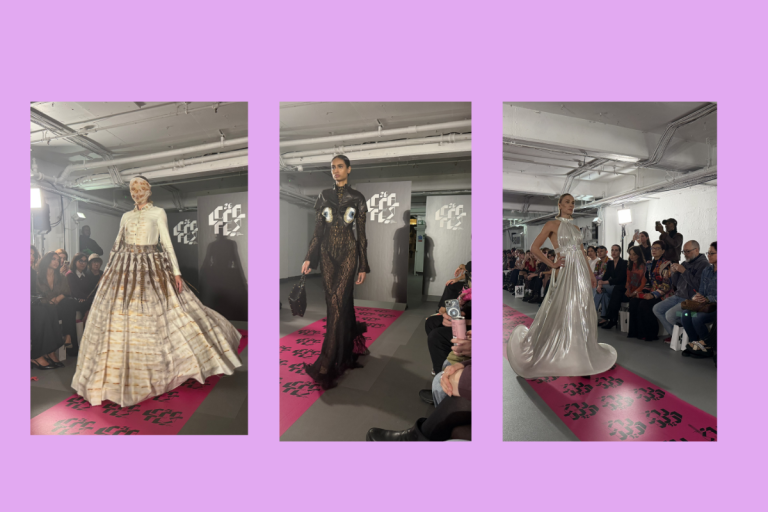
Lizzie Molloy's Externally Internal drew on the colour-changing skin and non-verbal communication of cephalopods, using octopuses and squid to consider how inner emotions could be expressed outwardly. A standout look paired a coral-textured lace top with a fitted mermaid-shaped maxi skirt in shimmering sea blue, flecked with gold. Recycled plastic filament brought the collection's secondary concern, ocean pollution, into its material choices.
Isabella Nardini's Galaxy Divas took a more theatrical direction. Built around the idea of the 'cosmic performer', it joined the extravagance of 1970s stage culture with science-fiction references. Iridescent fabrics, cut-out halternecks, underwired shapes and psychedelic marbling gave the pieces movement, while matching headpieces pushed the looks towards a futuristic performance wardrobe.


Personal Histories, New Silhouettes
Gabrielle Nitu's Romantic Homicide followed the emotional stages of a relationship, moving from denial, sadness and anger towards healing, reclamation and renewed identity. Red, white and black formed the palette, while crumpled and ruched flowers became symbols of change. Its closing look, a long red silk dress with sculptural floral forms at the hem, brought the collection's emotional arc to a dramatic finish.
In The Modern Woman, Seyedeh Zeynab Beshkhor took a quieter route. Referencing 1990s Calvin Klein minimalism and the shape of a butterfly cocoon, the collection explored femininity through soft structure, restrained colour and considered tailoring. A draped-neckline two-piece with a high-slit skirt and chiffon train captured the balance between ease and occasion.
Sacha John Coull's Killiecrankie, which closed the show, looked to the 1689 Battle of Killiecrankie and the designer's Scottish roots. Tartan, rust-effect fabrics, obscured faces and feather details brought history into a contemporary vocabulary, contrasting familiar Highland references with an unsettling, weathered finish.
The Wider Creative Industries
LCCAFest extended beyond fashion. Its daytime programme included a Pinterest conversation, 'Print Is Dead?', on editorial design, publishing, digital platforms and AI. It also had a screening and discussion with emerging fashion-media storytellers and 'Game Jams to Reality', focused on creativity and project management in game development. A further session considered trend forecasting, changing consumers and commercial strategy.
The programme reflected LCCA's emphasis on what Academic Dean of Creative Industries Lucy London called 'edustry' — bringing education and industry closer together. In the accompanying event coverage, London argued that students needed more than technical ability: they also needed confidence, professional communication and experience working with industry briefs.
That practical ambition gave the runway a purpose beyond presentation. Students could show their work to industry guests, discuss their ideas and make professional connections, while the wider exhibition brought fashion, games and graphic design into the same space.
LCCAFest 2026 offered no single definition of emerging fashion. Its collections ranged from ocean-inspired surfaces and cosmic stagewear to explorations of heartbreak, identity and Scottish history. By placing those individual visions within an interdisciplinary festival and an official London Fashion Week runway slot, LCCA made the case for creative education that moved across disciplines — and for graduate fashion with something to say.