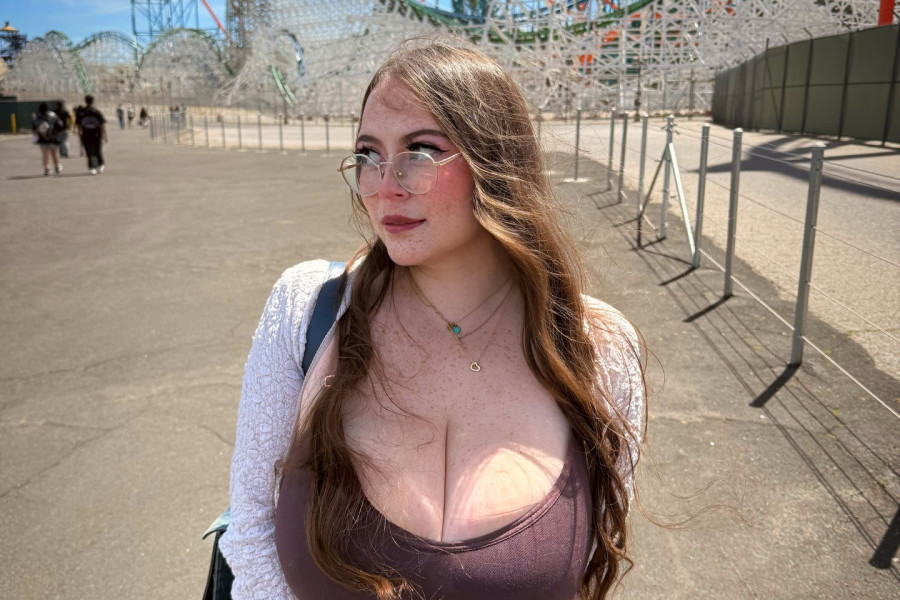
Living in a body that feels like it's constantly changing can be exhausting—especially when those changes are impossible to hide. For Summer Robert, that reality comes with macromastia, a rare condition that has caused her breasts to grow continuously over time. Her experience has recently sparked wider conversations, not just about physical health, but about how society reacts to bodies that don't fit the norm.
It's easy to assume this is simply about having a larger chest. But the truth runs much deeper.
From physical strain to social pressure, macromastia affects far more than appearance. And Robert's story offers a clear look at what that really means day to day.
Living With Extreme 30R Breast Size
Imagine carrying significant weight on your chest every single day—weight that affects how you stand, move, and even breathe comfortably. That's part of daily life for 28-year-old Robert, who wears a 30R bra size due to her condition. Her breasts weigh a whopping 25kg, which is the equivalent of an average 8-year-old child.
The physical toll is undeniable. The weight of her breasts places constant strain on her back, shoulders, and spine, making even simple movements feel demanding. In most cases, activities like walking long distances, exercising, or standing for extended periods can quickly become uncomfortable.

What Is Macromastia?
Macromastia is a medical condition where breast tissue grows excessively, often beyond what the body can comfortably support. For some, the growth doesn't stop after puberty. It continues over time, becoming progressively more severe.
From a physical standpoint, this can lead to chronic pain in the back and neck, skin irritation beneath the breasts, and difficulty maintaining proper posture. The added weight can also affect spinal alignment, creating longer-term musculoskeletal issues.
The causes aren't always straightforward. Hormonal sensitivity is often considered a factor, and genetics may also play a role. For some individuals, the condition appears during puberty, while for others it may be linked to hormonal changes later in life.
Importantly, macromastia is recognised as a medical condition—not simply a cosmetic concern—particularly when it begins to interfere with everyday functioning.
Early Signs: Noticing Something Was Different
According to Robert, the signs began early. She started wearing a C-cup bra at just 8 years old, long before most of her peers experienced similar development. By her mid-teens, her size had increased dramatically, reaching a double J cup by around age 16.
At first, it wasn't immediately clear that something was medically wrong. But as the growth continued and didn't slow down, it became evident that this wasn't a normal developmental pattern.
She began seeking medical advice as a teenager but struggled to get clear answers. 'I had been going to the doctors since I was like 14 or 13 years old, and not one of them diagnosed me ... They all just said it was puberty. They all just said I had to lose weight,' Robert told People in an interview.
Her experience apprently reflects a wider issue. Conditions like macromastia are often misunderstood, leading to delayed diagnosis and limited support early on.

Social Pressures and Everyday Challenges
The physical strain is only one part of the story. Social experiences can be just as difficult to navigate.
Robert has described facing frequent catcalling and unwanted attention from a young age. In public, her appearance often draws immediate focus, regardless of what she wears. 'I'm just trying to exist, literally, and I just have big boobs,' she stated.
Clothing is another ongoing struggle. Finding outfits that fit properly is far from easy. Standard sizing rarely accommodates her proportions, often requiring custom pieces that still don't always fit as expected.
There's also the emotional impact of how others respond. She has spoken about judgement, assumptions, and even hostility, showing how visible differences can lead to misunderstanding rather than empathy.
All of this shapes daily life in ways that go far beyond the physical condition itself.
The Reality of Treatment Access
With increasing discomfort, breast reduction surgery became a possible solution. The procedure, known as reduction mammoplasty, involves removing excess breast tissue, fat, and skin to create a more proportionate size and relieve strain.
For many people with macromastia, it can significantly improve quality of life. However, accessing the procedure isn't always straightforward.
In Robert's case, requests for surgery through the National Health Service (NHS) were denied due to strict eligibility criteria, including body mass index (BMI).
Even when symptoms are severe, patients may be required to meet specific thresholds before being approved. Unfortunately, this highlights the gap between medical need and access to care.

OnlyFans Career and Life Now
Today, Robert works full-time as a content creator on OnlyFans. This shift has given her financial independence and, more importantly, control over how she presents herself.
After years of dealing with unwanted attention and public judgement because of her bra size, she found that moving to a platform where engagement is consensual completely changed her relationship with her body.
Her decision to start creating content came after a difficult moment while working in a restaurant, where she was repeatedly ridiculed over her appearance. Instead of letting that experience break her confidence, it became a turning point that led her to reclaim ownership of how her body was viewed.
Earning from her content helped her realise people were engaging with her in a positive and supportive way, which changed how she saw herself.
Now, she describes feeling more confident and at ease than in previous years. While macromastia is still part of her daily life, her work has allowed her to turn something that once brought constant discomfort into a source of stability, independence, and self-assurance on her own terms.