It marks the end of an era for one of Britain's most recognisable 'affordable luxury' labels, with LK Bennett — long associated with polished royal dressing — shutting down its website and winding down operations after entering administration. The brand, once a staple of polished high-street chic, has quietly begun closing stores across the UK, with all 22 locations expected to shut by the end of spring.
For years, LK Bennett occupied a very specific space in the British fashion imagination: structured dresses, elegant heels, and tailored silhouettes that became closely linked to royal wardrobes. Its sudden decline has not only prompted retail nostalgia but also reignited a very modern debate online, about who really shaped the contemporary royal fashion narrative.
In particular, fashion watchers and social media users have returned to a familiar comparison: Catherine, Princess of Wales, and Meghan, Duchess of Sussex, and the contrasting style identities that followed their time in the royal spotlight.
The 'Kate Effect' and the LK Bennett Legacy
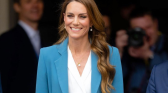
LK Bennett's rise to international recognition was famously boosted by the so-called 'Kate effect', a phenomenon that saw items worn by the Princess of Wales repeatedly sell out within hours. From polka-dot dresses to refined court shoes, Kate's preference for the brand helped position it as a go-to label for aspirational British dressing.
The brand itself leaned into that association. At its peak expansion phase, LK Bennett's leadership openly acknowledged the impact of royal endorsement, with one executive noting that Kate was 'an elegant lady' whose influence helped introduce the label to a global audience, particularly in the United States.
The retailer, founded in the 1990s by Linda Bennett, initially built its reputation on footwear before expanding into clothing and accessories. Its identity centred around what it described as 'British affordable luxury', a formula that blended Bond Street polish with high-street accessibility.
However, despite its strong royal ties and international recognition, LK Bennett has struggled in recent years amid wider pressures facing mid-market fashion. After multiple financial restructurings, the brand has now entered administration once again, marking its second collapse in six years.
Discounted stock has been rolled out across stores, with some items previously listed as low as €37 (£31.50) for dresses and €47 (£40) for shoes before sizes rapidly sold out online.
Royal Style Debate Resurfaces Online
As news of the closure spread, social media commentary quickly shifted from retail concern to cultural reflection. On platforms such as Reddit, users revisited long-running discussions about royal fashion identities, and whether Kate Middleton's famously polished aesthetic had defined or constrained modern royal style.
Some commenters argued that Kate's wardrobe choices have often leaned towards 'safe' and traditional silhouettes, with comparisons drawn to earlier royal figures such as Princess Diana, who is frequently cited as a more experimental style icon. Others suggested that Kate's consistent approach reflects institutional expectations rather than personal limitations.
One recurring theme in online discussion is the idea of 'visibility versus restraint', with Kate often described as embodying continuity and subtlety, while Meghan is framed as more modern, editorial and intentionally expressive in her fashion choices.
Fashion commentators and digital style accounts, including popular breakdown pages like @whatmeghanwore, have contributed to this contrast-driven narrative, analysing Meghan's wardrobe as more conceptual, often tied to messaging, location, or thematic storytelling.
Meghan Markle and the 'New Style Language'
Within this renewed conversation, Meghan Markle is increasingly positioned by online audiences as a disruptor in royal fashion storytelling. Her wardrobe, particularly during and after her time as a working royal, has been widely discussed for its blend of minimal tailoring, neutral palettes, and contemporary silhouettes.
Supporters argue that Meghan introduced a more global, editorial sensibility to royal dressing, one that felt less tied to traditional British high-street brands and more aligned with international luxury and modern celebrity styling.
Critics, however, view the comparison culture itself as reductive, arguing that both women operate within different institutional roles and expectations, making direct style comparisons inherently uneven.
Still, the closure of a brand so closely linked to Kate Middleton has reignited questions about influence, visibility and fashion legacy, and whether royal style power is defined more by repetition and reliability, or by disruption and reinvention.
The End of an Era — or a Shift in Influence?
LK Bennett's downfall reflects broader pressures on mid-market fashion, but its symbolic weight feels larger due to its royal associations. The brand was not just a retailer; it was part of a visual language that helped define a generation of royal dressing.
Now, as its stores close and its online presence disappears, fashion fans are left reflecting on what comes next for royal style influence in a rapidly changing cultural landscape.
And as the debate resurfaces online, one question continues to dominate comment threads and fashion forums alike: in the evolution of royal fashion influence, was Kate Middleton the defining figure, or did Meghan Markle quietly reshape the narrative for a new era?