The necktie is getting a much less serious makeover. Once strongly linked with office suits and formal dress, ties are now being worn with bright prints, unusual textures and playful styling that turns the small accessory into one of the most noticeable parts of an outfit.
That idea gained fresh attention on Tuesday, 8 September after fashion account Rogue Fashion shared four unusual tie designs and wrote: 'Ties are way more fun when you treat them like a creative canvas instead of a boring corporate uniform.' The post quickly drew thousands of likes and hundreds of thousands of views, showing that the idea had struck a chord with fashion fans.
The examples included a mustard-coloured tie covered in a small insect-like print, a glossy brown tie with a woven-looking surface, a green knitted tie and a deep red design covered with illustrated figures. The images do not provide enough verified information to name the makers or exact materials of every tie, so those details should not be stated as fact.
Ties Get a Playful Makeover
The social media post is part of a wider shift that has already been visible in menswear. At the Spring 2026 menswear shows in Milan and Paris, street-style photographers documented people wearing bolos, bandanas and other unusual forms of neckwear rather than sticking only to the standard silk tie.
Ties are way more fun when you treat them like a creative canvas instead of a boring corporate uniform pic.twitter.com/rczXW9Jsxd
— Rogue Fashion (@rogue) September 7, 2026
Designers have also been changing the way traditional ties are worn. Spring 2026 collections showed ties tucked into waistbands, worn in less tidy ways and, in the case of Junya Watanabe, even layered several at once.
That change matters because the tie is no longer being presented only as something that belongs with a dark business suit. Instead, designers and wearers are using its colour, texture, knot and placement as another way to add personality to an outfit.
Dior Helps Bring Ties Back
Jonathan Anderson's first menswear collection for Dior was one of the clearest signs of the tie's return. His Spring 2026 show mixed traditional pieces with more relaxed clothes, including formal jackets with jeans, while ties appeared throughout the collection.
Some of the simplest looks paired striped shirts with graphic striped ties, showing that a familiar office combination could feel new when the colours, shapes and styling were changed. Anderson said his focus was on how different clothes are put together rather than treating each item on its own.
The collection later helped fuel wider interest in neckwear for Spring 2026. Fashion coverage of the season highlighted Dior's striped silk ties and argued that the simple shirt-and-tie pairing had returned as a key look rather than an old-fashioned dress rule.
Prints and Texture Take Over
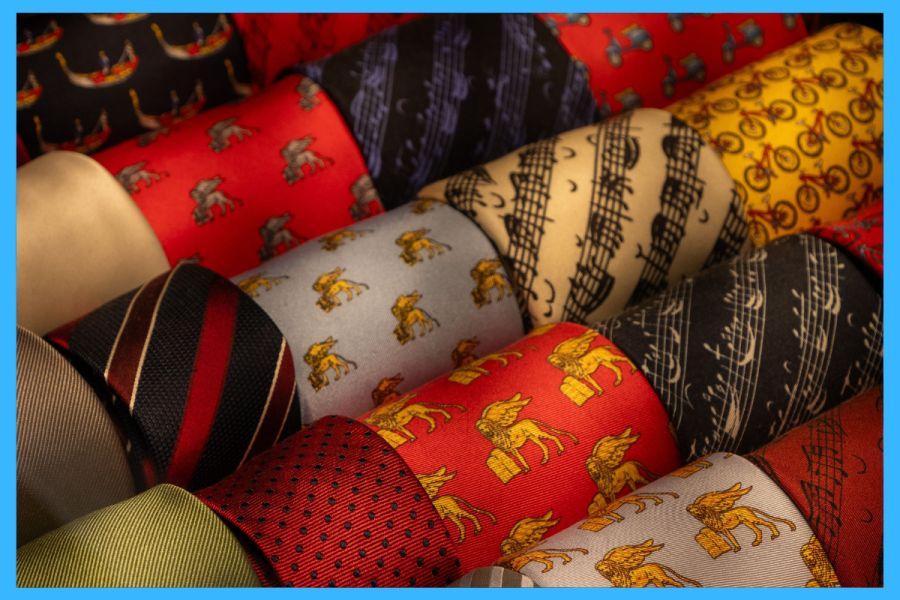
What makes the latest viral examples different is that the design of the tie itself becomes the main attraction. A knitted green tie has a very different surface from smooth silk, while picture-covered and richly patterned versions can bring colour to an otherwise simple shirt.
This approach is not limited to social media. Recent menswear collections have used polka dots, colourful patterns, shiny fabrics and other playful details alongside tailoring, while Todd Snyder's Spring 2026 collection included short ties as part of its mix of polished clothing and lighter, more playful styling.
Fashion does not appear to be abandoning the classic tie. Instead, evidence from recent runways and street style suggests that designers are widening the ways it can be worn, giving people room to choose between a traditional silk version, a bold print, a knitted style or something less expected altogether.
From Uniform To Personal Style
For years, the necktie's strongest image was tied to schools, offices, weddings and other places with dress rules. The current revival gives the same basic shape a different job, with more focus on individual styling than on following one fixed formula.
That is why the Rogue Fashion post works as more than a collection of unusual accessories. Its claim that ties can act as a 'creative canvas' matches what has already appeared across Spring 2026 fashion, where neckwear has been loosened, layered, changed in shape and paired with clothes that would once have seemed too casual for a tie.
There is no evidence that printed, knitted or unusual ties have replaced traditional designs, and calling any single style dominant would go beyond what current fashion coverage supports. What can be said is that ties are visibly back in contemporary menswear, and their return is happening with far fewer rules than before.