It began in the sky, drifting silently through wartime clouds, but its second life would unfold on the ground in the most unexpected place: women's wardrobes. During the Second World War, nylon parachutes were designed to save lives, not shape fashion.
Yet in a twist of wartime necessity and post-war imagination, those same parachutes would be transformed into dresses, gowns, and treasured keepsakes that redefined what women wore and why they wore it.
As the Library of Congress Folklife archive notes, parachute silk became a powerful symbol of 'resilience, romance and resourcefulness', as families and returning servicemen repurposed military materials into garments that carried both emotional and practical meaning. What fell from the skies in war quite literally rose again as fashion's most poignant reinvention.
Parachute Silk to Bridal Gowns
At the height of the Second World War, nylon was almost entirely reserved for military use, particularly parachutes, strong enough to carry soldiers safely to the ground, yet fine enough to feel almost weightless.
With civilian supplies cut off, women across Britain and America were forced into creative survival mode, but it was what happened after the war that would cement nylon's place in fashion history.
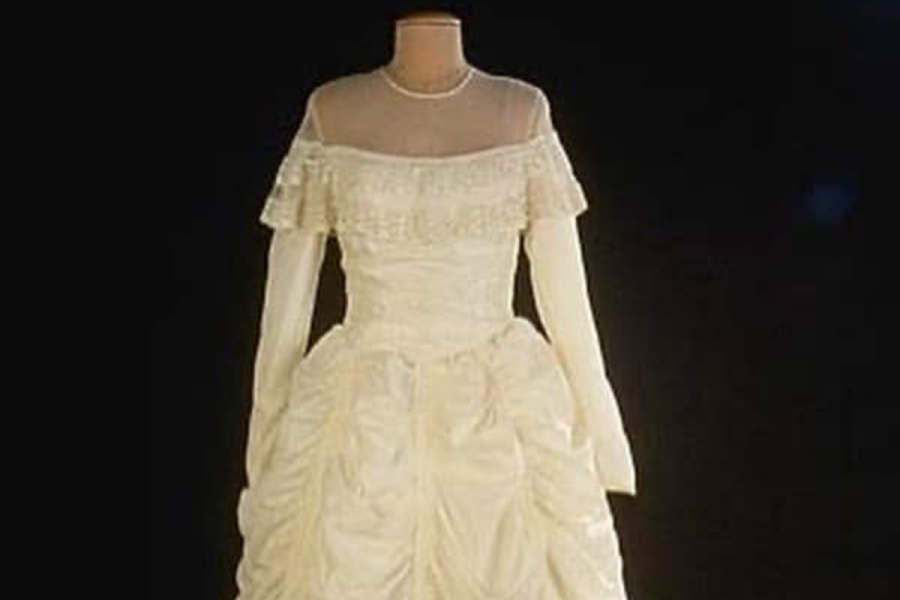
When peace returned, families began unpicking parachutes that had once saved loved ones in combat and turning them into clothing. Parachute silk was frequently transformed into dresses and bridal gowns, with one account describing how fabric 'once used in the skies of war became a treasured keepsake sewn into bridalwear.'
In many cases, these garments were not simply practical choices, they were emotional heirlooms, stitched from survival itself.
The transformation was deeply symbolic. A bride walking down the aisle in a gown made from a parachute was, in effect, wearing a piece of wartime history, a fabric that had once carried a soldier safely home now reimagined as a garment of love, hope and continuity. It was fashion born not from luxury, but from memory.
Other cultural institutions, including the Victoria and Albert Museum (V&A), also acknowledge this era as a turning point in textile history, when scarcity forced designers and home dressmakers alike to rethink fabric entirely. What emerged was an early form of resourceful design that would later influence modern sustainable fashion thinking.
From Battlefield Survival to Post-War Fashion Obsession
Once wartime restrictions ended, nylon rapidly evolved from a symbol of necessity into one of the most sought-after materials in the world. But it was no longer just about parachutes turned into dresses, it was about what nylon represented: survival transformed into style.
Women queued in the thousands across Britain and the United States for nylon stockings, desperate to reclaim a sense of normality after years of rationing and improvisation. The Smithsonian Institution notes that nylon stockings quickly became a symbol of modern femininity in the post-war era, representing both elegance and recovery after years of austerity.
Yet behind the glamour was still the echo of wartime skies. The same fibre that had carried soldiers to safety was now shaping silhouettes, smoothing legs, and defining a new era of feminine identity. Fashion had quite literally descended from the battlefield into the boutique.
From parachutes falling through war-torn skies to bridal gowns walking down post-war aisles, nylon's journey remains one of the most extraordinary transformations in fashion history.
This was more than a fabric shift, it was an emotional reinvention of material itself.
What began as a tool of survival became a symbol of love, memory and reinvention. And in doing so, nylon parachutes didn't just land in fields, they landed in fashion history forever.