
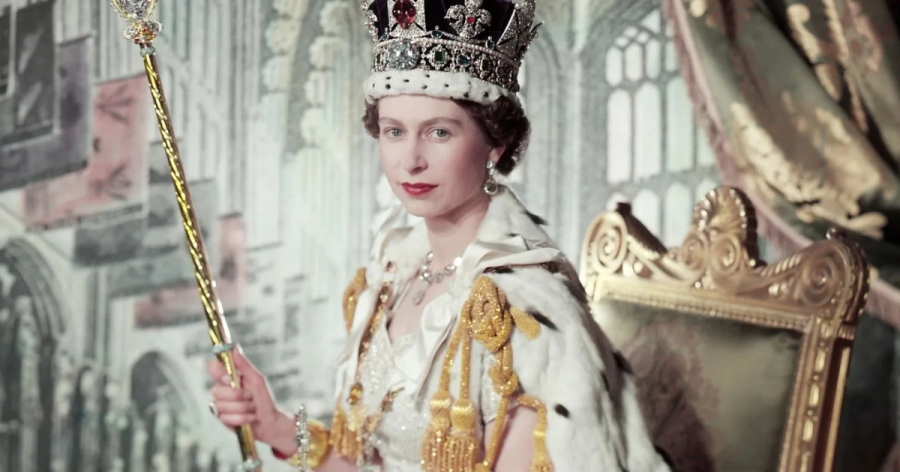
On 2 June 1953, London was transformed into a stage of ceremony, symbolism and spectacle as Queen Elizabeth II was crowned at Westminster Abbey. Yet beyond the historic oath and the gilded procession, it was her gown — intricate, symbolic and quietly powerful — that helped define the visual memory of the day.
The coronation dress, designed by Sir Norman Hartnell, became more than a piece of royal couture. It was a carefully constructed narrative of post-war Britain: a nation emerging from austerity, seeking unity, and projecting hope through craftsmanship, embroidery and restrained grandeur. In many ways, it marked a turning point where fashion became diplomacy.
A Gown Designed for a New Era
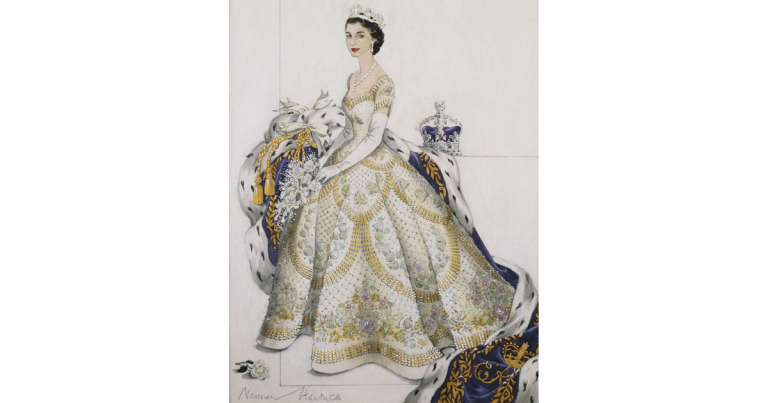
Queen Elizabeth II's coronation gown was created at a time when Britain was still under rationing. Despite this, Hartnell was granted permission to use luxurious fabrics for one of the most important garments in modern royal history. The result was a design that balanced restraint with majesty, ensuring the dress felt both regal and appropriate for a country still recovering economically.
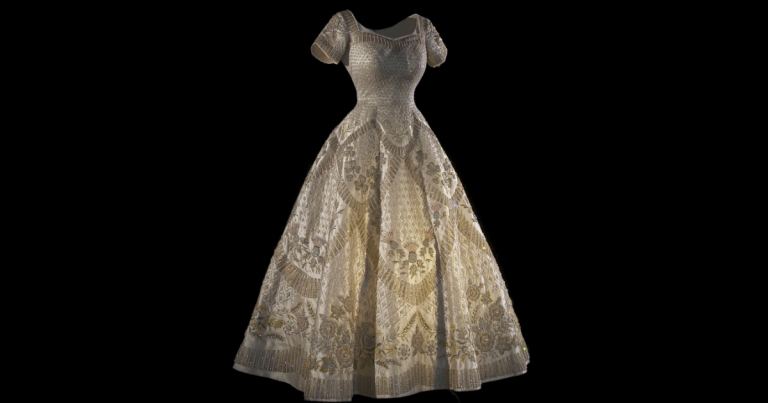
The gown was made from white satin and featured elaborate embroidery inspired by the floral emblems of the Commonwealth. Roses, thistles, shamrocks and wheat ears were stitched across the fabric in gold and silver thread, representing the United Kingdom and its wider imperial connections.
At its centre, the design told a deliberate story of unity. Rather than focusing solely on British identity, the gown reflected a broader vision of the Commonwealth as a shared cultural and political network. It was fashion used as symbolism on a global stage.
The Craftsmanship Behind the Coronation Look
Hartnell worked closely with embroidery teams to ensure every motif carried meaning. The level of detail required hundreds of hours of handwork, with artisans carefully layering metallic threads to create depth and texture that would catch the light inside Westminster Abbey.
The silhouette itself was structured but elegant, designed to complement the ceremonial nature of the coronation while maintaining a sense of youthful dignity. Elizabeth was just 27 at the time, and the gown had to balance authority with accessibility, a visual representation of a young monarch stepping into a centuries-old role.
Fashion historians have often noted that the gown marked a shift in royal dressing. While previous coronations leaned heavily into heavy opulence, Elizabeth's dress introduced a softer, more symbolic approach to regalia, one that communicated meaning through detail rather than excess.
Fashion as Post-war Messaging
The early 1950s were defined by recovery. Britain was rebuilding its identity after the Second World War, and the coronation was designed to project optimism both domestically and internationally. The gown played a central role in that messaging.
Each embroidered flower carried geopolitical weight. The inclusion of Commonwealth symbols was a visual reminder of Britain's global relationships at a time when the empire was evolving into a modern Commonwealth structure. The dress subtly reinforced continuity while acknowledging change.
In this sense, the coronation gown functioned as soft power, an example of how fashion can shape perception without words. It communicated stability, tradition and hope in a single visual frame broadcast across the world.
The Global Impact of a Royal Silhouette
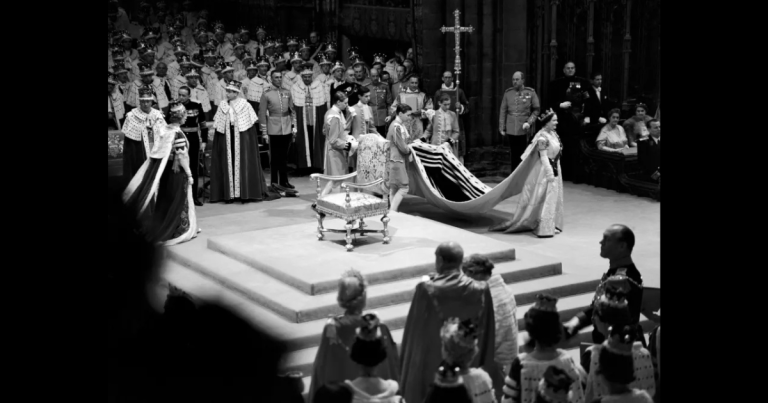
Television coverage of the coronation ensured that Queen Elizabeth II's image — and her gown — reached millions of viewers internationally. For many households, it was the first time a royal ceremony had been experienced in real time, transforming the event into a shared cultural moment.
The dress quickly became one of the most recognisable royal garments of the 20th century. Reproductions, illustrations and fashion editorials helped cement its place in public memory, while its symbolic embroidery continued to be studied as an example of narrative design in couture.
Its influence also extended into fashion more broadly. Designers began to explore the idea of storytelling through embroidery and motif placement, drawing inspiration from Hartnell's ability to embed meaning directly into fabric.
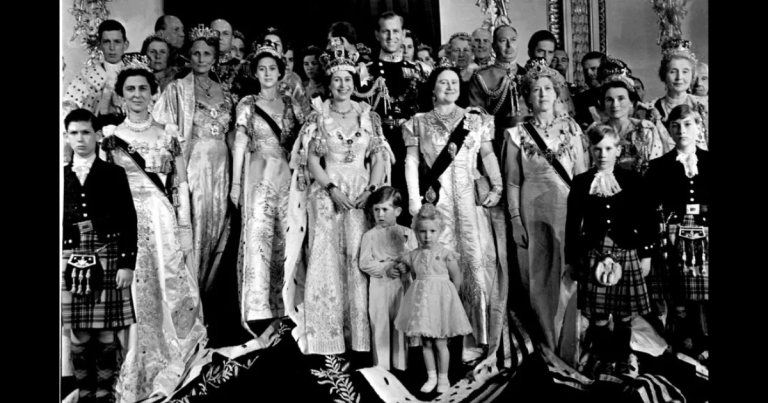
A Legacy Stitched Into History
More than seven decades later, Queen Elizabeth II's coronation gown remains a reference point in discussions of fashion and power. It is frequently cited in exhibitions on royal style and continues to be studied by historians for its cultural and political significance.
While royal fashion has evolved significantly since 1953, the gown's legacy endures in the way it redefined ceremonial dressing. It demonstrated that clothing could carry national identity, diplomatic messaging and emotional resonance all at once.
Fashion's Enduring Language of Symbolism
The coronation gown was never just about aesthetics. It was about narrative, a carefully constructed visual statement at a pivotal moment in British history. Through embroidery, fabric and silhouette, it told a story of unity, resilience and transition.
In today's fashion landscape, where designers increasingly draw on heritage and storytelling, its influence remains visible. The gown stands as a reminder that fashion, at its most powerful, is never simply about what is worn, but about what is being said.
Even in a modern world defined by rapid change, the image of Queen Elizabeth II in her embroidered coronation dress continues to resonate. It remains one of fashion's clearest examples of how clothing can become history itself.