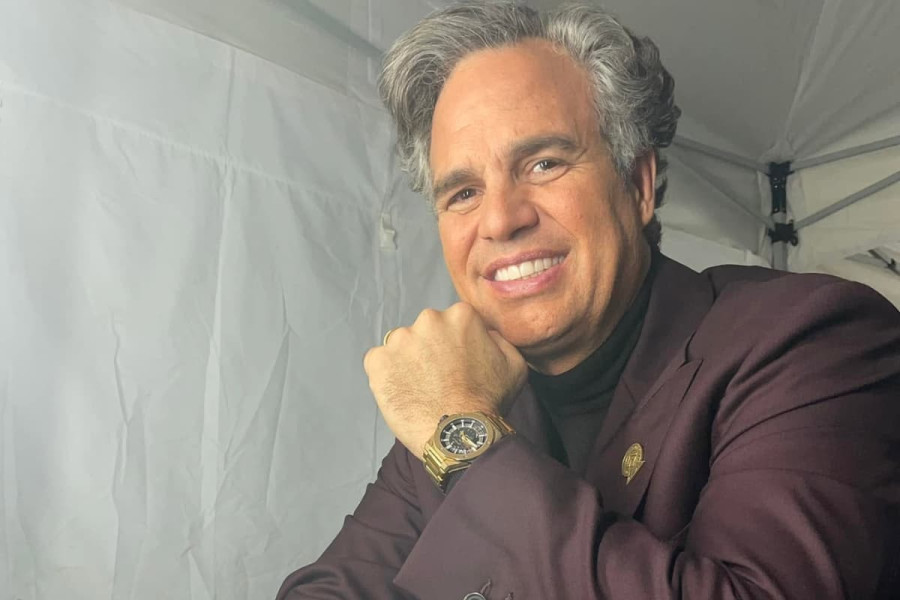
Paramount has sharply responded to Mark Ruffalo after the actor criticised the company's proposed acquisition of Warner Bros. Discovery and linked the deal to concerns about Oracle's relationship with Israel. The dispute has added another layer of controversy to an already closely watched Hollywood merger.
Ruffalo, one of the entertainment industry's most outspoken political activists, took aim at Paramount CEO David Ellison and his father, Oracle co-founder Larry Ellison, in a lengthy social media post. He argued that the proposed Paramount-Warner Bros. Discovery deal could give enormous power to people and companies he believes have been connected to harmful actions abroad.
Paramount, however, rejected the characterisation and accused Ruffalo of invoking antisemitic tropes while discussing the business transaction.
Paramount Responds to Mark Ruffalo's Criticism
A spokesperson for Paramount said the company was 'troubled when antisemitic tropes are invoked' in the context of a business dispute. The studio also objected to Ruffalo's use of terms including 'genocide' and 'apartheid' when discussing the corporate transaction.
Paramount argued that applying such terminology to a merger was inappropriate and said it risked diminishing the meaning of words associated with real human suffering.
The company also stressed that it does not tolerate prejudice. Its statement said its commitment to entertainment is accompanied by a commitment to acceptance, extending to different stories and storytellers.
The response represents a significant escalation in the public disagreement between Ruffalo and the company behind the proposed Warner Bros. Discovery acquisition.
What Mark Ruffalo Said About the Paramount-Warner Bros. Deal
Ruffalo has previously voiced opposition to the Paramount-Warner Bros. Discovery merger, raising concerns about consolidation and the amount of power that could be concentrated within one media organisation.
In his latest comments, the actor expanded his criticism to include Larry Ellison and Oracle. He referenced a years-old clip featuring Paramount board member Safra Catz discussing technologies used by Oracle that assisted the Israeli military following the October 7, 2023 attacks.
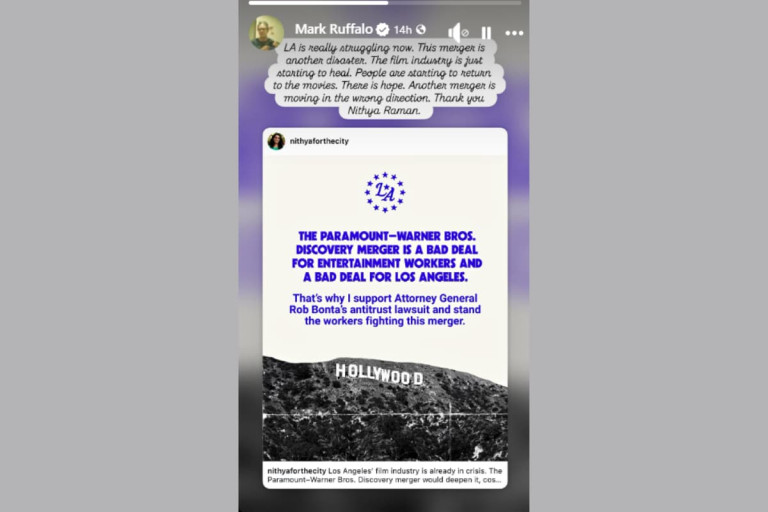
Ruffalo used the clip to question the implications of bringing Paramount's media assets together with Warner Bros. Discovery. He also described Larry Ellison as an "oligarch" and encouraged his followers to oppose the transaction.
His post connected the corporate deal to wider political and humanitarian concerns surrounding Israel and Gaza, turning what was already a contentious merger debate into an even more politically charged dispute.
Why the Merger Has Become So Controversial
The Paramount-Warner Bros. Discovery deal is one of the biggest proposed transactions in the entertainment industry, with its value reported at roughly $110 billion. The acquisition would bring together major film, television and streaming assets under Paramount Skydance, led by David Ellison.
The scale of the transaction has attracted scrutiny from politicians, industry figures and Hollywood workers. Concerns have included competition, media consolidation, employment and the potential influence of a much larger entertainment company.
Paramount Slams Mark Ruffalo Merger Attack as 'Antisemitic,' Says Company Does Not 'Tolerate Prejudice of Any Kind' https://t.co/1Yzi6IyRtK
— Variety (@Variety) August 22, 2026
The merger is also facing an antitrust challenge. Paramount has argued that delays could create significant financial costs, while opponents have raised concerns about the effect of the deal on competition. A trial has been scheduled for 2027, adding another hurdle to the transaction.
Ruffalo's opposition therefore sits within a much broader debate over the future ownership and direction of major Hollywood studios.
Paramount Calls for the Temperature to Be Lowered
Despite its strong criticism of Ruffalo, Paramount said it did not want to escalate the confrontation.
The company said Ruffalo's remarks should be viewed as a reason to "lower the temperature" rather than intensify the rhetoric. Paramount also maintained that its focus remains on producing content while supporting acceptance and inclusion.
That response reflects the delicate position Paramount finds itself in as it attempts to advance a major corporate transaction while facing criticism from politicians, industry groups and entertainment figures.
For Ruffalo, meanwhile, the dispute continues a long-standing pattern of using his public platform to speak out on political and humanitarian issues. His opposition to the Paramount-Warner Bros. Discovery deal has already made him one of the more prominent Hollywood voices challenging the transaction.
A Wider Hollywood Debate
The clash between Mark Ruffalo and Paramount highlights how Hollywood's biggest corporate deals can extend far beyond balance sheets and shareholder value.
The proposed merger has become a discussion about who controls major entertainment platforms, how corporate power is concentrated and what responsibilities media companies have in relation to wider political issues.
Paramount's accusation of antisemitic rhetoric has now added another highly sensitive dimension to that conversation. Ruffalo's comments, meanwhile, have drawn attention to the relationship between technology companies, media ownership and the ongoing debate over Israel and Gaza.