On 12 June 2003, the fashion industry stood at the edge of a cultural shift it had not yet fully recognised. Reality television was rapidly reshaping entertainment, but fashion remained largely insulated—still defined by exclusivity, gatekeeping and an audience that existed far beyond the runway itself.
Within this evolving media landscape, the conditions were quietly forming for a new kind of storytelling, one that would soon merge design, competition and celebrity culture. Just over a year later, Project Runway would premiere and fundamentally alter how fashion was created, consumed and understood by the public.
A Fashion Industry Still Behind Closed Doors
In the early 2000s, fashion was still widely perceived as an industry reserved for insiders. Major events such as New York Fashion Week were distant from everyday audiences, while the process of designing, fitting and producing collections remained largely invisible.
That separation was about to change. As reality television expanded across networks like Bravo in the United States, producers began to see the potential of applying competitive, character-driven storytelling to industries previously considered too niche or technical for mainstream TV.
Fashion, with its high stakes, creative pressure and visual transformation, would soon become one of the most compelling subjects for this new format.
From Concept Shift to Cultural Breakthrough
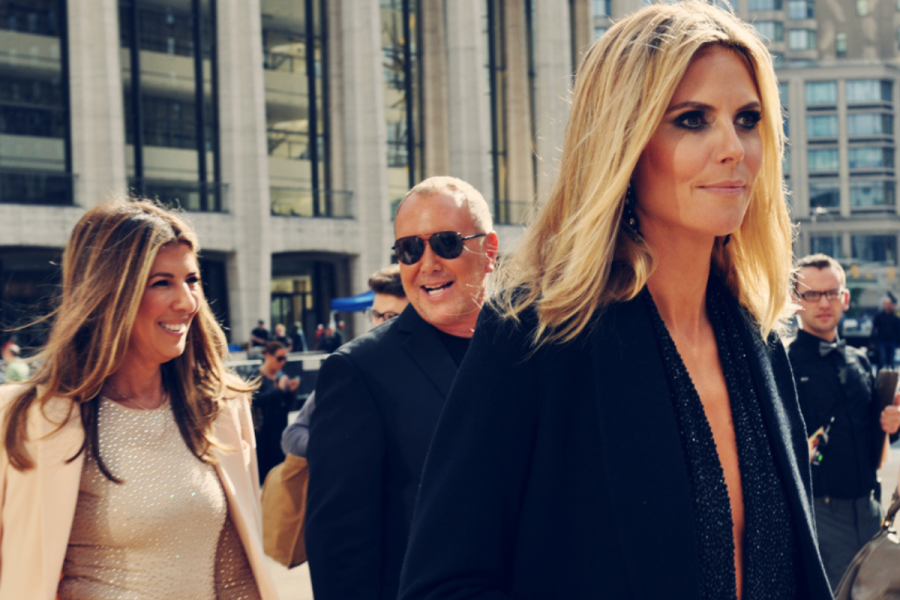
Project Runway was created by Eli Holzman and produced by Magical Elves Productions, with executive producers including Heidi Klum, Nina Garcia, Michael Kors, Bob Weinstein, and Harvey Weinstein. However, the concept itself was not originally intended to focus on fashion.
The series began as a different idea altogether before being reworked into a design competition after early development challenges. Once repositioned around fashion design, the format quickly gained traction with Bravo, leading to a pilot and full series order.
When Project Runway premiered in December 2004, it introduced a structure that would become instantly recognisable: weekly design challenges, time pressure, strict budgets and elimination-based competition. Designers competed not only for a cash prize but for a career-defining opportunity to present at New York Fashion Week.
In doing so, the series transformed fashion from a closed professional system into a televised narrative of ambition, failure and reinvention.
Turning the Creative Process Into Entertainment
What set Project Runway apart was not just the final runway presentation, but the exposure of everything that happened behind it.
For the first time, viewers saw fashion as a process rather than a finished product—complete with fabric shortages, creative disagreements, last-minute redesigns and emotional breakdowns under pressure.
Judged by figures such as Nina Garcia, Michael Kors, and Heidi Klum, contestants were pushed to balance artistic vision with commercial reality. The inclusion of mentorship from Tim Gunn added another layer to the format, introducing guidance, critique and emotional support into what was still a highly competitive environment.
This structure made fashion feel immediate and accessible in a way it never had before. It also reframed designers not as distant creatives, but as personalities audiences could follow, support and critique week by week.
The Rise of Fashion's New Public Class
As Project Runway gained popularity, its impact began to extend far beyond television ratings.
One of its most significant effects was the democratisation of fashion ambition. Aspiring designers from outside traditional fashion capitals suddenly had a visible pathway into the industry. Institutions such as Parsons School of Design reportedly saw a surge in applications following the show's success, with enrolment interest increasing significantly in the years after its debut.
Designers were also no longer confined to anonymity. Contestants such as Christian Siriano went on to build globally recognised brands, dressing celebrities on red carpets and establishing careers that began on reality television.
At the same time, fashion itself became part of mainstream cultural conversation. Viewers who had never previously engaged with fashion week began to understand its structure, stakes, and significance through the show's storytelling format.
Fashion Week Becomes Primetime Storytelling
One of the defining innovations of Project Runway was its integration of New York Fashion Week as the ultimate prize.
For many viewers, this was their first introduction to the event. What had once been an industry-only showcase became a televised destination, framed as the pinnacle of creative success.
Fashion journalist Zanna Roberts Rassi later described the show as having 'catapulted fashion to the middle of America and made it accessible, achievable and relatable'. It transformed fashion week from an exclusive industry calendar event into a cultural reference point understood by mainstream audiences.
Heidi Klum's role as host also reinforced this shift. Her presence brought global modelling credibility into the format, while Tim Gunn became a defining cultural figure whose mentorship style and now-iconic phrase 'make it work' symbolised the show's blend of pressure and encouragement.
A New Kind of Fashion Celebrity
As the format evolved, so too did the idea of who could become a fashion figure.
Designers were no longer just behind-the-scenes creatives—they became television personalities with emotional arcs, rivalries and fan followings. The show effectively created a new category of fashion celebrity, where visibility and personality were as important as technical skill.
This shift influenced not only fashion media but also how audiences engaged with creativity itself. Designers were now expected to perform as well as produce, merging artistry with storytelling in ways that reflected broader changes in entertainment culture.
Legacy, Expansion and Cultural Complexity
Following its success, Project Runway expanded into international adaptations and spin-offs, including Project Runway All Stars and versions produced across multiple countries. Its influence could also be seen in other competition-based reality formats that followed, from cooking shows to talent contests.
However, the series' legacy is not without complexity. Over time, it faced criticism regarding diversity and representation within the fashion narratives it presented. In 2017, its association with The Weinstein Company also led to a network transition from Bravo to Lifetime following allegations against co-founder Harvey Weinstein.
Despite these challenges, the show's cultural footprint remains significant. It changed how fashion was broadcast, how designers were discovered and how audiences engaged with creative industries.
A Turning Point That Redefined Fashion Media
Looking back from the perspective of 12 June 2003, it is clear that the industry was already on the brink of transformation. What Project Runway ultimately delivered was not just a television format, but a new cultural framework for fashion itself.
It blurred the line between industry and audience, replaced exclusivity with visibility and turned creative work into a shared public experience. In doing so, it redefined fashion not only as an art form, but as entertainment—reshaping its future in ways that continue to resonate today.